18 citations
,
January 2013 in “Evidence-based Complementary and Alternative Medicine” In this study, ALR was found to enhance both the proliferation and osteogenic differentiation of mouse bone marrow mesenchymal stem cells, potentially through specific signaling pathways.
September 2023 in “Journal of the American Academy of Dermatology”  December 2015 in “Vascular Pharmacology”
 Prasugrel is better than clopidogrel at preventing heart damage and improving blood flow in small heart vessels during heart artery procedures.
 April 2019 in “Journal of Investigative Dermatology”
 This study identifies a mechanism where dsRNA activates TLR3 to induce RA production, promoting hair follicle regeneration in mice and suggesting a potential role in human tissue regeneration.
 October 2024 in “Canadian Journal of Health Technologies”
 This CADTH recommendation advises that Olumiant should be publicly reimbursed for treating severe alopecia areata in adults, provided conditions such as a 50% scalp hair loss and specific prescribing criteria are met.
 4 citations
,
September 2022 in “Journal of The American Academy of Dermatology”
4 citations
,
September 2022 in “Journal of The American Academy of Dermatology” This study examined phase 3 clinical trial data and found that baricitinib improves hair regrowth in adults with alopecia areata and significant scalp hair loss, with the response varying based on the severity of hair loss at the start of treatment.
 35 citations
,
January 2002 in “Dermatology”
35 citations
,
January 2002 in “Dermatology” This article discusses alopecia areata occurring during Interferon Alpha-2b/Ribavirin therapy and reports no new clinical results.
1 citations
,
September 2023 in “Journal of the American Academy of Dermatology” Mini pulse corticosteroid therapy with oral dexamethasone is effective and has fewer side effects for treating extensive alopecia areata.
November 2022 in “Journal of Investigative Dermatology” This pilot study suggests that lovastatin may counteract stress-induced MICA expression in hair follicles and enhance MICA shedding, potentially offering a complementary approach for alopecia areata treatment.
This study found that the enzyme encoded by Dgat1 acts as a retinol acyltransferase in murine epidermis, protecting against retinoid toxicity and alopecia by preventing retinol accumulation.
April 2026 in “SSRN Electronic Journal”  25 citations
,
October 2019 in “JAAD Case Reports”
25 citations
,
October 2019 in “JAAD Case Reports” This article discusses the role of interleukin-15 and Janus kinase inhibitors in alopecia areata based on a murine model and reports no new experimental results.
 10 citations
,
January 2025 in “Frontiers in Nutrition”
10 citations
,
January 2025 in “Frontiers in Nutrition” This review discusses the potential role of the dietary antioxidant index in reducing the risk of various diseases, including obesity-related conditions, certain cancers, osteoporosis, and mental illnesses, but calls for further studies to confirm these findings.
 May 2026 in “Zenodo (CERN European Organization for Nuclear Research)”
 This study developed a new triamcinolone acetonide serum combined with a microneedling device, showing promise for treating alopecia areata by targeting hair follicles in a less invasive, patient-friendly way with confirmed drug solubility, compatibility, and safety.
 March 2026 in “Dermatology Online Journal”
 Medicaid coverage for alopecia areata treatments is inconsistent and often limited.
 5 citations
,
January 2016 in “Genetics and molecular research”
5 citations
,
January 2016 in “Genetics and molecular research” In this study, a specific SNP in the A2M gene of Murrah buffaloes was significantly associated with increased fat production and higher fat and protein percentages in milk.
27 citations
,
August 2008 in “Mayo Clinic proceedings” This review discusses the diagnosis, management, and treatment options for peripheral arterial disease and does not report new clinical findings; the authors emphasize the need for early diagnosis and comprehensive management.
1 citations
,
July 2026 in “Dermatology and Therapy” In this study, JAK inhibitors for treating alopecia areata and atopic dermatitis were generally well tolerated in a real-world setting, with most adverse events being mild or moderate and rare serious cases resembling the general population incidence.
4 citations
,
February 2024 in “Anais Brasileiros de Dermatologia”  1 citations
,
July 2022 in “The journal of investigative dermatology/Journal of investigative dermatology”
1 citations
,
July 2022 in “The journal of investigative dermatology/Journal of investigative dermatology” In this open-label trial, Tofacitinib was well tolerated and improved IFN and cytokine scores, as well as overall skin pathology, in individuals with Down syndrome and immune skin conditions.
 August 1994 in “Molecular Endocrinology”
 This study found that AtT-20 pituitary cells with higher cAMP-dependent kinase activity had larger calcium currents and significantly increased beta-endorphin release compared to cells with lower kinase activity.
 April 2025 in “Scientific Reports”
 This study explores how Astragaloside A from traditional Chinese medicine may combat lung adenocarcinoma by regulating key signaling molecules like STAT3 and AKT, using techniques such as network pharmacology and molecular docking to understand its mechanisms in cellular models.
 March 2024 in “Clinical, cosmetic and investigational dermatology”
 This study reported that five patients with alopecia areata achieved satisfactory results using 15 mg of Upadacitinib daily after conventional treatments had failed, without experiencing adverse events.
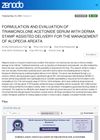 May 2026 in “Zenodo (CERN European Organization for Nuclear Research)”
 This study developed a low-viscosity triamcinolone acetonide serum, used with a derma stamp microneedling device, to improve targeted treatment of alopecia areata, reporting favorable drug solubility, spreadability, and permeation to hair follicles, while maintaining skin safety.
 January 2026 in “Frontiers in Bioscience-Landmark”
 This study reported that, in a laboratory setting, araliadiol derived from Centella asiatica activated antioxidant pathways, mitigating urban particulate matter-induced oxidative stress and skin damage.
 October 2023 in “Regular and Young Investigator Award Abstracts”
 This study found that Baricitinib significantly reduced hair loss and immune response in a mouse model of alopecia areata.
15 citations
,
December 2019 in “European Journal of Dermatology” This study identified new and recurrent missense mutations in the PHGDH and PSAT1 genes, implicating them in the pathogenesis of Neu-Laxova syndrome in Chinese patients.
May 2024 in “Drugs & Therapy Perspectives” In this study, the authors discuss that while traditional alopecia areata treatments like corticosteroids offer limited efficacy and pose long-term adverse effects, new treatments using janus kinase inhibitors show potential for changing treatment protocols, pending a better understanding of associated adverse drug events.
 July 2024 in “jurnal ABDIMAS Indonesia”
 In this study, the authors observed that among elderly participants, 59.1% did not experience depression, correlating with measured average levels of apolipoprotein A and B. They suggest early screening can help manage apolipoprotein levels, potentially reducing depression risk and improving quality of life.
May 2025 in “OPAL (Open@LaTrobe) (La Trobe University)” This study found that in a mouse model of alopecia areata, tofacitinib inhibited CD8+ T cell infiltration at hair follicles by modulating linoleic acid metabolism and magnesium pathways, offering insights into potential therapeutic strategies for the condition.