 76 citations
,
February 2015 in “Industrial Crops and Products”
76 citations
,
February 2015 in “Industrial Crops and Products” This study identified over 40 phytochemical compounds in the leaves and flowers of Bituminaria bituminosa, predominantly glycosylated flavonoids from apigenin, using advanced chromatographic techniques.
 44 citations
,
February 2015 in “Journal of the American Academy of Dermatology”
44 citations
,
February 2015 in “Journal of the American Academy of Dermatology” This study found that combination therapy with diphenylcyclopropenone and anthralin was more effective for complete hair regrowth in chronic extensive alopecia areata than diphenylcyclopropenone alone, despite more common side effects.
 36 citations
,
May 2015 in “Australasian Journal of Dermatology”
36 citations
,
May 2015 in “Australasian Journal of Dermatology” This case report described cosmetically significant hair regrowth in a 39-year-old woman with permanent chemotherapy-induced alopecia after continuous oral minoxidil use.
 35 citations
,
May 2022 in “Baillière's best practice and research in clinical endocrinology and metabolism/Baillière's best practice & research. Clinical endocrinology & metabolism”
35 citations
,
May 2022 in “Baillière's best practice and research in clinical endocrinology and metabolism/Baillière's best practice & research. Clinical endocrinology & metabolism” This review discusses the current understanding of androgen biosynthesis, mechanisms of action, and their roles in human biology, as well as related congenital and acquired disorders, but it reports no new research findings.
 19 citations
,
September 1995 in “Food and nutrition bulletin”
19 citations
,
September 1995 in “Food and nutrition bulletin” This article reviews the toxic effects of mimosine in Leucaena leucocephala and discusses various methods to mitigate its toxicity but presents no new findings.
 14 citations
,
August 2019 in “Journal of Dermatological Treatment”
14 citations
,
August 2019 in “Journal of Dermatological Treatment” This study found that 5% topical minoxidil was moderately more effective at increasing hair regrowth than 10% minoxidil and placebo in men with androgenetic alopecia.
 9 citations
,
March 2018 in “Actas Dermo-Sifiliográficas”
9 citations
,
March 2018 in “Actas Dermo-Sifiliográficas” This study found that the Spanish version of the Hair Specific Skindex 29 (HSS29) is a reliable and valid tool for assessing the quality of life impact of female androgenetic alopecia.
 9 citations
,
June 2014 in “Nutrition and Cancer”
9 citations
,
June 2014 in “Nutrition and Cancer” This study found that hydro-alcoholic Eclipta alba extract may have anticancer and multidrug resistance-reversal effects in animal models, suggesting potential as an adjunctive agent in tumor chemotherapy.
 8 citations
,
October 2018 in “Journal of Investigative Dermatology”
8 citations
,
October 2018 in “Journal of Investigative Dermatology” This study observed that alopecia areata patients experience significant psychosocial issues, with a high prevalence of anxiety, depression, and impaired quality of life across symptoms, functioning, and emotions.
 6 citations
,
February 2020 in “Journal of The European Academy of Dermatology and Venereology”
6 citations
,
February 2020 in “Journal of The European Academy of Dermatology and Venereology” This letter reported that combining platelet-rich plasma with hair transplants did not show benefits for treating androgenetic alopecia.
 6 citations
,
January 2017 in “Annals of Dermatology”
6 citations
,
January 2017 in “Annals of Dermatology” In this study, Korean women with female pattern hair loss who used a combination of topical 0.025% 17α-estradiol and 3% minoxidil saw significant increases in total hair count and hair caliber over six months.
 6 citations
,
July 2016 in “Gynecological Endocrinology”
6 citations
,
July 2016 in “Gynecological Endocrinology” This study found that women with PCOS have higher total PSA levels than controls, and the total PSA level correlates positively with testosterone and free androgen index.
 6 citations
,
January 2013
6 citations
,
January 2013 This chapter reviews hyperadrenocorticism in ferrets, covering its causes, symptoms, diagnosis, and treatment options, but reports no new research findings.
 4 citations
,
December 2019 in “Journal of Cosmetic Dermatology”
4 citations
,
December 2019 in “Journal of Cosmetic Dermatology” This study found that combining poly-l-lactic acid microthread therapy with minoxidil improved hair density and appearance more effectively than minoxidil alone in women with androgenetic alopecia.
 4 citations
,
January 2016 in “Journal of analytical & bioanalytical techniques”
4 citations
,
January 2016 in “Journal of analytical & bioanalytical techniques” This study evaluated a hair growth gel with Hibiscus rosa sinensis, Eclipta alba, and Solanum nigrum extracts, demonstrating consistent homogeneity, 5 α-reductase inhibitory activity, and no skin irritation.
 3 citations
,
March 2014 in “Annals of Hepatology”
3 citations
,
March 2014 in “Annals of Hepatology” This case report describes irreversible alopecia universalis following discontinuation of Peg-IFN/RBV treatment for chronic hepatitis C, highlighting potential autoimmune side effects of interferon-based therapies.
 3 citations
,
May 2011 in “Journal of the American Academy of Dermatology”
3 citations
,
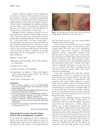
May 2011 in “Journal of the American Academy of Dermatology” This case report describes a 54-year-old woman who developed hypertrichosis around a leg ulcer while using PGE1 ointment, suggesting a potential side effect of the treatment.
 2 citations
,
April 2017 in “Actas Dermo-Sifiliográficas”
2 citations
,
April 2017 in “Actas Dermo-Sifiliográficas” This review discusses the etiology, pathogenesis, clinical presentation, and treatment of frontal fibrosing alopecia, noting the lack of clinical trial data and limited observational treatment results.
 2 citations
,
January 2007 in “Acta Dermato Venereologica”
2 citations
,
January 2007 in “Acta Dermato Venereologica” In this report, a case of a bullous lesion developed at the injection site in a patient treated with PEG-IFN-α-2a for chronic hepatitis C was described.
 1 citations
,
September 2019 in “Practica medicală”
1 citations
,
September 2019 in “Practica medicală” This article discusses the challenges in treating androgenic alopecia and highlights its potential links to coronary heart disease and metabolic syndrome but reports no new clinical findings.
 1 citations
,
September 2017 in “Asian Journal of Pharmaceutical and Clinical Research”
1 citations
,
September 2017 in “Asian Journal of Pharmaceutical and Clinical Research” This case report documents warfarin-induced alopecia in a 39-year-old male in Southern India, adding to the limited case reports on this potential side effect.
 1 citations
,
September 2016 in “Actas Dermo-Sifiliográficas”
1 citations
,
September 2016 in “Actas Dermo-Sifiliográficas” 5-alpha reductase inhibitors may cause sexual side effects, breast complications, and other health risks in men with hair loss.
 1 citations
,
May 2015 in “Journal of The American Academy of Dermatology”
1 citations
,
May 2015 in “Journal of The American Academy of Dermatology” Finasteride for hair loss in young men may significantly increase the risk of sexual dysfunction.
 March 2026 in “Revista Ibero-Americana de Humanidades, Ciências e Educação”
 This study reports that perioperative use of dutasteride, both orally and through mesotherapy, may enhance hair graft survival and reduce shock loss in patients undergoing hair transplantation for androgenetic alopecia.
 March 2026 in “Revista Ibero-Americana de Humanidades, Ciências e Educação”
 This systematic literature review found that exosome and PRP therapies show promise as effective, minimally invasive options for treating androgenetic alopecia, with clinical benefits potentially superior to or complementary to minoxidil, although standardization and larger clinical trials are needed to confirm long-term safety and efficacy.
 March 2026 in “Editora Pasteur eBooks”
 This study conducted a narrative literature review on androgenetic alopecia, highlighting the clinical diagnosis and management strategies, including minoxidil and 5-alpha-reductase inhibitors for men, and antiandrogens for women, along with the use of aesthetic procedures like microneedling as complementary therapies.
 February 2026 in “Editora Pasteur eBooks”
 An integrative approach combining medical, nutritional, and lifestyle changes effectively manages female pattern hair loss.
 January 2026 in “Ciencia Latina Revista Científica Multidisciplinar”
 This study reports on a 14-year-old male with refractory diffuse alopecia areata who achieved full hair density restoration after three monthly sessions of microneedling combined with triamcinolone, dutasteride, and synthetic exosome treatment, highlighting exosomes' potential for enhancing traditional therapies in autoimmune hair loss cases.

This study detailed a comprehensive hair therapy regimen for a 22-year-old male with androgenetic alopecia, observing significant improvements in scalp health and hair density over four months, though benefits regressed after stopping treatment, emphasizing the need for continuous adherence and multidisciplinary support.
 August 2025 in “Editora Pasteur eBooks”
 Combining conventional and integrative treatments can help reduce hair loss and improve hair growth in women with androgenic alopecia.