21 citations
,
September 2021 in “New Phytologist” This study found that the transcription factor HB24 plays a critical role in root hair elongation in Arabidopsis thaliana by promoting the conversion of indole-3-butyric acid to indole-3-acetic acid through regulation of IBR1 expression.
 290 citations
,
December 2017 in “Journal of The American Academy of Dermatology”
290 citations
,
December 2017 in “Journal of The American Academy of Dermatology” This article reviews the epidemiology, clinical evaluation, and pathogenesis of alopecia areata and highlights recent advancements, but it does not report new clinical findings.
 18 citations
,
October 2018 in “Nutrients”
18 citations
,
October 2018 in “Nutrients” This study found that Annurca apple polyphenolic extracts reprogram hair follicle metabolism in mice, enhancing mitochondrial activity and keratin production while inhibiting some metabolic pathways.
 2 citations
,
May 2021 in “Journal of pharmaceutical and biomedical analysis”
2 citations
,
May 2021 in “Journal of pharmaceutical and biomedical analysis” This study utilized a UHPLC-HRMS method to identify eight active pharmaceutical ingredients, such as ketoconazole and minoxidil, in 26 out of 100 analyzed cosmetic products.
1 citations
,
June 2023 in “British Journal of Dermatology” In this study, individuals with alopecia areata in the UK incurred significant costs for managing their condition, with those experiencing more severe symptoms and lower disposable income facing higher financial burdens.
2 citations
,
January 2018 in “Biomolecules & therapeutics” This study found that polyamidoamine dendrimers can permeate skin's current conducting pores and alter the magnitude and direction of electroosmotic flow, affecting drug flux during iontophoresis.
June 2023 in “Zenodo (CERN European Organization for Nuclear Research)”  11 citations
,
January 2013 in “Revista Brasileira De Terapia Intensiva”
11 citations
,
January 2013 in “Revista Brasileira De Terapia Intensiva” This article reports a case of rhabdomyolysis in a patient two hours after consuming the freshwater fish Mylossoma duriventre, suggesting a possible link to Haff disease from an unidentified toxin.

In this study on mice, a baricitinib-loaded microneedle patch enhanced hair growth in alopecia areata lesions (68% vs control: 33%, p < 0.05), suggesting it may deliver treatment effectively and pain-free, with fewer systemic side effects.
July 2026 in “Journal of Investigative Dermatology” 20 citations
,
July 2005 in “Experimental dermatology” This study found that the fuzzy mutation in mice is linked to both structural hair defects and accelerated hair follicle cycling, influencing the regulation of hair cycle phases such as catagen and anagen.
65 citations
,
September 2014 in “Orphanet Journal of Rare Diseases” This study identified mutations in the STUB1 gene linked to hereditary cerebellar ataxia with cognitive impairment, revealing potential effects on protein function and patient symptoms, including accelerated aging.
 March 2014 in “Hair transplant forum international”
 This abstract discusses a collaboration between the Asian Association of Hair Restoration Surgeons and another group, but it reports no new research findings.
1 citations
,
February 2024 in “Journal of the European Academy of Dermatology and Venereology” Certain genetic factors may contribute to frontal fibrosing alopecia in Brazil.
 December 2024 in “Journal of Cancer Therapy and Research”
 In this study, researchers investigated the effects of Aqueous Artocarpus heterophyllus seed extract on testosterone enanthate-induced benign prostatic hyperplasia in adult Wistar rats, using three different dosages to assess its potential as an alternative therapy. Results are not reported in this abstract.
 November 2025 in “SKIN The Journal of Cutaneous Medicine”
 In this study, UPA at doses of 15 mg and 30 mg showed higher efficacy than placebo for treating severe alopecia areata in adults and adolescents over 24 weeks, with a safety profile similar to approved uses.
June 2024 in “British Journal of Dermatology” This study found that alopecia areata significantly impacts patients' quality of life irrespective of hair loss severity, and concluded that the newer assessment tools AAPPO and AASIS better capture this impact compared to the traditional SALT measure.
 27 citations
,
June 2005 in “The journal of investigative dermatology/Journal of investigative dermatology”
27 citations
,
June 2005 in “The journal of investigative dermatology/Journal of investigative dermatology” This study identified numerous size polymorphisms in the human ultrahigh sulfur KAP4 genes due to intragenic sequence variations, suggesting these polymorphisms may have arisen through deletions and duplications during evolution.
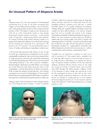 January 2014 in “International Journal of Trichology”
 A man had an unusual type of hair loss that didn't match known patterns and didn't improve with treatment.
 9 citations
,
June 2000 in “Journal of The American Academy of Dermatology”
9 citations
,
June 2000 in “Journal of The American Academy of Dermatology” This study reported that heterozygous carriers of a mutation in the human hairless gene did not differ from healthy homozygotes in the pattern of androgenetic alopecia.
3 citations
,
August 2021 in “Clinical Case Reports” This case report describes a patient with a NUDT15 minor variant who experienced severe myelosuppression due to azathioprine, emphasizing typical symptoms as clues to the adverse reaction.
66 citations
,
December 1999 in “Journal of Investigative Dermatology” New mutations in the hairless gene may cause hair loss and affect bone development.
March 2008 in “The Knowledge Bank (The Ohio State University)” This study found that AR-007 degrades faster and has a stronger association with hsp70 than AR-014, suggesting it is less stable when bound to the androgen receptor.
 February 2009 in “Journal of The American Academy of Dermatology”
 The document concludes that detailed clinical descriptions of seven family cases help understand dominant dystrophic epidermolysis bullosa's symptoms and inheritance.
 1 citations
,
January 2018 in “Acta dermato-venereologica”
1 citations
,
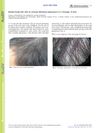
January 2018 in “Acta dermato-venereologica” A teenager's hair with alternating white and dark bands, known as Pili annulati, is a genetic condition that is usually harmless and often considered attractive.
June 2023 in “Zenodo (CERN European Organization for Nuclear Research)”  199 citations
,
April 2010 in “Nature”
199 citations
,
April 2010 in “Nature” A gene called APCDD1, which controls hair growth, is found to be faulty in a type of hair loss called hereditary hypotrichosis simplex.
 6 citations
,
January 2013 in “The Journal of Dermatology”
6 citations
,
January 2013 in “The Journal of Dermatology” Researchers found a new genetic mutation causing a rare hair loss condition in the first Japanese child studied.
April 2023 in “Journal of Investigative Dermatology” Trichohyalin in hair can trigger immune attacks in alopecia areata.
 22 citations
,
November 2021 in “Dermatology and Therapy”
22 citations
,
November 2021 in “Dermatology and Therapy” This study found that the Alopecia Areata Patient Priority Outcomes questionnaire is a reliable and valid tool for measuring the severity and impact of hair loss in individuals with alopecia areata.