 34 citations
,
March 1999 in “Journal of The European Academy of Dermatology and Venereology”
34 citations
,
March 1999 in “Journal of The European Academy of Dermatology and Venereology” This study found significant differences in serum lipoprotein (a) and triglyceride levels between men with androgenetic alopecia and those with normal hair, suggesting a need for dermatologists to monitor lipid profiles in these patients.
34 citations
,
December 1991 in “Annals of the New York Academy of Sciences” This study found that while the steroid mechanisms influencing androgenetic alopecia may be similar for men and women, differences in enzyme activity and receptor content could explain their varied clinical presentations.
 33 citations
,
July 2020 in “Journal of The American Academy of Dermatology”
33 citations
,
July 2020 in “Journal of The American Academy of Dermatology” In this study, PRP increased hair density in areas treated for androgenetic alopecia, but there was no significant difference when compared to placebo-treated areas.
 33 citations
,
August 2015 in “F1000Research”
33 citations
,
August 2015 in “F1000Research” This study presents a new model for androgenetic alopecia progression, explaining diffuse hair loss in women through 3D reconstructions of the arrector pili muscle and its relationship with the hair follicle stem cell niche.
 33 citations
,
August 2013 in “British Journal of Dermatology”
33 citations
,
August 2013 in “British Journal of Dermatology” Lack of small, fine hair on the front hairline is a key sign of frontal fibrosing alopecia.
 33 citations
,
October 2004 in “Archives of Dermatological Research”
33 citations
,
October 2004 in “Archives of Dermatological Research” This study suggests that a larger prostate is associated with a higher prevalence of androgenetic alopecia, although the prostate size did not correlate with alopecia severity.
 32 citations
,
July 2020 in “Journal of The American Academy of Dermatology”
32 citations
,
July 2020 in “Journal of The American Academy of Dermatology” This study noted that among hospitalized COVID-19 patients, androgenetic alopecia was prevalent, and severe cases were associated with adverse outcomes such as respiratory failure, highlighting a possible link with androgen sensitivity.
 32 citations
,
May 2020 in “European Journal of Pharmacology”
32 citations
,
May 2020 in “European Journal of Pharmacology” This review discusses the potential of stem cell-based therapies, particularly involving stem cell-derived conditioned medium and exosomes, for hair regeneration in nonscarring alopecia, but it reports no new clinical outcomes.
 32 citations
,
July 2017 in “Clinical and Experimental Dermatology”
32 citations
,
July 2017 in “Clinical and Experimental Dermatology” This study assessed the use of oral finasteride in transgender men with androgenetic alopecia and found that all patients improved by one grade on the Norwood–Hamilton scale within about 5.5 months, with no significant adverse effects reported during the 16.2 months of follow-up.
 32 citations
,
January 2017 in “Patient Preference and Adherence”
32 citations
,
January 2017 in “Patient Preference and Adherence” This study found that both alopecia areata and androgenetic alopecia moderately reduced the quality of life for Chinese patients, especially in younger individuals and those experiencing hair loss for over a year.
 32 citations
,
October 2009 in “Dermatology”
32 citations
,
October 2009 in “Dermatology” This article describes acute and chronic telogen effluvium, highlighting the importance of differentiating them from androgenetic alopecia for accurate diagnosis and treatment strategies but includes no new clinical research findings.
 32 citations
,
June 2000 in “Dermatologic Surgery”
32 citations
,
June 2000 in “Dermatologic Surgery” Different factors help diagnose and treat hair loss accurately.
 32 citations
,
October 1999 in “Journal of women's health and gender-based medicine”
32 citations
,
October 1999 in “Journal of women's health and gender-based medicine” This study found that women with androgenetic alopecia report various negative impacts on their lives due to hair thinning, highlighting emotional concerns and dissatisfaction with appearance.
 32 citations
,
August 1999 in “Journal of Investigative Dermatology”
32 citations
,
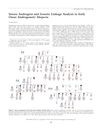
August 1999 in “Journal of Investigative Dermatology” This study found that individuals with early onset extensive androgenetic alopecia have an elevated ratio of DHT to testosterone, but no significant genetic linkage to markers on chromosomes 2 or 5 was detected.
 31 citations
,
January 2019 in “Journal of Cutaneous Medicine and Surgery”
31 citations
,
January 2019 in “Journal of Cutaneous Medicine and Surgery” This review found that three monthly PRP injections improved hair density in patients with androgenetic alopecia compared to placebo, but more rigorous studies are needed for broader dermatological applications.
 31 citations
,
June 2018 in “Dermatologic Surgery”
31 citations
,
June 2018 in “Dermatologic Surgery” In this randomized, double-blind trial, researchers observed that low-level laser therapy led to significantly greater hair regrowth on treated areas compared to a sham treatment in patients with androgenetic alopecia over 24 weeks, suggesting it as a potentially effective and safe option.
 31 citations
,
January 2017 in “Advances in Experimental Medicine and Biology”
31 citations
,
January 2017 in “Advances in Experimental Medicine and Biology” This review discusses the negative health impacts of testosterone deficiency and the potential adverse effects of 5α-reductase inhibitors, emphasizing the need for patient-physician discussions regarding these treatments.
 31 citations
,
February 2016 in “American Journal of Men's Health”
31 citations
,
February 2016 in “American Journal of Men's Health” This study found that nearly half of men using finasteride reported clinically significant depression, highlighting the need for psychiatric screening and careful risk assessment by prescribing clinicians.
 31 citations
,
January 2014 in “International Journal of Trichology”
31 citations
,
January 2014 in “International Journal of Trichology” This review summarizes the anatomy and physiology of the arrector pili muscle and discusses its potential role in hair loss disorders, reporting no new clinical results.
 31 citations
,
October 2010 in “Journal of the European Academy of Dermatology and Venereology”
31 citations
,
October 2010 in “Journal of the European Academy of Dermatology and Venereology” The authors concluded that some patients clinically diagnosed with telogen effluvium may actually have alopecia areata incognita, suggested by the presence of dystrophic hairs and development of alopecia patches.
 31 citations
,
January 2003 in “Dermatology”
31 citations
,
January 2003 in “Dermatology” This article provides an overview of recent discoveries about steroidogenic enzymes involved in androgenetic alopecia but reports no new clinical results.
 31 citations
,
August 2001 in “PubMed”
31 citations
,
August 2001 in “PubMed” This study found that the TrichoScan method detected significant increases in hair counts and cumulative hair thickness in men after finasteride treatment, suggesting its potential for monitoring hair treatment responses.
31 citations
,
August 2001 in “PubMed” This review discusses the role of androgen metabolism in hair follicles and its potential impact on future treatments for androgenetic alopecia, but reports no clinical results.
 31 citations
,
November 2000 in “Clinical and Experimental Dermatology”
31 citations
,
November 2000 in “Clinical and Experimental Dermatology” This study developed the Women's Androgenetic Alopecia Quality of Life Questionnaire, which shows high reliability and internal consistency for assessing the impact of AGA on women's quality of life.
 30 citations
,
January 2020 in “Journal of The American Academy of Dermatology”
30 citations
,
January 2020 in “Journal of The American Academy of Dermatology” This review reports no new clinical results but discusses fibrosing alopecia in a pattern distribution as a distinct scarring alopecia with characteristics of both androgenetic alopecia and lichen planopilaris.
 30 citations
,
May 2018 in “Experimental Dermatology”
30 citations
,
May 2018 in “Experimental Dermatology” This article reviews the cellular dynamics affecting dermal papilla size in androgenetic alopecia and suggests targeting DP size could improve therapies, but it presents no new clinical data.
 30 citations
,
December 2017 in “Medical Hypotheses”
30 citations
,
December 2017 in “Medical Hypotheses” This review evaluates dihydrotestosterone's role in androgenic alopecia and proposes a model suggesting that chronic scalp tension and inflammation contribute to hair follicle miniaturization, identifying fibrosis, calcification, and tension as treatment targets.
 30 citations
,
September 2017 in “Clinics in Dermatology”
30 citations
,
September 2017 in “Clinics in Dermatology” This review explores the relationship between androgenetic alopecia and metabolic syndrome, suggesting an association that supports considering cardiovascular risk assessments in patients with this type of hair loss.
 30 citations
,
October 2015 in “Journal of Ethnopharmacology”
30 citations
,
October 2015 in “Journal of Ethnopharmacology” This study identified several compounds from traditional Chinese medicines that may inhibit prostaglandin D2 synthase, potentially providing promising candidates for treating androgenic alopecia with minimal adverse skin reactions.
 30 citations
,
March 2015 in “Journal of Dermatology”
30 citations
,
March 2015 in “Journal of Dermatology” This study found that certain trichoscopic features like white peripilar sign, yellow dots, and scalp pigmentation are positively correlated with the severity of androgenetic alopecia in Chinese patients.