66 citations
,
May 2002 in “The Plant Journal” This study identified a mutant in Arabidopsis with shorter root hairs due to early growth cessation, implicating the IRE gene in regulating root hair growth duration.
11 citations
,
December 2011 in “The Journal of Dermatology” This abstract provides clinical images of scaly erythematous lesions but does not report any new research findings; further queries should be directed to the corresponding author.
 11 citations
,
March 2019 in “Journal of Medicinal Chemistry”
11 citations
,
March 2019 in “Journal of Medicinal Chemistry” This study reports that synthetic carbohydrate receptors effectively inhibit Zika virus infection in cell cultures by blocking early stages of viral entry.
36 citations
,
October 2009 in “Journal of biological chemistry/The Journal of biological chemistry” This study reports that TFM-4AS-1, a selective androgen receptor modulator, promoted bone and muscle growth with reduced effects on reproductive organs in ovariectomized rats.
6 citations
,
August 2024 in “Steroids”  April 2024 in “JEADV. Journal of the European Academy of Dermatology and Venereology/Journal of the European Academy of Dermatology and Venereology”
 This study investigates the role of retinoic acid in regulating hair follicle stem cell homeostasis to identify new potential targets for treating androgenetic alopecia.
 3 citations
,
August 2020 in “Cutaneous and Ocular Toxicology”
3 citations
,
August 2020 in “Cutaneous and Ocular Toxicology” This study demonstrated that adenosine triphosphate may prevent vandetanib-induced skin toxicity in rats, suggesting potential for further research in other animal models and humans.
1 citations
,
April 2023 in “Journal of the European Academy of Dermatology and Venereology” This study reports on a patient's case with support data available on request but provides no new research findings.
November 2004 in “Emergency Medicine News” This article reviews the clinical characteristics, treatment challenges, and epidemiology of community-acquired methicillin-resistant Staphylococcus aureus infections, highlighting their spread outside traditional hospital settings but presenting no new clinical results.
17 citations
,
January 1993 in “PubMed” This article reviews treatments for androgen-related skin disorders and discusses antiandrogens' doses, efficacy, and mechanisms, but reports no new clinical results.
 4 citations
,
February 2023 in “Journal of steroid biochemistry and molecular biology/The Journal of steroid biochemistry and molecular biology”
4 citations
,
February 2023 in “Journal of steroid biochemistry and molecular biology/The Journal of steroid biochemistry and molecular biology” In this study, only Vdr-knockout rats showed both abnormal skin formation and alopecia, which may provide insights into vitamin D receptor function and its role in the hair growth cycle.
4 citations
,
November 2023 in “SKIN The Journal of Cutaneous Medicine” In this study, ritlecitinib, an oral JAK3/TEC inhibitor, was evaluated for safety in patients aged 12 and older with alopecia areata across four clinical trials up to 36 months, showing a safety profile with reported adverse events and lab abnormalities summarized per dosing groups.
 77 citations
,
July 2020 in “European Journal of Clinical Pharmacology”
77 citations
,
July 2020 in “European Journal of Clinical Pharmacology” This review explores potential early-stage pharmacologic interventions for COVID-19 by targeting virus entry into host cells, identifying several existing drugs for further investigation, but reports no new clinical results.
 218 citations
,
December 2011 in “Advances in Urology”
218 citations
,
December 2011 in “Advances in Urology” This review discusses the biochemical properties and clinical significance of 5 alpha-reductase isozymes and reports no new clinical results.
May 2024 in “Drugs & Therapy Perspectives” In this study, the authors discuss that while traditional alopecia areata treatments like corticosteroids offer limited efficacy and pose long-term adverse effects, new treatments using janus kinase inhibitors show potential for changing treatment protocols, pending a better understanding of associated adverse drug events.
November 2024 in “Skin Appendage Disorders” This review provides insights and guidelines for clinicians and patients on assessing the risks and benefits of ritlecitinib for adolescents with alopecia areata, emphasizing shared decision-making and management strategies.
December 2010 in “TSpace” In this study, selective overexpression of androgen receptors in muscle cells increased lean muscle mass and reduced fat mass in transgenic rodents, suggesting a potential target for drug development.
This study reported that acupuncture combined with topical Aloe vera and celery gel reduced hair loss from alopecia androgenetica after 28 days of treatment.
 1 citations
,
September 2023 in “Journal of Education Health and Sport”
1 citations
,
September 2023 in “Journal of Education Health and Sport” This study provides a comprehensive analysis of anabolic-androgenic steroids, reporting that their use enhances muscle mass but is associated with significant health issues including cardiac muscle hypertrophy, liver disease, and changes in gender characteristics, emphasizing the need for patient awareness of these risks.
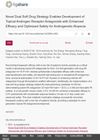
In a hair-growth mouse model, this study reported that the novel AR antagonist candidate 39, derived from structural optimization of 14-P1, achieved similar efficacy to pyrilutamide with faster response and maintained safety, demonstrating potent AR antagonism and favorable pharmacokinetics with lower systemic toxicity risk.
 25 citations
,
June 2019 in “Endocrine Related Cancer”
25 citations
,
June 2019 in “Endocrine Related Cancer” This review discusses the structure and function of steroid nuclear receptors, particularly focusing on androgen receptor dysregulation in prostate cancer and androgen insensitivity syndromes, without reporting new experimental results.
 2 citations
,
July 2005 in “International Joint Conference on Artificial Intelligence”
2 citations
,
July 2005 in “International Joint Conference on Artificial Intelligence” This study suggests that EREG, released from ORS cells, may promote hair growth by activating specific receptors and modulating ROS generation, offering a potential new treatment for hair loss.
 53 citations
,
June 1993 in “Proceedings of the National Academy of Sciences of the United States of America”
53 citations
,
June 1993 in “Proceedings of the National Academy of Sciences of the United States of America” This study identified LY191704 as a specific noncompetitive inhibitor of human 5 alpha-reductase type 1, which may be useful in treating endocrine disorders related to DHT overproduction.
16 citations
,
April 2000 in “Journal of Investigative Dermatology” The study reports that the AVET system showed higher efficiency in transfecting cultured human keratinocytes compared to SuperFect and PrimeFector, with AVET reaching levels of enzyme activity similar to normal cells in keratinocytes from lamellar ichthyosis patients.
 January 2025 in “ACS Applied Materials & Interfaces”
 In this study, a nanoparticle system codelivering diphenylcyclopropenone and rapamycin successfully induced immune tolerance and promoted hair regrowth in a mouse model of alopecia areata, offering a promising new therapeutic strategy for this autoimmune condition.
September 2025 in “Asian journal of pediatric dermatology.” This case study reports the successful use of abrocitinib for treating severe alopecia areata in a 14-year-old patient, demonstrating significant hair regrowth and suggesting the need for sustained JAK1 inhibition to prevent relapse.
 April 2017 in “Journal of Investigative Dermatology”
 This study found that retinoic acid and a retinol complex formulation showed different permeation and compound localization in a skin equivalent model, with unique lipid changes observed with only the retinol formulation.
October 1984 in “Immunology Today” September 2017 in “The journal of investigative dermatology/Journal of investigative dermatology” This study using a genetic mouse model found that S. aureus-driven dysbiosis sustains inflammatory skin side effects from EGFR inhibitors, suggesting prophylactic antibiotic treatment may reduce rash severity without fixing barrier defects.
July 2026 in “Frontiers in Immunology” In this case report, a 28-year-old male with severe atopic dermatitis, prurigo nodularis-like lesions, and alopecia areata showed rapid improvements in skin and hair following treatment with the JAK1 inhibitor, ivarmacitinib, suggesting its potential benefit for complex AD phenotypes with immune-mediated hair loss.