
This review compiles existing information on the pathogenesis of androgenetic alopecia, highlighting its genetic, hormonal, and environmental factors, but reports no new clinical findings.
4 citations
,
July 1979 in “Journal of the American Academy of Dermatology” This study describes "alarm reaction" histologic changes in pilosebaceous structures, including regression of hair matrix and alterations in sebaceous glands, affecting follicular and sebaceous gland morphology.
 April 2026 in “Zenodo (CERN European Organization for Nuclear Research)”
 This study introduces a hypothesis that elevated DHT at puberty may cause chronic thermal stress in specific scalp areas, potentially explaining Androgenetic Alopecia characteristics and guiding future research.
67 citations
,
August 2005 in “Journal of Investigative Dermatology Symposium Proceedings” This study found that in vitro, beard dermal papilla cells stimulated keratinocyte proliferation via androgen-dependent growth factors, while androgenetic alopecia cells released TGF-β1, inhibiting keratinocyte growth.
25 citations
,
October 1975 in “Journal of Cutaneous Pathology” This study found that in alopecia areata, hair bulbs are blocked in an early growth stage due to impaired metabolic function in the surrounding connective tissue, hindering hair growth.
 49 citations
,
September 1986 in “British Journal of Dermatology”
49 citations
,
September 1986 in “British Journal of Dermatology” Hidradenitis suppurativa improves with antiandrogen therapy.
In this study, researchers found that androgen receptor expression and AKR1C-mediated androgen inactivation, including AKR1C4, are prominent in scalp sebaceous glands, with AKR1C expression decreasing with age and differing by sex, suggesting these changes may impact hair follicle health as people age.
 September 2024 in “Medicine theory and practice”
 In a clinical case study, researchers identified adrenocortical adenoma as the cause of hyperandrogenism syndrome in a preschool-aged girl, following a comprehensive diagnostic process and successful surgical intervention to remove the tumor, leading to positive clinical improvements.
25 citations
,
October 1984 in “Journal of Clinical Investigation” This study demonstrated that human sebaceous glands can be successfully transplanted onto nude mice, where androgen stimulation increases gland volume, cell size, and labeling index.
May 2022 in “British Journal of Dermatology” In this case report, a 35-month-old girl with loose anagen hair syndrome experienced spontaneous resolution and hair regrowth within 24 months.
 35 citations
,
October 2006 in “Journal of Dermatology”
35 citations
,
October 2006 in “Journal of Dermatology” This study outlines the clinical features of androgenetic alopecia in Korean adolescents, finding milder symptoms compared to adults and a high occurrence of family history, with normal hormone levels.
 September 2017 in “Journal of Investigative Dermatology”
 This study suggests that the newly characterized sebocytic progenitor cells HSGC1 and HSGC2 from different skin sites may have proliferative and differentiating potential in response to DHT.
22 citations
,
December 1991 in “PubMed” 48 citations
,
July 1993 in “Archives of Dermatological Research” Merkel cells are abundant in facial vellus hair follicles, especially during the anagen phase.
 85 citations
,
February 1989 in “Journal of The American Academy of Dermatology”
85 citations
,
February 1989 in “Journal of The American Academy of Dermatology” This case report describes a newly identified condition called loose anagen hair of childhood, characterized by easily pluckable hair in two young boys, with variable duration and no scalp inflammation or scarring.
 107 citations
,
September 2002 in “Journal of Investigative Dermatology”
107 citations
,
September 2002 in “Journal of Investigative Dermatology” This study identified a distinct "exogen" phase in the hair cycle during which hair shedding occurs, primarily coupled with the anagen phase, rather than as part of the telogen phase.
 April 2026 in “Inflammation and Regeneration”
 This study found that androgen inactivation pathways in scalp sebaceous glands change with age, specifically noting that AKR1C expression, including AKR1C4 previously thought liver-specific, declines with age and is sex dependent, which could impact hair follicle health during aging.
 6 citations
,
July 2017 in “Case Reports”
6 citations
,
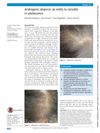
July 2017 in “Case Reports” This case study describes a 15-year-old girl with progressive hair thinning and reduced hair density at the frontal scalp, with a family history of alopecia.
This study found that estradiol affects hair growth in mice by regulating the transition of hair follicles from rest to growth phases via the estrogen receptor pathway in the dermal papilla.
 122 citations
,
November 2010 in “Journal of Dermatological Science”
122 citations
,
November 2010 in “Journal of Dermatological Science” This study found that increased expression of type II 5α-reductase, androgen receptors, and Hic-5/ARA55 in dermal papilla cells upregulates androgen sensitivity, playing a key role in androgenetic alopecia pathogenesis.
January 1996 in “Springer eBooks”  1 citations
,
February 2022 in “Clinical, Cosmetic and Investigational Dermatology”
1 citations
,
February 2022 in “Clinical, Cosmetic and Investigational Dermatology” In this study, researchers found that the thyroxine receptor agonist TDM10842 accelerated the onset of anagen, a hair growth phase, in C3H mice, potentially through activation of the Wnt/beta-catenin and Hedgehog pathways, with Pclaf playing a key role in this process.
 November 2021 in “CRC Press eBooks”
 This article reviews anagen effluvium, a type of non-scarring alopecia that affects both men and women, often induced by chemotherapy or radiation, and discusses diagnostic approaches but reports no new clinical findings.
 June 2023 in “Zenodo (CERN European Organization for Nuclear Research)”
 In this abstract, the issue of "microinflammation" in hair follicles, central to androgenetic alopecia, is described as involving an inflammatory process with Langerhans cells and keratinocytes presenting antigens to T lymphocytes, leading to an immune response with macrophages or natural killer cells destroying these antigens.
January 2016 in “프로그램북(구 초록집)” This review discusses various hormonal and neuropeptide influences on hair growth and reports no new clinical results; it highlights complexity and suggests areas for future exploration.
September 2004 in “Kitasato medical journal” This study found that a high dose of epidermal growth factor induced hair loss in sheep by causing apoptosis in anagen hair and transitioning the hair cycle to catagen.
June 2025 in “V F Snegirev Archives of Obstetrics and Gynecology” In this case study, a six-year-old girl was diagnosed with isolated adrenarche, linked to premature adrenal maturation, with increased dehydroepiandrosterone sulfate and axillary and pubic hair growth, and will require long-term monitoring due to increased risks of conditions like polycystic ovary syndrome and cardiovascular diseases.
 January 2021 in “Case Reports”
 This case study reports a rare instance of mucinous cystadenoma causing severe virilization in a postmenopausal woman, highlighting a possible link with rapidly progressive hyperandrogenism.
This article reviews the hormonal pathogenesis of acne vulgaris and androgenetic alopecia, emphasizing various hormonal factors beyond androgens, but reports no new clinical findings.
March 2016 in “Experimental Dermatology” This study reported that EGFR activation leads to suppression of Stathmin, which may promote synchronized entry into catagen in hair follicles, highlighting potential mechanisms involving EGFR in hair cycle transitions.