 January 2023 in “Acta medica Philippina”
 This study found that ethyl acetate extract of Carica papaya flowers exhibited the highest antioxidant and 5α-reductase inhibitory activities, suggesting potential hair growth-promoting properties.
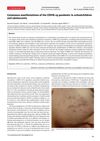 January 2023 in “Acta dermatovenerologica Alpina, Pannonica et Adriatica (Tiskana izd.)”
 This review details skin conditions in children and adolescents related to the SARS-CoV-2 pandemic, emphasizing mask-related acne and various cutaneous manifestations linked to infection and vaccination, with most being mild or nonspecific.
 September 2022 in “Acta Medica”
 This study reported that new-onset skin conditions such as acne vulgaris emerged in children during the Covid-19 pandemic, potentially linked to mask use and the psychosocial stress of the pandemic.
 January 2022 in “Acta dermatovenerologica Alpina, Pannonica et Adriatica (Tiskana izd.)”
 This article presents an overview of uncombable hair syndrome, emphasizing its clinical and molecular characteristics and noting systemic manifestations such as neuropsychiatric, ophthalmic, and cardiopulmonary issues.
 August 2021 in “Acta Haematologica Polonica”
 This paper discusses the diagnostic challenges and treatment options for folliculotropic mycosis fungoides, emphasizing the differing prognoses between its indolent and aggressive subtypes and reporting no new clinical results.
 August 2021 in “Acta medica Philippina”
 This case study highlights how trichoscopy helped differentiate between diffuse alopecia areata and trichotillomania in an 11-year-old girl, demonstrating its importance in distinguishing hair disorders with similar presentations.
August 2021 in “Acta Medica Philippina” This study found that complementary and alternative medicine use is common among Filipino adults with psoriasis vulgaris and is linked to poorer quality of life despite adjusting for confounding variables.
June 2020 in “ACTA MEDICA IRANICA” This case report describes a postmenopausal woman with virilization and an ovarian steroid cell tumor, highlighting the rarity and diagnostic importance of such tumors in this demographic.
 January 2020 in “Acta dermato-venereologica”
 People with certain hair disorders may also have missing permanent teeth.
 July 2019 in “Acta horticulturae”
 This study suggests that horticultural therapy may help cancer patients identify their experience of hair loss and regrowth with personal growth and emotional healing.
June 2019 in “Acta Dermato Venereologica” January 2018 in “Acta dermato-venereologica”  January 2017 in “Acta dermato-venereologica”
 The congress showed that psychological therapy can help skin condition patients, social media affects acne stigma, education improves atopic dermatitis, and patient satisfaction in dermatology is high, especially with good doctor engagement.
April 2014 in “Acta Medica Colombiana” This study presents a 63-year-old man with uncontrolled hypertension and facial hair who was diagnosed with adrenocortical adenoma, and whose blood pressure improved post-surgery.
January 1991 in “Acta Dermato Venereologica” This article describes a new method for staining hair fibers that visualizes keratin filaments without the need for OsO4 fixation or sulfur bond breakage, but it provides no new experimental results beyond the method itself.
December 2021 in “Acta dermato-venereologica” This study developed a deep learning framework and quantitative model that accurately predict basic and specific classification in male androgenetic alopecia by analyzing trichoscopic images.
June 2020 in “Acta medica Philippina” This research review suggests that topical adenosine could improve hair thickness and user satisfaction in adults with androgenetic alopecia, with minimal side effects reported, but concludes that further studies are necessary to confirm these findings.
 January 2019 in “Acta dermatovenerologica Alpina, Pannonica et Adriatica (Tiskana izd.)”
 This study found that the treatment group experienced a higher average increase in hair counts than the placebo group, but the difference was not statistically significant.
 March 2018 in “International Pharmacy Acta”
 This study concluded that niosomes could effectively serve as stable carriers for topical aminexil delivery, showing promising stability and a slow, biphasic release profile in laboratory settings.
November 1986 in “PubMed” In this study, women with male pattern alopecia had significantly lower serum sex hormone binding globulin levels compared to healthy controls, while testosterone levels remained similar.
30 citations
,
March 1980 in “European Journal of Endocrinology” This study suggests that genetic factors significantly influence adrenal androgen levels and the progression of puberty, with adrenal cortex maturation appearing independent of the hypothalamic-pituitary-gonadal axis.
7 citations
,
December 1971 in “European Journal of Endocrinology” Human hair follicles can process steroid hormones like DHEA.
 1 citations
,
October 2021 in “PubMed”
1 citations
,
October 2021 in “PubMed” This case report describes a 43-year-old woman with scarring burn alopecia treated with tissue expansion and local flap reconstruction, who experienced reversible acute hair loss (Telogen Effluvium) after the procedure.

This review of SVF treatment for androgenetic alopecia found a significant increase in hair density across studies with no serious adverse events, but calls for standardized protocols and further research.
81 citations
,
December 2007 in “Acta materialia” This study conducted in situ tensile loading experiments with atomic force microscopy to observe how conditioning treatments affect the tensile response of virgin, chemically damaged, and mechanically damaged Caucasian hair.
 42 citations
,
April 2008 in “Acta materialia”
42 citations
,
April 2008 in “Acta materialia” This study investigated the tensile response and morphological changes of different ethnic hair types using AFM, showing variations between virgin, chemically damaged, and conditioner-treated Caucasian hair under different conditions.
 18 citations
,
August 1985 in “European journal of endocrinology”
18 citations
,
August 1985 in “European journal of endocrinology” This study found that high-dose cyproterone acetate was effective for treating hirsutism, but 33% of patients felt their condition worsened on low-dose maintenance therapy, despite no significant change in objective measures of hair growth.
 October 2023 in “Acta Medica Nicomedia”
 In this study, hirsutism negatively affected quality of life in Turkish patients, as measured by the Dermatology Life Quality Index, although no significant relationship was observed between the severity of hirsutism and quality of life scores.
9 citations
,
December 1987 in “European journal of endocrinology” In this study, 12 months of cyproterone acetate and ethinyl oestradiol treatment significantly reduced hair growth rate and certain hormone levels in hirsute women, though hair density and prolactin levels remained unchanged.
8 citations
,
April 1991 in “European journal of endocrinology” This study found that cyproterone acetate significantly reduced both serum 3α-AdiolG levels and hirsutism scores in women with idiopathic hirsutism, PCOS, or 21-hydroxylase deficiency, suggesting its effectiveness in treating excessive hair growth.