 December 2023 in “bioRxiv (Cold Spring Harbor Laboratory)”
 This study found that AP-2α and AP-2β transcription factors are crucial for maintaining adult skin homeostasis, with their inactivation in keratinocytes leading to impaired differentiation, hair abnormalities, and inflammation, highlighting their key regulatory roles.
October 1993 in “The Journal of Clinical Pharmacology” 6 citations
,
November 2022 in “Antioxidants” In this study, sandalore was found to activate OR2AT4, which inhibits senescent cell traits and restores proliferation in human keratinocytes, suggesting potential anti-aging applications.
 1 citations
,
August 2023 in “JAMA Dermatology”
1 citations
,
August 2023 in “JAMA Dermatology” In this study, baricitinib 4 mg led to greater scalp, eyebrow, and eyelash hair regrowth in severe alopecia areata patients than baricitinib 2 mg at weeks 36 and 52.
 1 citations
,
March 2023 in “Skin”
1 citations
,
March 2023 in “Skin” This study describes the patterns of clinical response in patients with severe alopecia areata treated with baricitinib over 52 weeks, based on integrated data from two Phase 3 trials.
8 citations
,
January 2017 in “Journal of Biological Chemistry” This study found that astrotactin-2 undergoes unique intramembrane proteolysis during maturation, revealing specific transmembrane topologies and substrate sequence requirements for cleavage.
75 citations
,
September 2016 in “EMBO journal” This study found that PRC2 plays a crucial role in maintaining intestinal homeostasis by supporting progenitor cell proliferation and limiting secretory lineage differentiation.
5 citations
,
October 2022 in “British Journal of Dermatology” This study reports that two phase III trials demonstrated the effectiveness of the oral Janus kinase inhibitor baricitinib at 2 mg or 4 mg daily for treating severe alopecia areata in adults, marking a potential advance in managing this condition.
 1 citations
,
September 2023 in “Dermatology and Therapy”
1 citations
,
September 2023 in “Dermatology and Therapy” In this phase 3 trial analysis, baricitinib improved scalp hair growth in adults with severe alopecia areata, with a faster and higher response in those receiving 4 mg compared to 2 mg, but response varied with severity at baseline and continued through week 52.
2 citations
,
September 2023 in “Journal of the American Academy of Dermatology” CTP-543 effectively promotes hair regrowth in adults with moderate to severe alopecia areata.
 4 citations
,
September 2024 in “BMC Cancer”
4 citations
,
September 2024 in “BMC Cancer” In this prospective phase II clinical trial, researchers are investigating whether adding dutasteride to combined androgen blockade can improve the response rate and clinical outcomes for patients with androgen receptor-positive recurrent or metastatic salivary duct carcinoma.
July 2024 in “Journal of Investigative Dermatology” Targeting TCR-Vβ2 in cutaneous T cell lymphoma shows promise for safer, more specific treatment.
This study found that super-enhancers in squamous cell carcinoma stem cells are distinctly different from those in normal skin stem cells, with ETS2 playing a crucial role in promoting tumor growth.
 7 citations
,
March 2018 in “Asian-Australasian journal of animal sciences”
7 citations
,
March 2018 in “Asian-Australasian journal of animal sciences” This study observed that the OCIAD2 and DCN genes in Liaoning cashmere goats have opposite effects on hair growth by interacting with the TGF-β signaling pathway, influencing follicle morphogenesis and periodic changes.
 70 citations
,
June 2017 in “Nature Communications”
70 citations
,
June 2017 in “Nature Communications” This study introduced a new technique, 2Phatal, enabling precise apoptotic cell ablation in living animals, revealing unique cell-type differences in apoptosis-related dynamics.
 August 2012 in “Nature Cell Biology”
 In this study, researchers found that β-catenin directly promotes TERT expression in stem and cancer cells by interacting with the Tert promoter, illustrating a mechanistic link between tumorigenesis and pluripotency.
 January 2024 in “The journal of investigative dermatology/Journal of investigative dermatology”
 In this study, researchers found that AP-2α and AP-2β are critical for maintaining epidermal homeostasis in adult skin, with their combined loss leading to severe skin and hair abnormalities and early skin inflammation due to impaired keratinocyte differentiation.
 April 2023 in “The journal of investigative dermatology/Journal of investigative dermatology”
 This study found that treatment with ritlecitinib led to significant scalp hair regrowth in patients with alopecia areata at Weeks 24 and 48, with higher response rates observed in those receiving 50 mg compared to 30 mg doses.
 39 citations
,
March 2008 in “Journal of biological chemistry/The Journal of biological chemistry”
39 citations
,
March 2008 in “Journal of biological chemistry/The Journal of biological chemistry” This study found that GLI2 plays a key role in activating follistatin, an activin/BMP antagonist, in response to hedgehog signaling in human epidermal cells, with implications for hair follicle development and basal cell carcinoma.
 9 citations
,
November 2019 in “Scientific reports”
9 citations
,
November 2019 in “Scientific reports” This study isolated a bioactive peptide from Trapa japonica fruit and found that it may protect human dermal papilla cells from DHT-induced stress, suggesting potential for biomedical applications.
 4 citations
,
September 2022 in “Journal of The American Academy of Dermatology”
4 citations
,
September 2022 in “Journal of The American Academy of Dermatology” This study examined phase 3 clinical trial data and found that baricitinib improves hair regrowth in adults with alopecia areata and significant scalp hair loss, with the response varying based on the severity of hair loss at the start of treatment.
 1 citations
,
July 2022 in “British Journal of Dermatology”
1 citations
,
July 2022 in “British Journal of Dermatology” Baricitinib was effective in treating hair loss in adults with alopecia areata according to patient feedback.
 184 citations
,
February 2015 in “EBioMedicine”
184 citations
,
February 2015 in “EBioMedicine” This study observed that baricitinib treatment led to significant improvement in a patient's alopecia areata symptoms and suggests further clinical trials to explore its potential as a treatment.
171 citations
,
June 2004 in “Journal of Investigative Dermatology” GLI2 activates GLI1, promoting skin tumor growth and hair development.
 November 2021 in “Plastic and Reconstructive Surgery”
 This supplement reviews advancements in the science of aging, including facial age simulation and stem cell applications for hair restoration, and reports no new clinical results.
 1 citations
,
September 2022 in “Journal of The American Academy of Dermatology”
1 citations
,
September 2022 in “Journal of The American Academy of Dermatology” In this analysis of two trials, baricitinib showed eyebrow and eyelash regrowth in severe alopecia areata patients with greater than 20% scalp hair loss at Week 36, compared to placebo.
October 2014 in “Dialnet (Universidad de la Rioja)” This research concluded that Snail2's absence in myeloid progenitors promotes tumor progression in mice, and specific zinc fingers are crucial for Snail1 and Snail2's roles in establishing epithelial-to-mesenchymal transition.
33 citations
,
May 2017 in “Journal of Clinical Oncology” This phase I study reported that ETC-159, targeting Wnt signalling, showed tolerable safety profiles at doses that inhibit its pathway, though bone turnover markers increased, warranting early and regular monitoring. No tumor responses were observed, but two patients achieved stable disease for several cycles.
 November 2025 in “SKIN The Journal of Cutaneous Medicine”
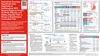
 This phase 3 trial found that over 50% of adolescents with severe alopecia areata achieved successful hair regrowth after 52 weeks on baricitinib 4-mg, with no new safety concerns reported compared to existing safety profiles.
September 2002 in “Oncology Times” This study presented at the ASCO Annual Meeting reported that the epidermal growth factor receptor antibody ABX-EGF showed preliminary efficacy in renal cell cancer patients, with tolerable side effects, while bortezomib demonstrated clinical benefit in a significant proportion of multiple myeloma patients.