 1 citations
,
October 2023 in “Romanian Journal of Morphology and Embryology”
1 citations
,
October 2023 in “Romanian Journal of Morphology and Embryology” This review analyzed 109 articles to classify skin lesions associated with COVID-19 and their frequency during the disease, but found no conclusive evidence on long-term persistence of specific types due to rarity.
 1 citations
,
April 2023 in “Journal of the Hellenic Veterinary Medical Society”
1 citations
,
April 2023 in “Journal of the Hellenic Veterinary Medical Society” This study investigated pododermatitis in 300 dogs and found West Highland White Terriers, Shar-Peis, and French Bulldogs were predominantly affected by allergic pododermatitis. It also observed that interdigital skin was primarily involved in cases of atopic dermatitis and pododemodicosis.
 1 citations
,
August 2018 in “bioRxiv (Cold Spring Harbor Laboratory)”
1 citations
,
August 2018 in “bioRxiv (Cold Spring Harbor Laboratory)” This study reports that a novel gain-of-function mutation in TMEM173, combined with polymorphisms in TMEM173 and IFIH1, results in a distinct clinical phenotype with features of SAVI, including alopecia and photosensitivity.
 1 citations
,
July 2018 in “Elsevier eBooks”
1 citations
,
July 2018 in “Elsevier eBooks” This review discusses the basic principles of hair pathology and findings in common types of alopecia but reports no new research results.
 1 citations
,
September 2015 in “Clinics in Dermatology”
1 citations
,
September 2015 in “Clinics in Dermatology” This article offers a question-by-question guide to assist clinicians in diagnosing hair shaft disorders, presenting no new clinical results.
 1 citations
,
January 2015 in “Springer eBooks”
1 citations
,
January 2015 in “Springer eBooks” Chemotherapy can cause skin side effects that affect patients' lives, but they can be managed to avoid interrupting cancer treatment.
 1 citations
,
January 2013 in “Elsevier eBooks”
1 citations
,
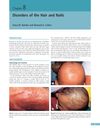
January 2013 in “Elsevier eBooks” The document reviews various hair and nail disorders, their causes, and treatments, emphasizing the need for proper diagnosis and the link between nail changes and systemic diseases.
 1 citations
,
December 2012 in “Journal of the European Academy of Dermatology and Venereology”
1 citations
,
December 2012 in “Journal of the European Academy of Dermatology and Venereology” This letter to the editor reports that sentinel lymph node status is the strongest independent predictor for both disease-free and overall survival in patients with thick melanoma.
 1 citations
,
June 2010 in “Expert Review of Dermatology”
1 citations
,
June 2010 in “Expert Review of Dermatology” Covers common skin issues in kids, their diagnosis, treatment, and need for specialist care.
 1 citations
,
January 2010 in “Elsevier eBooks”
1 citations
,
January 2010 in “Elsevier eBooks” Any drug can cause skin reactions, but antibiotics, NSAIDs, and psychotropic drugs are more common, with some reactions being life-threatening.
 1 citations
,
July 1973 in “British Journal of Dermatology”
1 citations
,
July 1973 in “British Journal of Dermatology” The document concludes that secondary syphilis cases are increasing and often misdiagnosed, pityriasis rubra pilaris can be distinguished from psoriasis by skin cell features, and different skin layers produce specific components during skin repair.
 April 2026 in “bioRxiv (Cold Spring Harbor Laboratory)”
 This study found that human skin melanocytes with low mutation burdens are smaller, less dendritic, and exhibit stem-like features, often residing in UV-protected hair follicles, suggesting their role in replenishing sun-damaged epidermis.
 April 2026 in “Portuguese Journal of Dermatology and Venereology”
 This review summarizes the various skin manifestations linked to COVID-19 infection, vaccination, and personal protective equipment, highlighting their clinical importance and discussing psychological stress and social isolation as additional dermatologic factors.
 February 2026 in “Frontiers in Medicine”
 This study reported that trichoscopy can identify specific hair shaft abnormalities linked to increased serological activity, highlighting its use as a valuable non-invasive diagnostic tool in pediatric dermatology for neonates with ECS.

In this open uncontrolled study on microneedling as an adjuvant therapy for frontal fibrosing alopecia, researchers observed stable frontotemporal recession measurements while patients reported improvements in quality of life and a reduction in inflammatory activity parameters.
 January 2025 in “Dermatology Reports”
 This case report describes a 61-year-old Italian man with a rare, localized variant of junctional epidermolysis bullosa linked to the R795X mutation in the COL17A1 gene, highlighting the importance of precise diagnosis for effective management of rare genetic disorders.
 October 2024 in “Irish Journal of Medical Science (1971 -)”
 Continuous glucose monitoring and GLP-1 receptor agonists improve diabetes management, but personalized care and education are crucial.
 May 2024 in “International Journal of Advanced Multidisciplinary Research and Studies”
 In this cross-sectional study of COVID-19 positive patients in Bangladesh, researchers found that maculo-papular eruptions were the most common dermatological manifestation, with other prevalent conditions including chilblain-like eruptions, urticarial lesions, and petechiae/purpura.
 March 2024 in “Sudan Journal of Medical Sciences”
 In this study, researchers found that half of the doctors at Khartoum dermatology and venereology teaching hospital had poor knowledge about COVID-19 skin manifestations, highlighting the need for better education and clear protocols on this topic.
 September 2022 in “Dermatology and therapy”
 This review summarizes current evidence on the use of contact immunotherapy, excluding alopecia areata, for various skin diseases, discussing its safety, efficacy, and the underlying mechanisms as reported from studies in the PubMed database.
 January 2022 in “Dermatology Review”
 This study found that patients with chronic kidney disease-associated pruritus had elevated serum levels of interleukin 31, suggesting a possible role of this cytokine in the condition.
This review found an increased prevalence of common skin disorders, such as infectious and inflammatory conditions, in patients with Down syndrome and highlighted the need for improved screening and management guidelines.
 September 2021 in “Selçuk Üniversitesi Tıp Fakültesi dergisi”
 This abstract discusses the dermatological symptoms associated with hepatitis C virus infections but reports no new research findings.
 September 2020 in “Annals of the National Academy of Medical Sciences. India”
 This article discusses the impact of COVID-19 on skin health, highlighting various cutaneous manifestations and the need for dermatologists to adapt their practices during the pandemic, but it reports no new results.
 January 2020 in “Medical journal of clinical trials & case studies”
 This report details a case of dystrophic epidermolysis bullosa in a 37-year-old male with a recessive mutation in the CLO7A1 gene, affecting type VII collagen.
 November 2019 in “Harper's Textbook of Pediatric Dermatology”
 This review discusses potential causes of alopecia and hair overgrowth in pediatric patients, detailing diagnostic techniques and treatments, but presents no new research findings.

In this case report, a patient on low-dose sorafenib for hepatocellular carcinoma developed a rare and severe facial acneiform eruption without other skin side effects, which improved only minimally with topical treatment.
 January 2018 in “Skin appendage disorders”
 The document focused on hair disorders, especially alopecia, and discussed treatments and impacts on quality of life.
 July 2016 in “American Journal of Dermatopathology”
 The meeting showcased rare skin disease cases, highlighting the need for accurate diagnosis and treatment.

This chapter reviews various skin disorders classified as Mendelian disorders of cornification and reports no new clinical findings, highlighting the complexity of genetics involved in inherited ichthyoses.