11 citations
,
May 1985 in “Archives of Dermatology” This study found that calcitriol-resistant rickets is associated with alopecia in children and should be considered in the differential diagnosis of hair loss.
 13 citations
,
June 2010 in “Journal of The American Academy of Dermatology”
13 citations
,
June 2010 in “Journal of The American Academy of Dermatology” This study reports previously unreported nail features in Cronkhite-Canada syndrome, specifically recurrent onychomadesis of all 20 nails linked to systemic illness.
 29 citations
,
October 2012 in “Anais Brasileiros De Dermatologia”
29 citations
,
October 2012 in “Anais Brasileiros De Dermatologia” This review presents an objective analysis of female androgenetic alopecia, discussing clinical and dermoscopic examination approaches but reports no new clinical findings.
 November 2022 in “CARDIOMETRY”
 This article discusses the potential benefits of GcMAF and oral MAF, developed by "Saisei Mirai", for cancer and other conditions, but reports no new clinical results.
 40 citations
,
March 2019 in “Nature Communications”
40 citations
,
March 2019 in “Nature Communications” This study found that deleting Stim1 and Stim2 in mature T regulatory cells disrupts Ca 2+ signaling, preventing their differentiation and leading to severe autoimmune disorders in mice.
March 2026 in “Drug Testing and Analysis” This study observed that the degradation product PTeCA significantly increased in hair treated with oxidative cosmetics, suggesting it could be a reliable marker for detecting such treatments, with a proposed PTCA cut-off value using PTeCA as the gold standard.
 November 2025 in “Frontiers in Medicine”
 In this prospective cohort, baseline severity, disease activity, and relapse history were identified as key factors influencing response and recurrence in alopecia areata, suggesting that implementing standardized assessments could enhance risk stratification and personalized care approaches.
 June 2024 in “British Journal of Dermatology”
 This study observed that Black women with central centrifugal cicatricial alopecia had a higher prevalence of uterine leiomyomas compared to those with lichen planopilaris, suggesting a potential association between the conditions.
29 citations
,
June 2016 in “Experimental Dermatology” This study provides suggestive evidence that duplications in the MCHR2 gene may be involved in the pathogenesis of alopecia areata.
 32 citations
,
June 2019 in “Frontiers in Endocrinology”
32 citations
,
June 2019 in “Frontiers in Endocrinology” This review discusses the overlapping clinical features and diagnostic challenges of non-classic adrenal hyperplasia and polycystic ovary syndrome without presenting original research findings.
 1 citations
,
June 2015 in “Australasian Journal of Dermatology”
1 citations
,
June 2015 in “Australasian Journal of Dermatology” This case report describes a patient with Cronkhite–Canada syndrome, where immunosuppression and nutritional support led to disease remission.
6 citations
,
May 2023 in “Molecules” In this study, dry powder inhalers containing Cepharanthine were administered to rats with acute lung injury, significantly reducing pulmonary edema, hemorrhage, and inflammatory markers, suggesting its potential as an effective anti-inflammatory treatment when inhaled directly into the lungs.
 22 citations
,
June 2004 in “Journal of The European Academy of Dermatology and Venereology”
22 citations
,
June 2004 in “Journal of The European Academy of Dermatology and Venereology” This case report identifies a novel association between Graham Little–Piccardi–Lassueur syndrome and complete androgen insensitivity syndrome, suggesting the influence of androgens in the alopecias accompanying the former may be limited.
8 citations
,
July 2003 in “Annals of the Rheumatic Diseases” This case study describes the successful treatment of a 13-year-old girl with relapsing polychondritis and autoimmune symptoms using co-trimoxazole, highlighting its potential role in managing autoimmune diseases.
 April 2025 in “BMC Urology”
 This case report highlighted a rare occurrence of both adrenocortical carcinoma and uric acid kidney stones in a 5-year-old boy, with hormonal levels and clinical symptoms returning to normal after treatment and no recurrence over four years, emphasizing comprehensive endocrine evaluations in pediatric ACC management.
1 citations
,
April 2020 in “Journal of the Endocrine Society” This case report describes a 19-year-old patient with microsatellite stable adrenocortical carcinoma who showed a promising 36-month response to pembrolizumab, including structural and biochemical improvements, with primary adrenal insufficiency as a major side effect.
February 2016 in “Journal of Allergy and Clinical Immunology” This report highlights a case of disseminated and recurrent infundibulofolliculitis in a 45-year-old African American male and underscores the importance of performing a skin biopsy for diagnosis.
 87 citations
,
December 2016 in “British journal of dermatology/British journal of dermatology, Supplement”
87 citations
,
December 2016 in “British journal of dermatology/British journal of dermatology, Supplement” This study describes and characterizes four cases of alopecia areata induced by immune checkpoint inhibitor therapy in cancer patients, highlighting the importance of recognizing and managing these hair-related adverse events.
 62 citations
,
March 2012 in “Journal of the European Academy of Dermatology and Venereology”
62 citations
,
March 2012 in “Journal of the European Academy of Dermatology and Venereology” This study found that dermoscopy-guided scalp biopsies provided a definitive pathological diagnosis in 95% of patients with cicatricial alopecia.
138 citations
,
March 2021 in “Journal of the American Academy of Dermatology” This study found that treatment with ritlecitinib or brepocitinib was effective in improving scalp hair loss for patients with alopecia areata over 24 weeks compared to placebo.
1 citations
,
September 2023 in “Journal of the American Academy of Dermatology” In this study, patients with alopecia areata who didn't initially respond to ritlecitinib at Week 24 showed improved response rates by Week 48, with up to 34% achieving better hair regrowth outcomes.
November 2022 in “Frontiers in Medicine” This review suggests that platelet-rich plasma may be a promising treatment for immune-mediated alopecias, including alopecia areata and primary cicatricial alopecias, but definitive recommendations are limited due to insufficient high-quality evidence.
February 2025 in “Gastroenterology” Corticosteroids improved symptoms in a man with Cronkhite-Canada Syndrome.
 4 citations
,
November 2021 in “Biomedicines”
4 citations
,
November 2021 in “Biomedicines” This review discusses the challenges in diagnosing primary cicatricial alopecias and explores how improved communication and digital pathology could enhance diagnosis, but it reports no new clinical results.
 1 citations
,
April 2022 in “The Journal of Family Practice”
1 citations
,
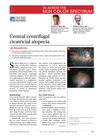
April 2022 in “The Journal of Family Practice” This report describes early and late stages of central centrifugal cicatricial alopecia in two Black women, highlighting progression from a small to a large central patch of hair loss.
1 citations
,
May 2025 in “Journal of the European Academy of Dermatology and Venereology” This review by Aceituno et al. found that both baricitinib and ritlecitinib demonstrate strong efficacy for severe alopecia areata, with meaningful hair regrowth by Week 24, but notes limitations like differing trial sizes and potential effect size overestimations.
 2 citations
,
August 2023 in “Human Reproduction”
2 citations
,
August 2023 in “Human Reproduction” This update of the 2023 International Guideline for PCOS offers refined diagnostic criteria and management recommendations, emphasizing evidence-based care, but notes that research quality remains low to moderate.
 32 citations
,
January 2012 in “Clinical & Developmental Immunology”
32 citations
,
January 2012 in “Clinical & Developmental Immunology” In this study, rheumatoid arthritis patients showed no changes in the number of circulating follicular helper T cells, but these cells had increased CD200 expression, implicating them in disease pathogenesis and suggesting CD200/CD200R as a potential therapeutic target.
September 2025 in “Radboud University Press eBooks” This study investigated AHR signaling's role in skin biology and reported that novel AHR ligands may help restore keratinocyte function and reduce inflammation in skin diseases, suggesting their potential as therapeutic agents.
November 2025 in “SKIN The Journal of Cutaneous Medicine” This study observed that adolescents with alopecia areata receiving ritlecitinib 50 mg daily showed notable hair regrowth over three years, as seen in both clinician- and patient-reported outcomes. However, the decreased number of participants at later stages limits the findings.