 2 citations
,
July 2014 in “Our Dermatology Online”
2 citations
,
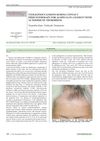
July 2014 in “Our Dermatology Online” This case report documents the development of vitiligo-like lesions in a patient with autoimmune thyroiditis following the use of topical squaric acid dibutylester for alopecia.
March 1998 in “JEADV. Journal of the European Academy of Dermatology and Venereology/Journal of the European Academy of Dermatology and Venereology” This study reported that acquired ichthyosis and hair changes in a 70-year-old woman with leiomyosarcoma resolved after the surgical removal of the tumor.
 1 citations
,
November 2017 in “The journal of investigative dermatology/Journal of investigative dermatology”
1 citations
,
November 2017 in “The journal of investigative dermatology/Journal of investigative dermatology” In this study, Makarova et al. found that topical vitamin D3 significantly delayed basal cell carcinoma development in UVR-exposed, BCC-prone mice, while oral vitamin D3 supplements did not prevent carcinogenesis, suggesting a potential role of UV-induced vitamin D3 in inhibiting tumor growth.
February 2026 in “Clinical Cosmetic and Investigational Dermatology” In this case report, a 67-year-old Thai woman exhibited isolated cheilitis due to actinic prurigo—an unusual presentation in Asian patients—successfully treated with topical hydrocortisone and sun protection, highlighting the need to consider actinic prurigo in chronic lip lesion diagnoses even with normal phototesting results.
July 2026 in “SKIN The Journal of Cutaneous Medicine” This case report details a 17-year-old male with Alopecic and Aseptic Nodules of the Scalp successfully treated with doxycycline and intralesional corticosteroids, highlighting the importance of thorough evaluation for accurate diagnosis.
3 citations
,
March 1998 in “PubMed” This case report describes a 70-year-old woman whose acquired ichthyosis resolved and darker hair regrew after removing a leiomyosarcoma, highlighting a possible association between the two conditions.
January 2022 in “Skin Appendage Disorders” This case report describes areata-like lupus in a 63-year-old woman, characterized by nonscarring patchy alopecia similar to alopecia areata, without meeting systemic lupus erythematosus criteria.
 1 citations
,
January 2009
1 citations
,
January 2009 In this case report, a 25-year-old man with nevus comedonicus showed no improvement from keratolytics and topical tretinoin, but had success with surgical excision of the lesions.
June 2025 in “American Journal of Dermatopathology” This case report describes a rare instance of sarcoidal granulomatous alopecia areata in a 42-year-old man, with histopathological findings suggesting inflammation but ruling out causes like tuberculosis and syphilis, resulting in treatment with tofacitinib.
 September 2025 in “Annals of Plastic Surgery”
 In this case report, a 76-year-old male had an eyelid lesion that mimicked squamous cell carcinoma but was diagnosed as benign inverted follicular keratosis after surgical excision, underscoring the importance of distinguishing between the two for proper management.
 20 citations
,
January 2014 in “Journal of skin cancer”
20 citations
,
January 2014 in “Journal of skin cancer” This study found that most completely excised basal cell carcinomas in the head and neck were nodular, with a 2.7% recurrence rate, particularly in median areas, likely due to anatomical and histopathological factors.
October 2023 in “Indian Journal of Skin Allergy” This study discusses a rare case of subacute cutaneous lupus erythematosus induced by nab-paclitaxel, a complication scarcely reported in existing literature related to paclitaxel use.
7 citations
,
January 2013 in “Ophthalmic plastic and reconstructive surgery” This case report describes a rare instance of late-onset, bilateral nevus comedonicus of the eyelids in a 79-year-old man, highlighting its clinical and histopathologic features.
 March 2026 in “Dermatopathology”
 This study found that sebaceous gland-derived cutaneous adnexal carcinomas exhibited the highest frequency of genomic alterations compared to other tumor types.
17 citations
,
October 2001 in “British Journal of Ophthalmology” This report highlights a case where intralesional cidofovir successfully treated squamous cell carcinoma without systemic toxicity, suggesting it may be a viable alternative to surgical excision.
31 citations
,
January 2007 in “Journal of the American Academy of Dermatology” A rare skin growth was successfully removed without recurrence after one year.
42 citations
,
January 2003 in “International Journal of Gynecological Pathology” This research observed that multifocal pseudoepitheliomatous hyperplasia may explain some cases of squamous nests in vulvar lichen sclerosus with lichen simplex chronicus, potentially as a reaction to tissue damage rather than squamous cell carcinoma.
 September 2025 in “Experimental & Molecular Medicine”
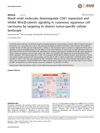
 This study observed that the small molecules KY19382 and KY19334 inhibited cancerous traits in human cutaneous squamous cell carcinoma cells by suppressing the Wnt/β-catenin pathway, indicating their potential as treatments for cancers involving CDK1 overexpression and diseases related to CXXC5 accumulation.
 51 citations
,
March 2014 in “Nature Communications”
51 citations
,
March 2014 in “Nature Communications” This study suggests that activating retinoic acid signalling can inhibit Wnt signalling and induce regression in certain skin tumors, providing potential therapeutic strategies for tumor regression.
2 citations
,
August 2022 in “Viruses” This study found that cutaneous squamous cell carcinomas in mice infected with murine papillomavirus preferentially arise from Lgr5+ progenitor cells, while squamous cell dysplasia does not.
July 2024 in “Journal of Investigative Dermatology” This study suggests that macrophages, especially CD206+ subsets, play a key role in hair growth induced by squaric acid dibutyl ester, a therapy used for alopecia areata.
February 2018 in “Dermatologic Surgery” This overview discusses the Dermatologic Surgery journal's extensive focus on various dermatologic surgical procedures and provides no new research findings.
 2 citations
,
August 2017 in “British Journal of Dermatology”
2 citations
,
August 2017 in “British Journal of Dermatology” Hair loss in Cronkhite-Canada syndrome may be due to an autoimmune response.
20 citations
,
August 2003 in “Clinical and Experimental Dermatology” In this study, a novel E583V missense mutation in the hairless gene was identified in an Italian family with atrichia with papular lesions, reinforcing the significance of zinc-finger and LXXLL domains in this condition.
October 1998 in “RePub (Erasmus University, Rotterdam)” This article discusses the structure and function of the skin, the etiology and increasing incidence of skin cancer, and the types and prevalence of malignant skin tumors, but reports no new research findings.
 October 2014 in “Aktuelle Dermatologie”
 This study reports that elderly men with baldness and comorbid conditions experienced persistent scalp erosions following topical treatment with imiquimod or diclofenac, suggesting alternative therapies should be considered for this group.
 6 citations
,
January 2009 in “Journal of Dermatological Treatment”
6 citations
,
January 2009 in “Journal of Dermatological Treatment” This case report suggests that imiquimod cream 5% may cause telogen effluvium as a rare side effect after treating actinic keratosis on the scalp.
January 2017 in “European Journal of Dermatology” This case report describes a 69-year-old woman with excessive facial hair growth over six months and provides details on her medical history and examination.
1 citations
,
November 2024 in “Journal of Cutaneous Pathology” This case study reported on a 72-year-old woman initially diagnosed with inflammatory alopecia, later identified as having angiosarcoma of the scalp, revealing the importance of considering unexpected malignancies during evaluation of suspected inflammatory alopecia cases.
January 2019 in “Dermatologic Surgery” This overview describes the Dermatologic Surgery journal, highlighting its comprehensive focus on various dermatologic surgery techniques, but it presents no new research findings.