 115 citations
,
October 2009 in “The Journal of clinical endocrinology and metabolism/Journal of clinical endocrinology & metabolism”
115 citations
,
October 2009 in “The Journal of clinical endocrinology and metabolism/Journal of clinical endocrinology & metabolism” In this study, researchers identified novel LMNA mutations in patients with atypical progeroid syndrome, revealing clinical features distinct from other similar disorders, but unrelated to mutant prelamin A accumulation.
In this study, researchers found that the keratin-associated protein 36-1 gene (KRTAP36-1) allele C is linked to variations in mean fibre curvature of fine wool in Chinese Tan lambs, suggesting its role in their distinctive curly coat.
1 citations
,
April 2024 in “JAAD International” This study found that patients with alopecia areata have significantly higher medication adherence than those with atopic dermatitis, potentially due to the stability and controllability of alopecia areata symptoms.
November 2020 in “Дерматовенерология, косметология” This study found that among men with androgenetic alopecia, the M-type pattern, either isolated or combined with others, was observed most frequently, using the BASP classification.
 1 citations
,
September 2023 in “Clinical, cosmetic and investigational dermatology”
1 citations
,
September 2023 in “Clinical, cosmetic and investigational dermatology” This genome-wide association study identified several genetic markers, including specific SNPs and HLA genotypes, associated with alopecia areata susceptibility in the Taiwanese population, highlighting key pathways involved in immune response and offering insights into the genetic origins of this autoimmune condition.
September 2024 in “Journal of the American Academy of Dermatology”  April 2022 in “Cermin Dunia Kedokteran”
 This paper reports on five cases of alopecia areata in children and emphasizes the importance of understanding its characteristics for accurate diagnosis in pediatric patients.
 1 citations
,
July 2025 in “Frontiers in Endocrinology”
1 citations
,
July 2025 in “Frontiers in Endocrinology” This review discusses the dual role of apoptotic vesicles in disease and therapy, emphasizing their potential in cancer treatment and tissue regeneration, but reports no new results.
 April 2022 in “Medicinus”
 This article discusses the challenges of treating androgenetic alopecia due to limited approved medications, potential side effects, and unmet expectations and reports no new clinical results.
226 citations
,
January 2006 in “International review of cytology” Keratin-associated proteins are crucial for hair strength and structure.
 6 citations
,
January 2013 in “Case reports in endocrinology”
6 citations
,
January 2013 in “Case reports in endocrinology” This article reviews acromegaloid facial appearance syndrome and presents a case in a 57-year-old woman, emphasizing the need for more cases to understand its clinical features and inheritance patterns.
 27 citations
,
September 2017 in “Journal of Medicinal Food”
27 citations
,
September 2017 in “Journal of Medicinal Food” In this study, researchers found that a polyphenolic extract from Annurca apples, high in procyanidin B2, increased hair growth, density, and keratin content in healthy subjects after 2 months of use, and stimulated keratin biosynthesis in vitro.
 May 2025 in “Journal of Nanobiotechnology”
 This study reported that an ATRA-loaded nanostructured lipid carrier gel (ATRA-NLC-Gel) improved symptoms of alopecia areata in mice by enhancing transdermal drug delivery, reducing skin irritation, and promoting hair regrowth through targeted follicle enrichment and pathway activation.
52 citations
,
May 2006 in “Journal of Structural Biology” This study identified two key pentapeptide quasi-repeats in human keratin-associated proteins, which are similar to motifs found in sheep wool.
 December 2022 in “Dermatology and Therapy”
 This review discusses the unmet needs and barriers in managing alopecia areata in Latin America, highlighting access constraints and recommending coordinated efforts to improve patient outcomes with promising new treatments.
 December 2022 in “Small methods”
 This study developed dissolving microneedles incorporating a new AR degrader for treating androgenetic alopecia, showing that a single application leads to superior hair regeneration compared to daily minoxidil, without systemic toxicity or androgen-related issues.
 September 2024 in “Journal of Cosmetic Dermatology”
 In this study, seven patients with refractory alopecia areata treated with concentrated growth factor and microneedling-assisted betamethasone experienced significant hair regrowth, with one achieving over 50% regrowth and six showing complete recovery, without adverse effects.
 4 citations
,
July 2022 in “Journal of health economics and outcomes research”
4 citations
,
July 2022 in “Journal of health economics and outcomes research” This review discusses the economic burden of alopecia areata in adolescents and reports no new results; the authors note that evidence in this area is limited.
 2 citations
,
January 1997 in “Archives of Dermatology”
2 citations
,
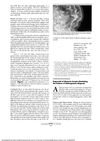
January 1997 in “Archives of Dermatology” This retrospective study of 1604 alopecia areata cases reported 13 instances of a potentially new hair regrowth pattern, termed the "androgenetic-like pattern".
January 2026 in “International Journal of Dermatology” This review examines the androgen-dependent subtype of acquired progressive kinking of the hair and suggests it may be an early indicator of androgenetic alopecia, emphasizing the importance of distinguishing between subtypes for clinical decisions.
161 citations
,
March 1992 in “International Journal of Dermatology” This study analyzed survey responses from 800 alopecia areata patients and found a possible genetic association with increased insulin-dependent diabetes mellitus in relatives but not in the patients themselves.
 1 citations
,
September 2025 in “Clinical Cosmetic and Investigational Dermatology”
1 citations
,
September 2025 in “Clinical Cosmetic and Investigational Dermatology” Upadacitinib is effective and safe for treating severe Alopecia Areata in adolescents.
April 2024 in “Demiroglu Science University Florence Nightingale Journal of Medicine” This review highlights the role of the APCDD1 gene and associated pathways in hair follicle biology, offering new perspectives on genetic contributors to hair loss and suggesting potential avenues for developing targeted treatments and preventive strategies.
 July 2021 in “Clinical case reports and studies”
 In this case report, a 9-year-old boy with diffuse alopecia areata showed improvement with topical diphencyprone immunotherapy, suggesting it as a safe and effective treatment option in pediatric cases of alopecia areata resistant to other therapies.
2 citations
,
January 2016 in “Journal of clinical & experimental dermatology research” This case report describes a child with acrodermatitis enteropathica showing dramatic improvement with oral zinc therapy, highlighting the importance of early diagnosis and treatment to prevent severe outcomes.
 13 citations
,
September 2018 in “Journal of the American Academy of Dermatology”
13 citations
,
September 2018 in “Journal of the American Academy of Dermatology” This editorial proposes a new classification for alopecia areata that incorporates the SALT score and body hair involvement, aiming to improve the assessment and treatment outcomes.
 10 citations
,
August 2011 in “Clinics”
10 citations
,
August 2011 in “Clinics” This article presents a dissenting opinion, arguing that the case described by Dr. Molina et al. was diffuse alopecia areata, not acute alopecia areata as claimed, emphasizing the importance of distinct clinical differences.
April 2024 in “Institutional Repositories DataBase (IRDB)” This study identified 11 previously unreported ABCA12 variants associated with varying severities of autosomal recessive congenital ichthyoses and expanded the phenotype spectrum of ichthyosis linked to these variants.
 1 citations
,
December 2024 in “Dermatology and Therapy”
1 citations
,
December 2024 in “Dermatology and Therapy” This study found that the STRIAA scoring tool provides a rapid and highly reliable assessment of alopecia areata severity, showing a significant correlation with the traditional SALT score, thus enhancing clinical evaluation in patients with this condition.
14 citations
,
February 2013 in “Veterinary dermatology” This study reports that alopecia areata is a rare and typically cosmetic condition in horses, affecting breeds such as Appaloosas and quarter horses, with a possible seasonal pattern of worsening in spring and summer.