December 2025 in “Advanced Healthcare Materials” This study introduces a spherical skin model that effectively mimics key features of human skin, offering a scalable and rapid alternative for non-animal dermatological and cosmetic testing.
May 2026 in “Journal of Clinical Oncology” This study found that nearly 40% of Hodgkin’s Lymphoma patients who received Brentuximab Vedotin with AVD chemotherapy experienced persistent alopecia more than two years after treatment, leading to significant psychosocial consequences such as reduced self-confidence and emotional distress.
1 citations
,
May 2019 in “Annals of Medicine” In this study, researchers found that most food supplement labels in Portugal recommend daily mineral doses exceeding the EU's Recommended Daily Allowance, with some even surpassing the Tolerable Upper Intake Level, raising safety concerns regarding potential adverse effects.
January 2023 in “Toxicological Research” April 2019 in “The journal of investigative dermatology/Journal of investigative dermatology” This study in mice suggests that defects in hair follicles with mesenchymal TSC2 disruption may result from an impaired TGFβ1 response, indicating a potential novel treatment approach for tuberous sclerosis complex.
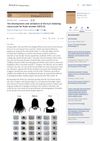 October 2023 in “The Journal of Dermatology”
 This study developed and validated the Hair-Shedding Visual Scale for Asian Women, finding it to be an effective tool for identifying FPHL and TE.
12 citations
,
January 1987 in “Ophthalmic Paediatrics and Genetics” This report describes a patient with biotinidase deficiency presenting bilateral optic atrophy, and confirms autosomal recessive inheritance through enzyme dosage analysis in the patient and family members.
December 2016 in “Indonesian Journal of Tropical and Infectious Disease/Indonesian Journal of Tropical an Infectious Disease” In this case report, a two-year-old girl with kerion type of tinea capitis successfully achieved clinical and mycologic cure with double pulse dose terbinafine and 2% ketoconazole shampoo over two months, with excellent tolerability and no side effects.
 January 2023 in “Research Square (Research Square)”
 This study identified m6A-related genes, particularly IGF2BP3, as significantly up-regulated in keloid patients, potentially implicating them in the condition's molecular mechanisms and suggesting targets for therapy.
 26 citations
,
February 2020 in “Frontiers in genetics”
26 citations
,
February 2020 in “Frontiers in genetics” This study identified three candidate genes (CORT, FGF5, and CD36) associated with cold climate adaptation in Yanbian cattle through genome resequencing and comparison with African tropical cattle.
January 1994 in “Memorial University Research Repository (Memorial University)” This study suggests that oleosomes in Sesbania nodules are utilized for cell growth and development but are not directly involved in nitrogen fixation.
This study retrospectively evaluated the effectiveness of off-label baricitinib in children with severe alopecia areata and found that 50% achieved treatment goals, though psychological effects were noted and laboratory abnormalities occurred in 42.86% of patients.

This abstract contains subscription and access information for Wolters Kluwer Health journals but reports no research findings.
 August 2022 in “medRxiv (Cold Spring Harbor Laboratory)”
 This study found that certain medication clusters prescribed at hospital discharge are associated with different risks of adverse drug events in older adults, with respiratory cluster patients facing the highest risk.
December 2025 in “eTheses of Maulana Malik Ibrahim State Islamic University (Maulana Malik Ibrahim State Islamic University)” This study found that the highest antioxidant-activity formulation of the RENTT herbal combination effectively stimulated hair growth in mice and may serve as a natural therapy for chemotherapy-induced alopecia.
 January 2022 in “Turkiye Klinikleri Journal of Dermatology”
 This study found that the Turkish version of the Multidimensional Assessment of Interoceptive Awareness-2 Scale is valid and reliable for use with Turkish dermatology patients.
This study found that structural changes in the stroma surrounding hair follicles and skin laxity are associated with the appearance of large pores, regardless of ethnicity or age.
April 2025 in “Experimental Eye Research” In this study, researchers characterized the retinal structure and function of the Oatrhg mouse model of gyrate atrophy, finding localized atrophy without significant retina-wide functional impact, suggesting the model may be useful for testing new treatments using multimodal retinal imaging.
 76 citations
,
July 2006 in “Veterinary Dermatology”
76 citations
,
July 2006 in “Veterinary Dermatology” In this pilot study, the researchers found that topical application of imiquimod 5% cream may significantly reduce equine sarcoid tumor size, with 80% of tumors showing more than 75% reduction.
 April 2026 in “Human Genome Variation”
 In this study, researchers identified a recurrent MBTPS2 splice-site variant as a mutational hotspot in IFAP syndrome across diverse families, with phenotype severity suggesting the influence of additional modifiers.
1 citations
,
October 2010 in “EUR Research Repository (Erasmus University Rotterdam)” In this case report, long-term oral antibiotics were extremely effective in treating a 49-year-old man with a therapy-resistant botryomycosis infection on his forearm.
 April 2017 in “The journal of investigative dermatology/Journal of investigative dermatology”
 This study reports that 71% of patients treated with the gamma-secretase inhibitor PF-03084014 for desmoid tumors experienced dermatologic side effects, such as follicular lesions and pruritic eruptions, which were managed with topical or systemic treatments.
9 citations
,
January 2007 in “Journal of dermatological treatment” This study found that applying 2.5% testosterone gel increased facial terminal hairs in young males with beta-thalassemia major and was well tolerated.
4 citations
,
December 2008 in “The Thai Journal of Veterinary Medicine” This study found that zinc methionylglycinate supplementation improved haircoat characteristics and zinc absorption in dogs compared to zinc sulfate.
 April 2023 in “Tikrit Journal of Pharmaceutical Sciences”
 In this study, researchers assessed the effects of deferasirox in 85 children with ß-thalassemia in Kirkuk and reported that while 55.3% experienced a reduction in serum ferritin, 9.4% had adverse effects, indicating that deferasirox is generally well-tolerated as an iron chelator with modifiable side effects.
 January 2022 in “Kafkas Universitesi Veteriner Fakultesi Dergisi”
 In this study, differences in protein expression related to twin lambing were identified in Tibetan sheep, providing insights into the reproductive performance and fertility improvement strategy for sheep in the Qinghai-Tibet Plateau.
 April 2021 in “Journal of Investigative Dermatology”
 This study found that multicomponent microarray patches for SARS-CoV-2 vaccination produced stronger immune responses and fewer side effects in mice compared to traditional intramuscular injection.
 August 2020 in “Egyptian Veterinary Medical Society of Parasitology Journal (EVMSPJ)”
 In this study, 10.5% of sheep examined in Ismailia, Egypt, were infested with Sarcoptes scabiei, showing specific molecular and skin alterations.
 3 citations
,
December 2021 in “Frontiers in endocrinology”
3 citations
,
December 2021 in “Frontiers in endocrinology” In this study, a novel DCAF17 gene mutation was identified in a Chinese family, suggesting a potential role in pancreatic β cell dysfunction and diabetes development in Woodhouse-Sakati syndrome.
11 citations
,
December 2017 in “Orphanet Journal of Rare Diseases” This study found a previously unreported ST14 gene mutation in a patient with ichthyosis-hypotrichosis syndrome, highlighting novel skin and hair characteristics and emphasizing the critical role of the Asp482 amino acid in matriptase activation.