
This case study indicates that older patients with NMOSD may show favorable clinical improvements with aggressive treatment, even when the intervention is initiated later in the disease course.
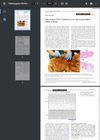 May 2024 in “Animal genetics”
 The researchers investigated a Maine Coon cat with suspected classical Ehlers-Danlos Syndrome and discovered a heterozygous deletion in the COL5A1 gene, underscoring the value of whole-genome sequencing for precise veterinary diagnostics.
2 citations
,
June 2025 in “Chemical Engineering Journal” The hydrogel helps heal seawater-immersed wounds by reducing infection and inflammation.
1 citations
,
April 2024 in “Animal Genetics” This study described an Appenzeller Mountain Dog with clinical signs of an NSDHL defect, discovering a large heterozygous de novo deletion spanning the entire NSDHL gene through whole genome sequencing.
 March 1997 in “Hair transplant forum international”
 This abstract reports on the 1997 meeting of the American Society of Hair Restoration Surgeons and the American Academy of Cosmetic Surgery, and it contains no new research findings.
April 2023 in “Journal of Investigative Dermatology” 3D ultrasound can detect hair follicle changes and disease phases in alopecia areata.
 2 citations
,
August 2021 in “The Journal of Urology”
2 citations
,
August 2021 in “The Journal of Urology” This study reported that seminal vesiculoscopy combined with transurethral resection of ejaculatory ducts and balloon dilation effectively resolved hematospermia and improved symptoms in a patient whose condition was unresponsive to medical treatments.
14 citations
,
April 2020 in “Journal of the American Academy of Dermatology” Viral reactivation is rare at the time of DRESS diagnosis in the U.S.
 November 2020 in “Skin Research and Technology”
 This study found that videodermoscopy showed higher sensitivity and specificity than clinical examination for diagnosing female pattern hair loss and may serve as an alternative to scalp biopsy in the future.
3 citations
,
July 2025 in “Stem Cell Research & Therapy” This study highlights the potential of extracellular vesicles derived from HuMSCs and lncRNA VIM-AS1 to enhance wound healing in diabetic conditions, suggesting innovative strategies for tissue repair.
September 2022 in “European Journal of Dermatology” This study identified a novel pathogenic splice-site variant of the LAMB3 gene in patients with junctional epidermolysis bullosa, highlighting the importance of gene sequencing for diagnosis.
8 citations
,
July 2015 in “International Journal of Dermatology” This study reports that a homozygous A1103G mutation in DSG 4 is responsible for localized autosomal recessive hypotrichosis in a 2-year-old Chinese girl, resulting in reduced DSG 4 expression and hair defects.
 February 2025 in “Infectious Diseases & Immunity”
 This case report highlights two instances of suspected human herpesvirus 6 reactivation in patients with existing psychiatric disorders, underscoring the need for further research into the relationship between viral reactivation and psychiatric conditions.
 May 2021 in “Journal of Advances in Internal Medicine”
 This case report describes a 13-year-old with DSD raised as female, exhibiting hoarseness and clitoral enlargement, with hormonal assessments not indicating common related deficiencies.
In this report, a 22-year-old woman with congenital adrenal hyperplasia due to 21-hydroxylase deficiency underwent treatment with hydrocortisone and spironolactone, followed by feminization surgery, which subsequently led to the development of secondary sexual characteristics and regular menstruation.
 July 2022 in “International Journal of Contemporary Pediatrics”
 This report describes siblings with vitamin D-dependent rickets type 2, characterized by growth retardation, alopecia totalis, and low 25(OH)D3 levels, highlighting its autosomal recessive pattern and distinction from other rickets types.
76 citations
,
March 2008 in “Journal of the American Academy of Dermatology” This study found that videodermoscopy can help diagnose nailbed psoriasis by revealing distinctive hyponychial capillary patterns, which correlated with disease severity and response to treatment.
 April 2016 in “Journal of The American Academy of Dermatology”
 This study suggests that low-cost videomicroscopes may not be reliable for diagnosing hair and scalp disorders due to limitations in color quality and resolution.
36 citations
,
January 2010 in “Journal of Pediatric Endocrinology and Metabolism” This study identified a novel nonsense mutation in the VDR gene in two patients with hereditary vitamin D resistant rickets and alopecia, leading to resistance to 1,25-dihydroxyvitamin D3.
12 citations
,
September 2014 in “Bone” This study characterized two siblings with hereditary vitamin D resistant rickets and a mutation in the vitamin D receptor, finding no immune-related disorders despite a defective T cell response to vitamin D.
 June 2026 in “Zenodo (CERN European Organization for Nuclear Research)”
 This research outlines an innovative bioregeneration chamber aimed at significantly extending human lifespan and enhancing health maintenance by treating the body as a thermodynamic system, potentially enabling an average lifespan of 130 to 150 years in an advanced therapeutic setting.
 1 citations
,
June 2025 in “Journal of Materials Science Materials in Medicine”
1 citations
,
June 2025 in “Journal of Materials Science Materials in Medicine” This study reports that multifunctional electrospun scaffolds containing silver vanadate, hydroxyapatite, and graphene oxide significantly improved wound healing in a rat model, promoting rapid re-epithelialization, enhanced mechanical properties, and strong antibacterial activity, making them promising candidates for advanced wound care applications.
 June 2023 in “International journal of pharmaceutical quality assurance”
 This study found that videodermoscopy is a promising non-invasive tool for distinguishing between types of non-scarring alopecia on the scalp, highlighting its potential in dermatological practice.
3 citations
,
January 2022 in “Burns & Trauma” This study found that CTHRC1 is crucial for sweat gland function and vascular network integrity in mice, and its administration improved sweat gland performance by reconstructing nearby blood vessels.
26 citations
,
September 1999 in “Canadian Journal of Botany” This study found that a recessive mutation in the RHD4 gene of Arabidopsis thaliana leads to slower and more variable tip growth in seedling root hairs, resulting in shorter and wider hairs than in wild-type plants.
September 2023 in “Journal of the American Academy of Dermatology” 18 citations
,
August 2015 in “International Journal of Molecular Sciences” This study developed an efficient method for isolating and enriching multipotent ovine hair follicle stem cells, which may aid in research on the ovine hair cycle and future wool production.
July 2025 in “Journal of Investigative Dermatology” 4 citations
,
December 2021 in “Journal of clinical laboratory analysis” This study identified a splicing-site deletion in the DCAF17 gene associated with Woodhouse-Sakati syndrome in a large consanguineous pedigree, leading to typical phenotypic features.
 14 citations
,
May 2019 in “Human gene therapy”
14 citations
,
May 2019 in “Human gene therapy” This study found that minicircle-based gene therapy significantly lowered total homocysteine levels and improved liver CBS activity in a mouse model of CBS deficiency.