 3 citations
,
July 2022 in “Dermatologic Therapy”
3 citations
,
July 2022 in “Dermatologic Therapy” This study reported that using non-absorbable magnesium microneedle patches for 12 weeks improved under-eye wrinkles as measured by a grading scale and wrinkle index, with minimal discomfort and no significant change in dermal thickness.
 June 2020 in “Journal of cosmetic medicine”
 This article discusses the development of a standardized assessment scale for hair transplant outcomes, emphasizing multiple parameters that contribute to an aesthetically pleasing result and reports no new clinical findings.
 July 2012 in “Hair transplant forum international”
 This article defines body dysmorphic disorder as excessive concern over perceived physical defects that cause distress and affect social or functional activities, but it reports no new results.
 12 citations
,
December 2020 in “Journal of The American Academy of Dermatology”
12 citations
,
December 2020 in “Journal of The American Academy of Dermatology” In this study, individuals with body-focused repetitive behaviors reported increased symptoms during the COVID-19 pandemic, highlighting the psychological impact of pandemic-related societal changes on this population.
 May 2025 in “The Journal of Rheumatology”
 This study reports that even minimal improvements in SLE-related fatigue and skin symptoms are meaningful to patients, supporting the content validity of the FACIT-Fatigue scale for measuring these effects.
January 2022 in “Clinical Cases in Dermatology” This review discusses treatment strategies for scalp psoriasis, highlighting the use of topical agents and challenges in managing this difficult form of psoriasis, but provides no new clinical results.
In this study, a combination of GFM-lotion with autologous PRP treatment improved efficacy in treating androgenic alopecia compared to PRP alone, as shown by significant improvements in clinical assessments over 3 months.
27 citations
,
July 1997 in “PubMed” This study suggests that the harlequin ichthyosis mouse model closely resembles human type 2 harlequin ichthyosis, indicating its potential as a useful model for studying the human condition.
1 citations
,
April 2019 in “Acta medica Philippina” This study found that androgenetic alopecia is significantly associated with an increased risk of Metabolic Syndrome, particularly in early-onset male cases and females exhibiting severe AGA.
January 2026 in “Dermatologic Therapy” This study found that treatment with human foreskin fibroblast conditioned medium improved both objective measures like hair density and subjective satisfaction in patients with androgenetic alopecia.
 September 2025 in “Journal of Cutaneous and Aesthetic Surgery”
 This study found that scalp micropigmentation improved esthetic outcomes and patient satisfaction in scarring alopecia, particularly in conditions with less fibrosis like frontal fibrosing alopecia and traction alopecia.

In this study, women with stress urinary incontinence who received a platelet-rich plasma injection experienced significant improvement in symptoms without significant adverse reactions.
In this interventional study, researchers observed that women with stress urinary incontinence experienced significant symptom improvement one and three months after receiving autologous platelet-rich plasma injections, with no notable impact on sexual function or adverse reactions reported.
 October 2023 in “Skin research and technology”
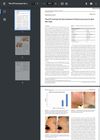
 This study evaluated the effectiveness of a 675 nm laser device on facial acne scars in patients with darker skin types, finding that 67% reported excellent improvement and 33% reported good improvement, with significant enhancements in skin texture and appearance after five treatments.
 June 2022 in “Evidence-based complementary and alternative medicine”
 This study found that acupressure on specific points improved health-related quality of life and reduced total testosterone levels and clinical symptoms in patients with polycystic ovary syndrome compared to controls.
 5 citations
,
September 2017 in “Colloids and surfaces. B, Biointerfaces”
5 citations
,
September 2017 in “Colloids and surfaces. B, Biointerfaces” This study found that treating hair with 1 M sodium hydroxide increases its self-friction coefficient, suggesting potential applications in forming fine frictional fibers for medical uses.

In this study, botulinum toxin type A injections reduced the severity of treatment-resistant scalp psoriasis in more patients compared to placebo over a 12-week period.
January 2026 in “JPRAS Open” In this pilot study, PDLLA scalp microinjections showed improvement in physician-rated Global Aesthetic Improvement Scale scores over 12-24 weeks for 90% of patients with non-scarring alopecia, with no serious adverse events reported, although findings remain preliminary due to methodological limitations.
 December 2025 in “Canadian Urological Association Journal”
 This study highlights the gap between media claims and limited scientific evidence on the impact of alternative therapies for men's health, emphasizing the need for larger-scale trials for informed patient counseling.
 December 2024 in “Research Square (Research Square)”
 In this phase I/II clinical trial, placenta-derived mesenchymal stem cell exosome therapy significantly improved hair density and diameter, and reduced hair loss in patients with androgenetic alopecia, though further large-scale studies are needed to confirm these results and investigate the underlying molecular mechanisms.
 54 citations
,
September 2019 in “Journal of the European Academy of Dermatology and Venereology”
54 citations
,
September 2019 in “Journal of the European Academy of Dermatology and Venereology” This study found that tofacitinib shows reasonable effectiveness for treating alopecia areata with mild adverse effects, although more large-scale randomized trials are needed to fully assess its safety and efficacy.
 2 citations
,
January 2019 in “Medizinische Genetik”
2 citations
,
January 2019 in “Medizinische Genetik” Among families with pediatric brain disease, this study identified over 200 novel genetic causes, revealing potential treatment points using drug repurposing or nutritional supplementation.
 May 2026 in “International Journal of Homoeopathic Sciences”
 This study found that individualized homeopathic medicine can significantly improve outcomes in patients with alopecia areata, including complete hair regrowth and reduced SALT scores within 5 to 12 months, without relapse, and shows promise for alopecia universalis through targeted miasmatic and constitutional remedies.
33 citations
,
August 2024 in “Frontiers in Drug Discovery” In this article, the authors describe how drug repurposing, supported by large-scale data and artificial intelligence, can make drug discovery more cost-effective and expedient compared to traditional methods, despite certain regulatory challenges.
 January 2024 in “Biomedicines”
 This study found that a single injection of autologous cell micrografts significantly improved hair condition in women with androgenetic alopecia six months post-treatment.
4 citations
,
October 2023 in “Journal of clinical medicine” This meta-analysis found that women with polycystic ovary syndrome have over a 2.5-fold higher risk of depression compared to healthy women.

This review presents evidence supporting acupuncture's potential benefits for AA treatment but notes the findings are limited by low-quality evidence and small sample sizes, suggesting a need for future large-scale, rigorous studies.
December 2025 in “Journal of Cosmetic Dermatology” This systematic review found that intralesional dutasteride treatments for androgenic alopecia in adults improved hair density and thickness with minimal adverse effects, although study methodologies varied and lacked large-scale trials.
 76 citations
,
November 2010 in “Journal of The American Academy of Dermatology”
76 citations
,
November 2010 in “Journal of The American Academy of Dermatology” In this study, a photographic scale and questionnaire revealed that extensive central scalp hair loss was observed in 5.6% of African American women, with an association to a history of tinea capitis.
 April 2019 in “Dermatology reports”
 This case study reported that scalp dermoscopy, or trichoscopy, provided a useful noninvasive method to evaluate and confirm hair regrowth in a child treated for tinea capitis.