 3 citations
,
August 2021 in “Journal of fiber science and technology”
3 citations
,
August 2021 in “Journal of fiber science and technology” This study found that chitin nanofibrils prepared by the aqueous counter collision process exhibited superior emulsifying properties for stabilizing oil droplets in Pickering emulsions compared to cellulose nanofibrils.
 9 citations
,
July 2021 in “Journal of Natural Medicines”
9 citations
,
July 2021 in “Journal of Natural Medicines” This review summarizes research finding over 150 new molecules with various biological activities from traditional herbal medicines studied in China, Mongolia, Uzbekistan, and Bangladesh.
 3 citations
,
October 2018 in “International Journal of Green Pharmacy”
3 citations
,
October 2018 in “International Journal of Green Pharmacy” This study suggested that an herbal shampoo containing Piper betle and Psidium guajava leaves extract may promote hair growth due to its antioxidant properties and showed stability for two months.
 September 2018 in “Gynecology & Obstetrics”
 In a meta-analysis of 210 hair tourniquet syndrome cases, this study reported that 44.2% involved the penis, 40.4% the toes, and 8.6% fingers, highlighting the condition's potential severity and underreporting, especially in infants and some adults with cognitive impairments.
 66 citations
,
November 2011 in “Journal of The American Academy of Dermatology”
66 citations
,
November 2011 in “Journal of The American Academy of Dermatology” This study concluded that a polarized-light handheld dermatoscope attached to a digital camera is a practical and useful tool for diagnosing different types of alopecia.
 19 citations
,
September 2011 in “Clinical and Experimental Dermatology”
19 citations
,
September 2011 in “Clinical and Experimental Dermatology” This study suggests that for single biopsy specimens, transverse sections may be preferable for diagnosing noncicatricial alopecia, while vertical sections may be better for suspected lichen planopilaris.
 48 citations
,
October 2011 in “Sports Medicine”
48 citations
,
October 2011 in “Sports Medicine” This review covers dermatological conditions experienced by ice-skating athletes due to cold exposure, infections, and inflammation, providing no new clinical findings and emphasizing diagnosis and treatment strategies.
 21 citations
,
August 2011 in “Clinics in Dermatology”
21 citations
,
August 2011 in “Clinics in Dermatology” This review discusses skin signs that can indicate systemic diseases and provides no new clinical results; it aims to aid physicians in diagnosing these conditions.
 37 citations
,
June 2011 in “Journal of The American Academy of Dermatology”
37 citations
,
June 2011 in “Journal of The American Academy of Dermatology” This study demonstrates that sebaceous gland loss is a common early feature in primary scarring alopecia and suggests that inflammation of sebaceous glands or ducts may contribute to follicular damage.
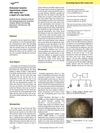 1 citations
,
August 2011 in “Dermatology Reports”
1 citations
,
August 2011 in “Dermatology Reports” This case report describes a new family with autosomal recessive hypotrichosis simplex with woolly hair, suggesting the disorder may be underreported due to misdiagnosis.
 57 citations
,
March 2011 in “Pediatric Dermatology”
57 citations
,
March 2011 in “Pediatric Dermatology” In this study, skin manifestations were observed in 48% of children with primary immunodeficiency disorders, often providing crucial diagnostic clues for early identification of these conditions.
 19 citations
,
October 1971 in “The BMJ”
19 citations
,
October 1971 in “The BMJ” Anticonvulsant drugs may cause temporary chromosomal abnormalities.
 February 2024 in “Research Square (Research Square)”
 This study identified SFRP2 and PTGDS as potential biomarkers for female pattern hair loss, finding these genes consistently upregulated in bald hair follicles from all 18 patients, which may contribute to understanding the condition's pathogenesis and developing targeted treatments.
 February 2024 in “Dermatologic Surgery”
 This review discusses the evidence for platelet-rich plasma in hair restoration and skin rejuvenation, highlighting its benefits but noting a lack of consensus on best practices and protocols.

This study demonstrated that the differential wetting characterization (DWC) method can effectively differentiate changes in the wetting properties of hair fibers after chemical or physical treatment.
 March 2024 in “CRC Press eBooks”
 This article notes that the concept of hair restoration dates back to ancient times, as evidenced by references to hair transplantation attempts in the Ebers Papyrus, an ancient Egyptian medical document from around 1500 BC.
 April 2024 in “Journal of burn care & research”
 This study found that most patients with burn scar alopecia chose to pursue multiple surgical treatments regardless of total body surface area affected or gender, highlighting the importance of personalized aesthetic goals in post-burn care.
23 citations
,
June 2005 in “Journal of cosmetic dermatology” This article reviews the psychosocial impacts of androgenetic alopecia on men, highlighting the importance of addressing both hair loss and associated psychological disorders for improved treatment satisfaction.
38 citations
,
May 1971 in “Clinical genetics” This study suggests 5α‐androstan‐3α‐17β‐diol may be the true inducer of kidney enzymes in certain mice, while its induction mechanism likely involves pinocytosis rather than a receptor protein.
 January 2015 in “British journal of medicine and medical research”
 This case report describes a patient with systemic sclerosis and severe alopecia areata who experienced complete resolution of hair loss within four months after treatment with topical steroids, minoxidil, and mycophenolate mofetil.
This study found that neonatal administration of Allopregnanolone may mitigate some behavioral effects of early maternal separation in adolescence, but also lead to similar adverse effects as the separation in adulthood.
 28 citations
,
November 2013 in “The journal of investigative dermatology/Journal of investigative dermatology”
28 citations
,
November 2013 in “The journal of investigative dermatology/Journal of investigative dermatology” This study found that the selective PPARγ modulator GMG-43AC may inhibit unwanted hair growth by inducing catagen phase while preserving hair follicle epithelial progenitor cells, suggesting potential in anti-hirsutism therapy.
 49 citations
,
March 2014 in “Dermatologic clinics”
49 citations
,
March 2014 in “Dermatologic clinics” This article discusses the causes, development, treatment, and prevention strategies for pseudofolliculitis barbae and folliculitis keloidalis nuchae, but reports no new clinical results.
January 2008 in “한국미용학회지” This study found that in a shaving animal model of mice, increased enzyme activities and gene expression correlated with enhanced hair growth, suggesting they are good biomarkers in the anagen phase.
1 citations
,
January 2013 in “Journal of clinical & experimental dermatology research” This study found that melatonin enhanced whisker growth in vitro and identified MT1 receptor presence in the granular layer of mouse epidermis and the outer root sheath, suggesting potential for hair growth treatment.
 February 2016 in “The journal of allergy and clinical immunology/Journal of allergy and clinical immunology/The journal of allergy and clinical immunology”
 This study reports a novel mutation in the TP63 gene associated with T and B cell lymphopenia in an EEC patient, suggesting that EEC diagnosis should include TREC assay and evaluation for immunodeficiency.
6 citations
,
January 2018 in “Advances in experimental medicine and biology” This research reports that Muse cells from human skin can be differentiated into melanocytes, fibroblasts, and keratinocytes, enabling the creation of 3D reconstituted skin, potentially advancing skin reconstruction therapies.
 April 2014 in “Significance”
 Unconventional home remedies can sometimes show surprising results.
39 citations
,
January 2008 in “Journal of cosmetic and laser therapy” This review examines the literature on laser hair removal to provide evidence-based guidelines for treatment intervals, pre- and post-treatment practices, and areas that should be avoided, but presents no new findings.
September 2015 in “Journal watch” Triamcinolone acetonide injections help regrow hair in alopecia areata patients.