 27 citations
,
April 2011 in “Folia Histochemica et Cytobiologica”
27 citations
,
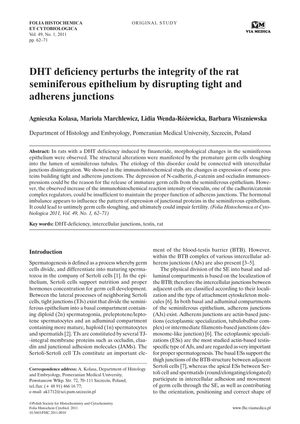
April 2011 in “Folia Histochemica et Cytobiologica” In this study using rats, finasteride-induced DHT deficiency led to morphological changes in seminiferous tubules, linked with altered junctional protein expression, potentially impairing fertility.
28 citations
,
January 2009 in “Cellular & Molecular Biology Letters” This study concluded that finasteride-induced DHT deficiency intensified constitutive iNOS expression in rat testicular and epididymal cells, suggesting a complex regulatory relationship needing further investigation.
 10 citations
,
September 2008 in “Andrologia”
10 citations
,
September 2008 in “Andrologia” In this study, treatment with finasteride altered the expression patterns of antioxidant enzymes in the epididymis of rats, potentially affecting its protective function for spermatozoa.
48 citations
,
February 2006 in “Molecular and Cellular Endocrinology” This study found that dual 5α-reductase inhibitors in rats decreased sperm quality and led to reduced pregnancy success, suggesting potential for use in male contraception.
4 citations
,
January 2006 in “PubMed” This study found that finasteride-induced DHT deficiency altered estrogen receptor expression in the epididymis, potentially destabilizing its function.
25 citations
,
November 2005 in “PubMed” This study found that finasteride altered androgen receptor expression in the rat epididymis without affecting the morphology of epididymal epithelium, suggesting a change in hormonal status.
34 citations
,
January 2004 in “PubMed” In this study, finasteride treatment for 56 days in adult rats led to sloughing of immature germinal cells and reduced sperm content in the epididymis, indicating its importance for maintaining spermatogenesis.
115 citations
,
March 2001 in “Baillière's best practice and research in clinical endocrinology and metabolism/Baillière's best practice & research. Clinical endocrinology & metabolism” This article reviews how different 5alpha-reductase and 3alpha-HSD enzymes impact androgen levels and highlights their potential as drug targets for androgen-related diseases, but provides no new experimental findings.