September 2024 in “Journal of the European Academy of Dermatology and Venereology”
 This study found that baricitinib significantly reduced hair loss in patients with severe alopecia areata, decreasing the mean SALT score from 96.6 to 48 over 24 weeks, with no patients dropping out and only mild adverse events in 12.7% of participants.
8 citations
,
August 2024 in “Clinical and Experimental Dermatology” This review discusses the limitations of existing clinician-reported outcome measures for alopecia areata and emphasizes the need for a composite scoring system to better assess disease severity.
2 citations
,
June 2024 in “Journal of Clinical Medicine” This study identifies various nail changes in alopecia areata, which can affect quality of life, and suggests that while spontaneous improvement is possible, further research is needed to refine treatment strategies.
 March 2024 in “International Journal of Dermatology”
 In this case report, a 40-year-old male with alopecia universalis and twenty-nail dystrophy showed significant nail improvement and partial hair regrowth after six months of baricitinib treatment, improving his quality of life.
 November 2023 in “Journal of Cosmetic Dermatology”
 In this study, tofacitinib treatment significantly reduced hair loss on the head and body, as well as nail involvement, in patients with alopecia areata over 18 months, with minimal side effects reported.
49 citations
,
October 2023 in “Journal of Dermatological Science”  6 citations
,
May 2023 in “Drugs”
6 citations
,
May 2023 in “Drugs” This study reports that baricitinib was more effective than placebo in promoting hair growth in adults with severe alopecia areata after 36 weeks of treatment in clinical trials.
227 citations
,
April 2023 in “The Lancet” Ritlecitinib effectively treats alopecia areata and is well-tolerated.
290 citations
,
August 2021 in “Clinical Reviews in Allergy & Immunology” JAK inhibitors show promise for treating alopecia areata, but more research is needed.
 56 citations
,
January 2021 in “Clinical and Experimental Medicine”
56 citations
,
January 2021 in “Clinical and Experimental Medicine” This review highlights the challenges in treating alopecia areata, noting that current therapies often lead to relapse and have uncertain long-term effectiveness; it also points to potential future treatments such as JAK-STAT inhibitors and PRP.
 56 citations
,
August 2020 in “American Journal of Clinical Dermatology”
56 citations
,
August 2020 in “American Journal of Clinical Dermatology” This study concluded that the ClinRO and PRO measures, along with their photoguides, offer clear and meaningful assessments for patients with alopecia areata concerning eyebrow, eyelash, and nail appearance, as well as eye irritation.
 9 citations
,
April 2018 in “Journal of Dermatological Treatment”
9 citations
,
April 2018 in “Journal of Dermatological Treatment” This study found that oral tofacitinib monotherapy improved nail changes in 73.3% of adults with moderate-to-severe alopecia areata over a median period of 5 months, but nail improvement was not linked to the severity of hair loss or hair regrowth.
45 citations
,
January 2018 in “International Journal of Dermatology” This review explores nail changes associated with alopecia areata, noting their prevalence and impact on appearance and function, but reports no new clinical findings; the authors call for larger controlled trials.
 19 citations
,
January 2018
19 citations
,
January 2018 Most people with alopecia areata have nail changes, which are common but don't greatly affect their quality of life.
13 citations
,
February 2017 in “Clinical rheumatology” This report suggests that tofacitinib may be beneficial for patients with nail disease unresponsive to other treatments.
 26 citations
,
October 2016 in “Case Reports in Dermatology”
26 citations
,
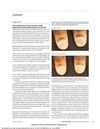
October 2016 in “Case Reports in Dermatology” In this study, tofacitinib treatment in a male patient with alopecia areata led to significant hair regrowth and improvement in nail dystrophy symptoms, restoring finger function within 10 months.
 41 citations
,
December 2015 in “JAMA Dermatology”
41 citations
,
December 2015 in “JAMA Dermatology” Tofacitinib citrate improved nail dystrophy and pain in patients with alopecia universalis without causing side effects.
701 citations
,
August 2014 in “Nature medicine” This study found that JAK inhibitors promote hair regrowth in both mice and human alopecia areata cases by blocking key immune pathways involved in disease development.
 391 citations
,
January 2010 in “Journal of The American Academy of Dermatology”
391 citations
,
January 2010 in “Journal of The American Academy of Dermatology” This article reviews the clinical presentation and histopathologic features of alopecia areata and proposes a hypothesis for its development, but it reports no new clinical results.
44 citations
,
May 1980 in “Archives of Dermatology” This case study discusses a patient with persistent 20-nail dystrophy following alopecia areata, suggesting that "20-nail dystrophy" describes a condition with multiple potential causes.