This study identified CXXC5 as a key mediator of hair loss induced by PGD2 and DHT via suppression of the Wnt/β-catenin pathway, with implications for potential therapeutic targets.
16 citations
,
September 2022 in “Cold Spring Harbor Perspectives in Biology” This article explores how adult mammals can regenerate hair follicles after wounding and suggests that manipulating cell signals during healing might enhance this process, but provides no new experimental results.
 220 citations
,
March 2020 in “Advanced functional materials”
220 citations
,
March 2020 in “Advanced functional materials” This review discusses the mechanisms and potential therapeutic benefits of mesenchymal stromal cell-derived extracellular vesicles delivered via biomaterials, but reports no new clinical results.
37 citations
,
May 2018 in “Frontiers in physiology” This study identified key long non-coding RNAs and mRNAs involved in primary wool follicle induction in carpet wool sheep, emphasizing their roles in hair follicle development and skin processes.
 27 citations
,
April 2017 in “Journal of Investigative Dermatology”
27 citations
,
April 2017 in “Journal of Investigative Dermatology” The researchers reported that noncoding double-stranded RNA promotes wound-induced hair neogenesis in mice by modulating prostaglandin and Wnt levels.
 128 citations
,
August 2015 in “Cell Stem Cell”
128 citations
,
August 2015 in “Cell Stem Cell” The researchers reported that dsRNA from damaged skin activates TLR3, promoting hair follicle regeneration, while TLR3-deficient animals fail to initiate this process, suggesting potential therapeutic approaches for hair neogenesis.
 359 citations
,
January 2015 in “Cold Spring Harbor Perspectives in Medicine”
359 citations
,
January 2015 in “Cold Spring Harbor Perspectives in Medicine” This article reviews the role of skin appendages in wound healing and appendage regeneration, discussing cellular and molecular mechanisms but reports no new experimental findings.
 207 citations
,
March 2012 in “Development”
207 citations
,
March 2012 in “Development” In this mouse study, researchers found that dermal Wnt signaling/β-catenin activity is essential for fibroblast proliferation and initiating hair follicle formation by interacting with epidermal Wnt ligands.
 829 citations
,
May 2007 in “Nature”
829 citations
,
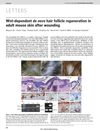
May 2007 in “Nature” Hair follicles can regrow in wounded adult mouse skin using a process like embryo development.