Polygonum multiflorum tincture
Research
20 / 723 results
research Exploring the Combination and Modular Characteristics of Herbs for Alopecia Treatment in Traditional Chinese Medicine: An Association Rule Mining and Network Analysis Study
This study used association rule mining and network analysis to identify frequently combined herb sets for treating alopecia from 56 articles, highlighting the potential of Polygonum multiflorum, Angelica sinensis, and Ligusticum chuanxiong in traditional medicine and suggesting further bioinformatics research to understand their efficacy.

research In Vivo Evaluation of Galla Chinensis Solution in the Topical Treatment of Dermatophytosis
This study found that Galla chinensis solution significantly improved skin lesions and fungal eradication in dermatophytosis-infected dogs, showing over 85% efficacy in fungal removal after 14 days and outperforming the positive control treatment.
research Exploring the Treatment of Seborrheic Alopecia Based on the Theory of 'Healthy Qi is Stored Inside, Evil Can't Be Done'
In this study, the researchers explored the traditional Chinese medicine approach to treating seborrheic alopecia, emphasizing the interplay between zang-fu organs, qi, blood, and body fluids, and highlighted treatments focusing on wind, dampness, heat, blood stasis, and deficiency.
research Traditional Knowledge Digital Library: The Challenges Ahead
This paper suggests that to better protect traditional and indigenous knowledge, TKDL should expand its database or establish a separate confidential resource for indigenous, tribal, and nomadic communities.
research Clinical Research Progress on Plum-Blossom Needle Combined Therapy for Androgenic Alopecia
This review discusses the combined use of plum-blossom and Daoma needle therapy for androgenic alopecia, emphasizing its potential benefits and the need for further clinical research, but reports no new results.

research Clinical Experience of Professor Ma Shuanquan in Treating Androgenetic Alopecia
In this analysis, Professor Ma Shuanquan attributes androgenetic alopecia to liver, spleen, and kidney dysfunctions and describes a treatment approach using Chinese medicines focused on these organs, suggesting individualization and noting significant therapeutic effects.
research A Review on Traditional Uses, Phytochemistry, and Pharmacology of Eclipta Prostrata (L.) L.
This review compiles current information about Eclipta prostrata, traditional uses, and its promising pharmacological properties, like hepatoprotective and anti-inflammatory effects, but emphasizes that more research is needed to fully understand its mechanisms and ensure safety for clinical application.

research Meta-Analysis on the Efficacy and Safety of Traditional Chinese Medicine as Adjuvant Therapy for Refractory Androgenetic Alopecia
This meta-analysis found that traditional Chinese medicine may be an effective and safe adjuvant therapy for androgenetic alopecia, improving efficacy rates and symptom scores compared to conventional medicine.
research Medicinal Value of Three Agricultural Weed Species of the Asteraceae Family: A Review
This review discusses the traditional uses, phytochemical, and pharmacological studies on Ageratum conyzoides, Tridax procumbens, and Bidens pilosa, emphasizing the need for further clinical research into their medicinal potential, but it does not report new results.
research The Clinical Effect of Plum Blossom Needle Acupuncture with Qi-Invigorating Superficies-Consolidating Therapy on Seborrheic Alopecia
In this clinical study, plum blossom needle acupuncture and qi-invigorating therapy were reported to be more effective than conventional Western medicine for treating seborrheic alopecia, as they improved hormone levels, reduced hair loss, and stimulated hair growth among the 87 patients observed.

research Observation of the Expression of Vascular Endothelial Growth Factor and the Potential Effect of Promoting Hair Growth Treated with Chinese Herbal BeauTop
This study observed that oral administration of BeauTop, a Chinese herbal medicine, significantly increased hair growth indicators, including VEGF expression, hair follicles, and hair coverage in C57BL/6 mice.
research Identification of Hair Growth Promoting Components in the Kernels of Prunus Mira Koehne and Their Mechanism of Action
This study found that components in the kernel of Prunus mira Koehne, such as vitamin E and β-sitosterol, may promote hair growth in mice, possibly involving the Wnt/β-catenin signaling pathway.
research Interdisciplinary Traditional Chinese Medicine Microneedles in Skin Disease Treatment: Recent Advances and Challenges
This review highlights the potential of microneedle technology in traditional Chinese medicine as a promising transdermal delivery system for skin diseases, showcasing improved efficacy and reduced side effects of TCM ingredients while discussing the challenges of its clinical application.
research Technological Advances in Anti-Hair Loss and Hair Regrowth Cosmeceuticals: Mechanistic Breakthroughs and Industrial Prospects Driven by Multidisciplinary Collaborative Innovation
This review explores the mechanisms, current products, challenges, and innovative approaches related to cosmetics for hair loss prevention and growth promotion, emphasizing the need for multidisciplinary cooperation to enhance product development and market success.

research Evaluation of the Clinical Efficacy of Chuzhi Shengfa Tablets and Finasteride in the Treatment of Androgenetic Alopecia
In this study of 60 male patients with androgenetic alopecia, combining Chuzhi Shengfa tablets with finasteride significantly improved clinical efficacy over finasteride alone, with an effectiveness rate of 93.33% versus 73.33%, while adverse reactions were similar between groups.
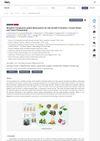
research Bioactive Compound-Loaded Nanocarriers for Hair Growth Promotion: Current Status and Future Perspectives
This review highlights various plant-based and herbal treatments that reportedly help prevent hair loss and encourage hair growth. It also explores the molecular mechanisms, identified plant compounds, recent technologies such as nanoarchitectonics, and patents related to hair growth promotion.
research Topical Application of Polygonum Multiflorum Extract Induces Hair Growth of Resting Hair Follicles Through Upregulating Shh and β-Catenin Expression in C57BL/6 Mice
This study found that Polygonum multiflorum extract may promote hair growth by inducing the anagen phase in the resting hair follicles of mice.
research Promotion Effect of Constituents from the Root of Polygonum Multiflorum on Hair Growth
This study found that compound 2 from Polygonum multiflorum significantly increased dermal papilla cell proliferation and hair-fiber length, suggesting potential as a therapeutic agent for alopecia.
research Polygonum Multiflorum Extract Supports Hair Growth by Elongating Anagen Phase and Abrogating the Effect of Androgen in Cultured Human Dermal Papilla Cells
This study found that Polygonum multiflorum extract may promote hair growth by increasing anagen duration and activating dermal papilla cells in human hair follicles, as observed in cultured cell models.
research Integrated Chemometric Fingerprints of Antioxidant Activities and HPLC-DAD-CL for Assessing the Quality of the Processed Roots of Polygonum Multiflorum Thunb. (Heshouwu)
The research identified 12 antioxidant compounds in Polygonum multiflorum roots, suggesting these as quality markers for the plant's processed roots.