 1 citations
,
January 2012 in “Journal of Toxicologic Pathology”
1 citations
,
January 2012 in “Journal of Toxicologic Pathology” This case report describes a hybrid cyst in a Sprague-Dawley rat, showing both infundibular and matrical differentiation similar to different parts of normal hair follicles.
August 2005 in “The Journal of Cell Biology” This abstract provides a graphic illustrating that mice lacking the Sgk3 gene exhibit thin coats and abnormal hair, suggesting a role for Sgk3 kinase in hair follicle growth, but reports no new experimental findings.
207 citations
,
September 1973 in “Entomologia Experimentalis et Applicata” In this study, the researchers found that female Pieris brassicae butterflies have more "B-type" chemoreceptory hairs on their forelegs, which may be involved in selecting oviposition sites through detecting mustard oil glucosides.
October 2015 in “Cosmetic Dermatology” This article reviews the complexity of human hair follicles and the development of shampoos and conditioners tailored for different hair types, but it presents no new experimental findings.
 February 2023 in “Cosmoderma”
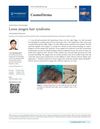
 Loose anagen hair syndrome causes easily shed hair but usually improves with time.
This study found that human hair exhibits significant deformation in its intermediate filaments under strain, with recovery taking about 1000 minutes, suggesting a self-healing period post-mechanical stress. Additionally, cuticle scales deform much less than the cortex, and the Poisson ratio aligns with soft matter properties.
19 citations
,
March 2015 This study reports the first detection of electromagnetic forces from human hairs, evidenced by the aggregation of iron nanoparticles around hair follicles.
27 citations
,
November 2007 in “Genomics” This study found that mutations in type I IRS keratin genes disrupt keratin protein complexes in mice, suggesting crucial roles for these genes in proper hair coat formation.
May 2006 in “The American journal of medicine” This article presents a case of a 45-year-old African American man with firm, hyperpigmented papules and pustules on his cheeks and neck, persisting despite various shaving methods.
2 citations
,
July 1994 in “Journal of Dermatological Science” This study found that a laboratory model using nude mice can produce human hair follicles with amino acid compositions resembling both normal and trichothiodystrophy-affected human scalp hair over extended periods.
2 citations
,
September 2017 in “Mehmet Akif Ersoy Üniversitesi Veteriner Fakültesi dergisi” This review discusses the anatomy and gene involvement in the development of animal hair follicles and reports no new experimental results; it calls for continued examination of gene roles in hair quality.
 40 citations
,
June 2009 in “Journal of Cutaneous Pathology”
40 citations
,
June 2009 in “Journal of Cutaneous Pathology” This study found that Iranian patients with androgenetic alopecia had a higher terminal to vellus hair ratio compared to previous studies in Whites, suggesting potential onset of miniaturization.
12 citations
,
September 1990 in “The Anatomical Record” This study found that distinct glycoconjugate expression patterns in human hair follicle cells suggest complex carbohydrate metabolism, revealing a unique sugar moiety in outer root sheath cells not present in other keratinocytes.
6 citations
,
January 2004 in “DNA Research” This study identified a nonsense mutation in the Sgkl gene as the cause of defective hair growth in a mutant mouse strain, implicating the SGKL signaling pathway in hair development.
This study presents a new model for the progression of androgenetic alopecia, suggesting that the loss of attachment between the bulge's stem cells and the arrector pili muscle may contribute to irreversible hair miniaturization.

This study examined hair classification based on geo-racial origin, observing that Caucasian and Mediterranean hair differs morphologically from African or Asian hair, with differences in density, thickness, and fiber shape contributing to varied hair characteristics such as color and curliness.
 May 2026 in “Zenodo (CERN European Organization for Nuclear Research)”
 This study applies the Displacement Framework to explore how hair serves as both a biological and social signal, highlighting the costs of institutional demands for hair straightening in Black communities, which the natural hair movement counters by returning to natural hair.
2 citations
,
January 2002 in “Zhiwu Yanjiu” Capitate trichomes have more endoplasmic reticulum and vacuoles, while peltate trichomes have more plastids and larger subcuticular spaces.
12 citations
,
March 2012 in “JEADV. Journal of the European Academy of Dermatology and Venereology/Journal of the European Academy of Dermatology and Venereology” This study observed that some patients with homozygous c.736T>A mutation in LIPH may have mild hypotrichosis with long hairs in adulthood.
 38 citations
,
June 2003 in “Journal of Investigative Dermatology Symposium Proceedings”
38 citations
,
June 2003 in “Journal of Investigative Dermatology Symposium Proceedings” This article reviews various topics discussed at a workshop on hair disorders, focusing on hair biology, diagnosis, and challenges in therapy evaluation, without presenting new clinical findings.
13 citations
,
August 2007 in “Journal of Investigative Dermatology” Mouse hair can regrow in a special lab setup without serum.
 8 citations
,
March 2019 in “Progress in Human Geography”
8 citations
,
March 2019 in “Progress in Human Geography” This paper explores how hair functions as a geographical lens to redefine the body's borders, influencing perceptions of identity and power.
15 citations
,
May 2013 in “International Journal of Cosmetic Science” This study found that while ethnic hair types share a common fibrous keratin structure, variations in keratin-associated proteins and lipids may lead to different macroscopic hair characteristics.
3 citations
,
January 1981 This study describes a traditional Slovac hairstyle in Northeastern Yugoslavia that may contribute to a mild form of alopecia in middle-aged and older women.
 September 2023 in “Journal of the American Academy of Dermatology”
 This study found that hair care products designed for coily/curly hair are significantly more expensive than those for straight hair, based on pricing data from Amazon.com. This indicates a need for equitable pricing to ensure access to affordable hair care for all hair types.
21 citations
,
November 1980 in “PubMed” This study describes a newly identified mite species, Demodex zalophi, found on captive sea lions and highlights its unique traits, including being the first of its kind described in marine mammals.
 5 citations
,
December 2018 in “Journal of The American Academy of Dermatology”
5 citations
,
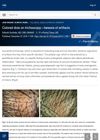
December 2018 in “Journal of The American Academy of Dermatology” This study highlights the importance of recognizing artifacts in trichoscopy, as certain cosmetic products can mimic signs of early androgenetic alopecia.
12 citations
,
March 2004 in “Journal of Investigative Dermatology” 3 citations
,
January 2025 in “Animal Genetics” In this study, researchers conducting a genome-wide association study on 263 adult female goats identified significant genomic variants linked to coarse hair diameter, particularly emphasizing a crucial region on Chromosome 10. These findings enhance understanding of the genetic factors influencing fiber diameter in goats.
February 2016 in “Faculty of 1000 Research Ltd” This review describes the dual influences on hair follicle homeostasis, proposing it as a "Yin Yang" paradigm, and highlights glycans as a potential key in hair follicle growth control; no new clinical results are reported.