 234 citations
,
April 2000 in “Gene”
234 citations
,
April 2000 in “Gene” This review discusses the expression patterns and biochemical roles of Msx and Dlx genes during development but does not present new research findings.
 August 2016 in “Journal of Investigative Dermatology”
 This case report identifies a novel LIPH gene mutation linked to autosomal recessive woolly hair/hypotrichosis in a Japanese boy, expanding the spectrum of known mutations associated with this condition.
 April 2023 in “Journal of dermatological treatment”
 This study reports a case of complete hair regrowth in lichen planopilaris after 12 weeks of treatment with ixekizumab, suggesting its potential as a targeted therapy.
39 citations
,
November 2017 in “PubMed” This case series reported that low-dose naltrexone may benefit patients with lichen planopilaris by reducing scalp symptoms and slowing disease progression, with no adverse effects observed in the patients.
 April 2016 in “Journal of Investigative Dermatology”
 This study reported that the absence of Lsh in skin led to significant epidermal hyperplasia and altered gene expression, suggesting its crucial role in regulating epidermal proliferation, differentiation, and wound healing.
October 2023 in “Indian Journal of Skin Allergy” This study discusses a rare case of subacute cutaneous lupus erythematosus induced by nab-paclitaxel, a complication scarcely reported in existing literature related to paclitaxel use.
3 citations
,
July 2022 in “Indian Journal of Dermatology” This report describes a case of acute localised exanthematous pustulosis in a 19-year-old boy after using amoxicillin-clavulanic acid, with new dermoscopic features identified.
247 citations
,
June 2021 in “Frontiers in Cell and Developmental Biology” This review discusses the role of lncRNA Xist in cell growth regulation and disease development, particularly cancer, and reports no new experimental results.
20 citations
,
January 2015 in “Biochimica and biophysica acta. Molecular and cell biology of lipids” This review discusses lysophosphatidic acid's role in neuropathic pain and cholestatic itch, highlighting its complex signaling pathways, but reports no new clinical results.
46 citations
,
May 2013 in “The journal of investigative dermatology/Journal of investigative dermatology” This review discusses the state-of-the-art knowledge on pseudoxanthoma elasticum, summarizing recent advancements in genetics, pathomechanisms, and potential treatments but reports no new clinical findings.
January 2016 in “Indian journal of drugs in dermatology” This case report describes a 48-year-old male with severe, itchy hypertrophic lichen planus who showed a 90% improvement in lesions following 4 months of treatment with oral acitretin, with no recurrence 6 months posttreatment.
 68 citations
,
July 2011 in “Journal of Biochemistry/The journal of biochemistry”
68 citations
,
July 2011 in “Journal of Biochemistry/The journal of biochemistry” This review discusses newly identified non-Edg family lysophosphatidic acid receptors, detailing their roles in vascular development, platelet activation, and hair growth, and reports no clinical results.
 2 citations
,
January 2004 in “Elsevier eBooks”
2 citations
,
January 2004 in “Elsevier eBooks” This article reviews historical uses of the term "lupus" for various skin disorders but provides no new clinical findings.
2 citations
,
December 2013 in “Journal of dermatology” This letter reports a homozygous missense mutation in the LIPH gene causing autosomal recessive hypotrichosis simplex in a Chinese patient.
 April 2023 in “IP Indian journal of clinical and experimental dermatology”
 This article reviews the pathogenesis, complications, and management of lichen planus, especially its persistent oral form, and highlights the need for further prospective studies.

This study found that the Lim-homeodomain transcription factor Lhx2 regulates Sonic Hedgehog signaling during early retinal neurogenesis in mice by controlling the expression of pathway genes in retinal progenitor cells.
 291 citations
,
January 2014 in “The Scientific World Journal”
291 citations
,
January 2014 in “The Scientific World Journal” Lichen Planus is a less common condition affecting skin and mucous membranes, with various types and associated risk factors, challenging to diagnose, significantly impacts life quality, and may have a risk of cancerous changes in oral lesions.
 155 citations
,
June 2009 in “International Journal of Dermatology”
155 citations
,
June 2009 in “International Journal of Dermatology” This extensive review discusses the clinical manifestations, potential associations, and treatment approaches for lichen planus, but reports no new clinical results, highlighting gaps in evidence for therapeutic strategies.
This chapter provides dermatology trainees with insights on managing lichen planopilaris, emphasizing treating active disease to prevent further hair loss and recommending a tapered course of oral steroids for disease stabilization.
 January 2024 in “Brazilian Journal of Hair Health”
 Combining low-level laser therapy with topical corticosteroids effectively improved Lichen Planopilaris symptoms.
19 citations
,
March 2011 in “The Journal of Dermatology” This case report in a child suggests that lichen planus pemphigoides may represent a heterogeneous group of disorders, potentially triggered by conditions like varicella.

In this case study, an 80-year-old woman developed lichen planus pigmentosus inversus after receiving multiple intra-articular injections of a homeopathic preparation, suggesting a possible link, though causality remains speculative.
January 2026 in “China CDC Weekly” This study explored using large language models to automatically identify monkeypox cases from electronic medical records, finding that models based on DeepSeek features performed better than traditional methods, with logistic regression showing high accuracy in detecting key symptoms like fever and rash.
7 citations
,
July 2013 in “InTech eBooks” This article describes the various presentations of oral lichen planus and notes it often requires topical or systemic immunosuppressive treatment for associated discomfort, but it reports no new clinical results.
January 2025 in “Indian Journal of Dermatopathology and Diagnostic Dermatology” In this case report, a rare instance of Graham–Little–Piccardi–Lassueur syndrome coexisting with linear lichen planus was identified in a 35-year-old male, highlighting the condition's rarity in males, with dermoscopy aiding diagnosis through distinctive scalp and trunk lesion features.
 May 2025 in “International Medical Case Reports Journal”
 This case report highlights lichen planus pigmentosus in a 60-year-old man, which was linked to previously undetected hepatitis C infection and liver cirrhosis, suggesting a need for hepatitis C testing in patients with similar dermatological manifestations.
 52 citations
,
February 2006 in “Archives of Dermatology”
52 citations
,
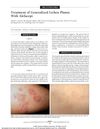
February 2006 in “Archives of Dermatology” This case report describes a 25-year-old woman with widespread lichen planus who did not respond to multiple systemic treatments, including antihistamines, hydroxychloroquine sulfate, and corticosteroids.
February 2026 in “JEADV Clinical Practice” This report describes a rare case of scarring alopecia, diagnosed as lichen planopilaris (LPP), affecting solely the limbs, highlighting the necessity for thorough evaluation of LPP beyond the scalp.
 1 citations
,
October 2023 in “Skin research and technology”
1 citations
,
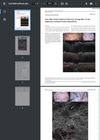
October 2023 in “Skin research and technology” This study found that line-field confocal optical coherence tomography effectively visualized key diagnostic features of classic lichen planopilaris in real time, suggesting its potential as a valuable diagnostic tool.
 April 2017 in “Journal of Investigative Dermatology”
 In this study, deep phenotyping of 68 patients with XPD gene defects successfully separated individuals by clinical diagnosis and survival status, potentially improving diagnosis and prognosis for xeroderma pigmentosum and trichothiodystrophy.