 May 2025 in “Clinical Cosmetic and Investigational Dermatology”
 In this clinical study, the researchers found that a standardized wheat polar lipid complex, in both oil and powder form, significantly reduced hair shedding and improved hair growth in 99 women with acute telogen effluvium over 56 to 84 days.
 November 2023 in “International Journal of Cosmetic Science”
 This study found that a wheat polar lipid complex supplement significantly reduced hair loss and improved hair growth and volume in women experiencing acute hair shedding, including postmenopausal women.
 38 citations
,
June 2018 in “Plant & cell physiology/Plant and cell physiology”
38 citations
,
June 2018 in “Plant & cell physiology/Plant and cell physiology” This study found that overexpressing PLC5 in Arabidopsis thaliana reduced root growth but improved drought tolerance, and suggests PIP2 is crucial for root hair growth.
 28 citations
,
December 2018 in “Plant, cell & environment/Plant, cell and environment”
28 citations
,
December 2018 in “Plant, cell & environment/Plant, cell and environment” This study found that the PLC2 gene plays a critical role in auxin-mediated root development in Arabidopsis, influencing root growth and PIN2 distribution.
83 citations
,
October 2012 in “International Journal of Oncology” In this in vitro study, wedelolactone induced selective apoptosis in prostate cancer cells by inhibiting 5-Lox activity, suggesting it may have potential as a treatment for prostate cancer.
 5 citations
,
October 2019 in “The journal of investigative dermatology/Journal of investigative dermatology”
5 citations
,
October 2019 in “The journal of investigative dermatology/Journal of investigative dermatology” This study identified a high-risk allele in the PLCD1 gene associated with hereditary trichilemmal cyst formation, proposing a monoallelic two-hit mechanism as the underlying genetic pathogenesis.
 July 1998 in “Proceedings of SPIE”
 This study found that Low Power Laser therapy may be an effective complementary treatment for scalp alopecia and crural ulcers, showing quicker and potentially better results than conventional treatments.
 January 2026 in “Frontiers in Pharmacology”
 This review highlights the potential of wedelolactone from the plant Wedelia Chinensis, summarizing its reported pharmacological effects, including anti-inflammatory, antiviral, antibacterial, antitumor, anti-osteoporosis activities, and organ protection based on existing in vitro and in vivo research findings.
58 citations
,
March 2019 in “Frontiers in Pharmacology” This study found that wedelolactone from Eclipta prostrata L. significantly reduced lung inflammation and fibrosis in mice with bleomycin-induced pulmonary fibrosis, suggesting potential therapeutic benefits through AMPK activation.
9 citations
,
July 2022 in “Journal of Biological Chemistry” This study in mice found that WWP2 facilitates odontoblast differentiation and dentin formation by targeting PTEN for degradation, thereby enhancing KLF5 activity, which may suggest its crucial role in dental development.
 2 citations
,
April 2020 in “bioRxiv (Cold Spring Harbor Laboratory)”
2 citations
,
April 2020 in “bioRxiv (Cold Spring Harbor Laboratory)” This study introduced a statistical method, PLACO, which revealed novel genetic regions associated with both Type 2 Diabetes and Prostate Cancer from GWAS data.
 March 2026 in “International Journal of Science Strategic Management and Technology”
 This research introduces WomenCare, a web-based system using a machine learning model to predict PCOD risk by evaluating factors like age, BMI, and lifestyle habits; it aims to help women monitor their health but is not a substitute for a professional diagnosis.
49 citations
,
January 2010 in “Plant and Cell Physiology” This study found that a phosphorus starvation-insensitive mutant of Arabidopsis thaliana shows altered root growth and auxin responses under low phosphate conditions compared to wild-type plants, suggesting a role for LPR1 in regulating these traits.
13 citations
,
October 2016 in “Acta Biochimica et Biophysica Sinica” This study found that GhPLDα1 in upland cotton may be involved in fiber development, correlating with increased hydrogen peroxide and cellulose biosynthesis during secondary cell wall thickening.
101 citations
,
June 2003 in “The EMBO Journal” Phospholipase Cδ1 is crucial for normal skin and hair development.
 43 citations
,
December 2020 in “PLOS Genetics”
43 citations
,
December 2020 in “PLOS Genetics” This study used a new statistical approach, PLACO, to identify several novel shared genetic regions associated with both Type 2 Diabetes and Prostate Cancer in two large GWAS datasets.
April 2021 in “Journal of Investigative Dermatology” Blocking DPP4 can help prevent fat loss and skin fibrosis.
January 2013 in “eScholarship (California Digital Library)” This study observed that activating Wnt signaling pathways increased the efficiency of reprogramming human fibroblasts into induced pluripotent stem cells compared to untreated cells.
117 citations
,
April 2008 in “Developmental biology” This study identified that Eda-A1 unexpectedly induces placode inhibitors dkk4 and lrp4, indicating the importance of tightly regulated signaling for proper ectodermal organ development.
65 citations
,
February 2018 in “The Plant Journal” This study found that PLDζ2 and NPC4 enzymes play distinct roles in lipid remodeling and root hair growth in Arabidopsis under phosphate deficiency, influencing root hair density and length in a tissue- and time-specific manner.
 August 2016 in “Journal of Investigative Dermatology”
 This case report identifies a novel LIPH gene mutation linked to autosomal recessive woolly hair/hypotrichosis in a Japanese boy, expanding the spectrum of known mutations associated with this condition.
 January 2026 in “RSC Advances”
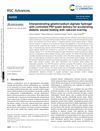
 This study found that the natural polymer-based hydrogel Gel/SA@PL released growth factors in a controlled way, which enhanced tissue regeneration and minimized scarring in the healing of diabetic wounds.
 October 2024 in “International Journal For Multidisciplinary Research”
 This review highlights that Wedelolactone, a compound in Eclipta prostrata, appears to be a potent antioxidant and selective modulator of proteins linked to chronic diseases, suggesting further research into its pharmacological effects is warranted according to the examined data.
 14 citations
,
June 2021 in “Expert Opinion on Therapeutic Patents”
14 citations
,
June 2021 in “Expert Opinion on Therapeutic Patents” This review discusses various Wnt pathway modulators developed between 2014 and 2020, highlighting their potential as treatments for diseases like cancer and osteoarthritis, but reports no new clinical results.
This study found that WISP-1 plays a key role in ligamentum flavum fibrosis through the Hedgehog-Gli1 pathway, with cyclopamine showing potential to reduce fibrosis effects in a rabbit model.
53 citations
,
November 2014 in “International Journal of Oncology” This study found that wedelolactone, a natural compound from plants, inhibited breast cancer-mediated osteoclast differentiation and activity in vitro, suggesting its potential as a therapy for bone destruction in breast cancer bone metastasis.
11 citations
,
December 2024 in “Wound Repair and Regeneration” In this study, researchers created the WRAHPS Guidelines to standardize the reporting of preclinical wound healing studies, aiming to improve transparency, enable comparative analysis, and support the development of human clinical trials for wound healing disorders.
2 citations
,
June 2024 in “Skin Research and Technology” This study found that low-level laser stimulation activates the Wnt signaling pathway, promoting hair follicle stem cell regeneration and accelerating wound healing.
 3 citations
,
November 2020 in “Phyton-international Journal of Experimental Botany”
3 citations
,
November 2020 in “Phyton-international Journal of Experimental Botany” This review discusses the potential therapeutic applications of wedelolactone, a compound in Eclipta prostrata, for various chronic human diseases and reports no new clinical results.
 November 2020 in “Journal of The American Academy of Dermatology”
 This study reported that using plain bottles instead of commercial kits for extracting platelet-rich plasma may be an effective method for treating hair loss.