 28 citations
,
May 2019 in “Life Sciences”
28 citations
,
May 2019 in “Life Sciences” This study found that ginsenoside Rb1 promoted the growth of mink hair follicles and dermal papilla cells, potentially through activating the PI3K/AKT/GSK-3β signaling pathway.
 2 citations
,
September 2023 in “Curēus”
2 citations
,
September 2023 in “Curēus” This study reported that topical spironolactone improved lid margin vascularity, corneal fluorescein staining, and disease severity scores in patients with ocular graft-versus-host disease, suggesting a potential therapeutic role by enhancing corneal lipid production with minimal adverse effects.
21 citations
,
January 2020 in “Brazilian Journal of Medical and Biological Research” This study found that lncRNA H19 may regulate CTGF expression in KGN cells by acting as a "sponge" for miR-19b, potentially influencing polycystic ovary syndrome development.
 January 2024 in “Wiadomości Lekarskie”
 This study reported that interdisciplinary treatment, combining surgical and rehabilitation methods, led to satisfactory outcomes for patients with extensive facial skull injuries. The authors emphasized the importance of teamwork between surgeons and physiotherapists to minimize complications and enhance recovery, restoring function, aesthetics, and physical fitness.
 April 2016 in “Journal of Investigative Dermatology”
 This study suggests that dsRNA may enhance KRT9 expression in palm and sole skin through β-catenin signaling, potentially linking mechanical damage to specific skin features and certain skin conditions.
19 citations
,
January 2023 in “Genes” This study identified genomic regions and genes associated with wool, live weight, body condition, and reproduction traits in Uruguayan Merino sheep, highlighting potential genetic factors influencing these characteristics.
147 citations
,
October 2021 in “Cancer Communications” This study found that the novel anti-HER2 antibody RC48 demonstrated promising activity and manageable safety in patients with HER2-overexpressing, advanced gastric or gastroesophageal junction cancer after at least two prior chemotherapy lines.
1 citations
,
January 2003 in “Current Pharmaceutical Design” This review explores existing research on the therapeutic benefits of ginseng and ginsenosides for various dermatological conditions, but it reports no new clinical results.
 2 citations
,
October 2022 in “International journal of Ayurvedic medicine”
2 citations
,
October 2022 in “International journal of Ayurvedic medicine” This review examines the traditional uses and biological activities of Glycyrrhiza glabra in Ayurveda, but reports no new clinical results; the authors identify a gap in evidence supporting its medicinal potential.

This article discusses the Graduate Program in Pharmaceutical Sciences at the University of Sorocaba and emphasizes collaborating internationally to improve health policies and practices but reports no new research findings.
January 2021 in “Springer eBooks” Combining PRP with other treatments can improve hair loss outcomes.
 August 2023 in “International journal of research in medical sciences”
 In this study, application of Revgrey® hair serum was found to be safe and may offer some benefit in treating premature greying of hair, with slightly to moderately increased hair recovery observed in a small group of patients after 12 weeks.
 8 citations
,
September 2024 in “BMC Genomics”
8 citations
,
September 2024 in “BMC Genomics” In this study, researchers found that the novel gene circCFAP20DC enhances the proliferation of goat follicular granulosa cells by activating the RB pathway, facilitating their progression from the G1 to S phase during follicular development.
 June 2026 in “Frontiers in Oncology”
 In this study, researchers found that deficiencies in Gsdma1/2/3 significantly inhibited the initiation and progression of cutaneous squamous cell carcinoma (cSCC) in mice, suggesting GSDMA's role in promoting cSCC proliferation and its potential as a therapeutic target.
 45 citations
,
July 2009 in “Journal of human genetics”
45 citations
,
July 2009 in “Journal of human genetics” This study found that an SNP in the FGFR2 gene, rs4752566, was significantly associated with hair thickness in Asian populations, suggesting an effect on hair morphology through altered FGFR2 expression levels.
August 2026 in “Pharmacological Research - Modern Chinese Medicine” In this study, topical applications of Agrimonia pilosa extract and agrimonolide demonstrated notable anti-inflammatory and wound healing benefits in animal models, significantly reducing inflammation and enhancing wound closure compared to controls. However, further research in humans is needed to confirm these preclinical findings.
May 2026 in “SKIN The Journal of Cutaneous Medicine” This study suggests that a proprietary nutraceutical supplement gummy and peptide serum regimen may be safe and effective for improving hair growth and density in females with pattern hair loss.
47 citations
,
June 2017 in “The FEBS journal” This study found that CRISPR/Cas9-induced loss-of-function mutations in the FGF5 gene significantly increased wool length and yield in genetically modified Chinese Merino sheep compared to wild-type controls.
 2 citations
,
December 2023 in “Advanced science”
2 citations
,
December 2023 in “Advanced science” This review discusses the roles and mechanisms of glycosaminoglycans in wound healing and presents challenges and potential applications for GAG-based biomaterials without reporting new experimental results.
 41 citations
,
April 2016 in “Journal of experimental botany”
41 citations
,
April 2016 in “Journal of experimental botany” This research suggests that the barley protein RACB supports cell polarity functions rather than interfering with immunity, as it aids nucleus positioning during fungal attack rather than affecting early immune responses.
 3 citations
,
January 2017 in “Evidence-based complementary and alternative medicine”
3 citations
,
January 2017 in “Evidence-based complementary and alternative medicine” This study found that Galla chinensis solution significantly improved skin lesions and fungal eradication in dermatophytosis-infected dogs, showing over 85% efficacy in fungal removal after 14 days and outperforming the positive control treatment.
 November 2018 in “Chin J Clin Lab Mgt (Electronic Edition)”
 This paper introduces Concentration Growth Factor (CGF) as a potential treatment for androgenetic alopecia, but reports no clinical findings on its effectiveness in promoting hair growth.
In this study, RNA-sequencing identified differentially expressed genes, including FGF5, FGFR1, and RRAS, that affect the hair follicle growth cycle in Inner Mongolian Cashmere goats.
This article reviews current understanding of Hutchinson–Gilford Progeria Syndrome and suggests RNA-based treatments show promise, but no new clinical findings are reported.
1 citations
,
January 2010 in “SRX Pharmacology” This study found that bupropion SR may improve symptoms in female trichotillomania patients who did not respond to SSRIs, with benefits maintained through a 16-month follow-up.
September 2017 in “Journal of Investigative Dermatology” LRIG1 protein affects hair growth by regulating skin receptors, leading to hair loss when overexpressed.
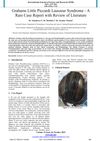 October 2023 in “International Journal of Science and Research (IJSR)”
 This paper describes Grahams Little Piccardi Lassueur Syndrome, a rare type of Lichen Planopilaris that causes different types of alopecia and distinctive skin papules, primarily affecting females aged 40 to 70, and notes the current challenges in treatment options, particularly once scarring occurs.
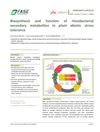 November 2025 in “Frontiers of Agricultural Science and Engineering”
 This study observed that rhizobacterial strain RT3 significantly improved drought tolerance in lettuce by increasing survival rates and fresh biomass after rewatering, with metabolites such as proline and glycine enhancing stress resilience.
 June 2026 in “Zenodo (CERN European Organization for Nuclear Research)”
 This research outlines an innovative bioregeneration chamber aimed at significantly extending human lifespan and enhancing health maintenance by treating the body as a thermodynamic system, potentially enabling an average lifespan of 130 to 150 years in an advanced therapeutic setting.
 May 2014 in “Hair transplant forum international”
 This notice announces the upcoming 22nd ISHRS Annual Scientific Meeting, highlighting it as a key event for hair restoration surgeons to learn about recent innovations; it reports no new results.