 4 citations
,
October 2024 in “American Journal of Clinical Dermatology”
4 citations
,
October 2024 in “American Journal of Clinical Dermatology” This study found that ritlecitinib improved patient-reported outcomes related to hair growth in individuals with alopecia areata, with some experiencing clinically meaningful hair regrowth, although changes in emotional symptoms and activity limitations were minimal and similar across treatment groups.
 1 citations
,
February 2018 in “Orthopedics and rheumatology”
1 citations
,
February 2018 in “Orthopedics and rheumatology” This study found that combining intra-arterial chemotherapy with Traditional Chinese Medicine may improve response rates in malignant bone and soft tissue tumor treatment while also managing specific side effects.
3 citations
,
November 1998 in “PubMed” This study found that finasteride significantly inhibits the metabolism of tirilazad to its active metabolites without greatly affecting tirilazad's overall clearance.
21 citations
,
August 1987 in “Archives of Dermatology” This communication reports previously unreported side effects, severe bullous dermatosis and onycholysis, in three patients undergoing high-dose methotrexate and leucovorin calcium therapy, impacting their chemotherapy schedules.
 June 2024 in “Journal of Clinical Oncology”
 In this retrospective study, combining TACE with Donafenib showed promising results as a first-line treatment for Chinese patients with unresectable hepatocellular carcinoma, yielding a median progression-free survival of 12.8 months and a one-year overall survival rate of 87.5%, along with a favorable safety profile.
 8 citations
,
May 2017 in “Singapore Medical Journal”
8 citations
,
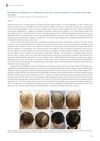
May 2017 in “Singapore Medical Journal” A Korean woman with complete hair loss regrew her hair after taking tofacitinib, with no side effects.
 January 2024 in “Wiadomości Lekarskie”
 In this study, researchers examined a patient with ZMYM2::FGFR1 fusion-positive leukemia, finding that Pemigatinib showed efficacy, while Ponatinib resistance was linked to a specific FGFR1 mutation. Other FGFR inhibitors demonstrated high effectiveness in ex vivo assays.
January 2026 in “OSF Preprints (OSF Preprints)” In this study, researchers presented a novel therapeutic approach for androgenetic alopecia combining AR-PROTAC degradation with regenerative strategies and evaluated the potential of GT20029 as a topical treatment, proposing a three-phase protocol and future research hypotheses.
December 2025 in “JEADV Clinical Practice” This review reports that innovative topical treatments for dermatologic conditions like acne and atopic dermatitis show minimal systemic absorption, indicating improved safety and tolerability compared to traditional therapies.
 January 2016 in “대한피부과학회지”
 This case report describes two patients experiencing a bortezomib-induced skin eruption as multiple plaques on the trunk, with the lesions resolving spontaneously in about a week.
 August 2023 in “The Journal of Dermatology”
 This retrospective study found that intralesional betamethasone injections led to significant repigmentation in scalp vitiligo patients without leukotrichia, suggesting it as an effective treatment option.
21 citations
,
March 2003 in “Acta Dermato Venereologica” Tacalcitol ointment effectively improves bilateral nevus comedonicus.
In a proof-of-concept study at Xiangya Hospital, the researchers observed that combining tofacitinib with low-dose interleukin-2 helped maintain remission in refractory alopecia areata patients, with three out of four maintaining complete remission for 11–20 months post-treatment and no adverse events reported.
36 citations
,
December 2021 in “The journal of allergy and clinical immunology/Journal of allergy and clinical immunology/The journal of allergy and clinical immunology” This study observed that both ritlecitinib and brepocitinib improved scalp biomarkers in patients with alopecia areata, with associations to hair regrowth seen in this phase 2a trial.
 1 citations
,
April 2009 in “Expert Review of Dermatology”
1 citations
,
April 2009 in “Expert Review of Dermatology” This study found that the once-daily gel combining calcipotriene and betamethasone dipropionate was more effective and faster in treating scalp psoriasis compared to individual treatments, with a similar safety profile.
March 2026 in “The Journal of Dermatology” This study found that ritlecitinib 50 mg is cost-effective compared to no treatment for patients in Japan with alopecia areata and significant scalp hair loss, demonstrating an incremental cost-effectiveness ratio below the country's cost-effectiveness threshold.
This review reports no new results and discusses various topical treatments, noting that fluocortin butyl ester offers anti-inflammatory effects without systemic side effects, while combinations outperform single-agent therapies in managing hyperpigmentation.
8 citations
,
May 2025 in “Pharmaceuticals” This article reviews 27 small-molecule drugs approved by the FDA in 2024, noting that among them, eight "first-in-class" drugs with breakthrough therapy status show distinct mechanisms and substantial efficacy improvements in various conditions like cancer and chronic diseases.
4 citations
,
June 2025 in “MedComm” This review detailed the significant progress and challenges in the design and application of PROTACs, a novel class of cancer therapeutics, highlighting their clinical trials, design complexities, and the role of artificial intelligence in improving their efficacy and selectivity for cancer therapy.
 August 2019 in “Regenerative Medicine”
 In June 2019, the stem cell research field saw major progress, including new clinical trials, FDA approvals, and industry collaborations.
12 citations
,
September 2020 in “Nanomaterials” This study found that centrifugally spun scaffolds with higher concentrations of platelet-derived bioactive molecules enhanced melanocyte metabolic activity and proliferation, suggesting potential for improving vitiligo treatment.
2 citations
,
June 2024 in “Dermatology” This study found that patients receiving active ritlecitinib doses reported greater satisfaction with hair growth compared to placebo, with high agreement observed between clinician evaluations of scalp hair improvement and patient satisfaction through week 48.
May 2026 in “Reactions Weekly” 
This study found that the lignan compound VB-1 may promote hair follicle growth by enhancing Wnt/β-catenin signaling and increasing dermal papilla cell proliferation in vitro.
 23 citations
,
September 2019 in “Journal of The American Academy of Dermatology”
23 citations
,
September 2019 in “Journal of The American Academy of Dermatology” In this retrospective analysis, combination therapy with tofacitinib and oral minoxidil led to significant scalp hair regrowth in patients with severe alopecia areata, with 67% achieving at least 75% regrowth, although the small sample size limits the findings.
1 citations
,
June 1999 in “American Journal of Contact Dermatitis” In this study, tazarotene 0.1% gel showed greater efficacy than tretinoin 0.025% gel in reducing acne lesions and demonstrated similar efficacy to adapalene 0.1% gel when used less frequently.
 July 2014 in “Faculty Opinions – Post-Publication Peer Review of the Biomedical Literature”
 Applying valproic acid on the scalp increased hair growth in men with hair loss.
8 citations
,
October 2024 in “Cochrane Database of Systematic Reviews” This review found that Tolvaptan is the only drug shown to slow the progression of autosomal dominant polycystic kidney disease, but it does not affect mortality or kidney failure outcomes.
The study found that the combined administration of regulatory T cells and rapamycin improved outcomes in an experimental model of chronic graft-versus-host disease.
18 citations
,
October 2022 in “Biomedicines” This review presents clinical and preclinical evidence supporting innovative regenerative approaches to treat vitiligo, as existing treatments lack a specific cure and predictable long-term repigmentation outcomes.