9 citations
,
March 2022 in “Journal of Chemical Information and Modeling” This study identified a series of novel β-glucuronidase inhibitors that may help mitigate adverse effects of first-line anti-cancer drugs by targeting gut bacteria, based on virtual high-throughput screening findings.
 1 citations
,
January 2026 in “Frontiers in Cell and Developmental Biology”
1 citations
,
January 2026 in “Frontiers in Cell and Developmental Biology” This study reviews the transformative role of artificial intelligence in biomaterial design, highlighting its ability to reduce costs through virtual screening, enhance material performance, and predict biological interactions to advance personalized and precision medicine.

This study used machine learning to develop classifiers for identifying effective inhibitors of 5α-reductase isozyme 2, achieving high performance in distinguishing potent from weak inhibitors.
 14 citations
,
November 2014 in “European journal of medicinal chemistry”
14 citations
,
November 2014 in “European journal of medicinal chemistry” This study identified 30 new compounds with significant androgen receptor binding affinity through a combination of virtual screening and in vitro testing.
 3 citations
,
July 2025 in “BIOMED natural and applied science”
3 citations
,
July 2025 in “BIOMED natural and applied science” This systematic review synthesizes the current state of drug repurposing, revealing its potential in various therapeutic areas like oncology and infectious diseases through insights from mechanistic studies and real-world evidence, and discusses emerging tools and challenges in the field.
15 citations
,
November 2024 in “Pharmaceutics” This review discusses how recent advancements in computational and lab-based methods have enhanced peptide drug discovery, noting the efficiency and cost benefits over traditional approaches and the potential for targeting difficult protein interactions, including protein degradation using proteolysis-targeting chimeras.
 April 2023 in “IntechOpen eBooks”
 This article reviews drug repurposing as a strategy to overcome challenges in drug discovery, emphasizing AI and machine learning's role, but presents no new clinical results.
 42 citations
,
January 2018 in “Expert review of precision medicine and drug development”
42 citations
,
January 2018 in “Expert review of precision medicine and drug development” This review discusses the integration of drug repurposing with personalized medicine through off-label prescribing and reports no new results, highlighting the potential for systematic exploration using omics technologies.

In this study using a virtual screening approach, eriocitrin and silymarin were identified as potent flavonoid compounds that strongly and stably interacted with 5α-reductase type II, suggesting potential development as novel treatments for androgenic alopecia.
5 citations
,
January 2018 in “Interdisciplinary sciences: computational life sciences” Accurate protein modeling can help develop new treatments for prostate cancer and other diseases.
 November 2022 in “Journal of Herbal Medicine”
 This study suggests that three mushroom-derived bioactive compounds, Zhankuic acid A, Sterenin M, and Melleolide K, may effectively inhibit SRD5A2 and stabilize its interaction, indicating potential for treating androgenic alopecia.

This study reported that high cholesterol levels were linked to increased prostate cancer risk, while selenium supplementation affected gene expression, suggesting nutritional and clinical factors might influence prostate cancer risk and biology.
 January 2024 in “Wiadomości Lekarskie”
 This study highlights the role of innate immunity and purinergic signaling in regulating hematopoiesis and hematopoietic stem/progenitor cell specification. The researchers observed that these ancient pathways operate both paracrinally and autocrinally within HSPCs, maintaining their developmental function throughout evolution.
January 2026 in “Microsystems & Nanoengineering” This review discusses advancements in skin microphysiological systems, such as 3D bioprinting, skin organoids, and skin-on-a-chip, and their effectiveness in emulating human skin functions for research and preclinical applications, highlighting the potential for replacing animal testing with these innovative technologies.
 1 citations
,
November 2023 in “BMC chemistry”
1 citations
,
November 2023 in “BMC chemistry” In this study, researchers used computational modeling and virtual screening to identify two FDA-approved drugs, Tadalafil and Finasteride, that may effectively inhibit key proteins involved in melanoma progression, suggesting potential for new therapeutic strategies against aggressive melanoma.
This study introduced ElixirSeeker2, a computational framework for designing anti-aging peptides, and found that some newly identified peptides significantly delayed cellular senescence and enhanced cellular and locomotor functions in aged Caenorhabditis elegans.
 41 citations
,
March 2017 in “PLoS neglected tropical diseases”
41 citations
,
March 2017 in “PLoS neglected tropical diseases” This study found that isotretinoin, a drug commonly used for acne, inhibits polyamine transport in Trypanosoma cruzi, leading to trypanocidal effects, and suggests its potential as a treatment for Chagas disease without affecting mammalian cell viability.
1 citations
,
October 2009 in “Cancer Epidemiology Biomarkers & Prevention” This review discusses the American Society of Preventive Oncology's focus on cancer prevention and highlights the ongoing challenges and developments in screening, tobacco control, and the need for innovative risk-reduction strategies; it reports no new research findings.
9 citations
,
August 2023 in “Molecules” This study found that the peptides RMYYY and VMYMI displayed stronger binding energy and more frequent interactions with HPGDS compared to the native inhibitor, suggesting potential as future therapeutic drugs.
2 citations
,
November 2025 in “Cancer Imaging” This review highlights recent advances in ultrasound-based radiomics and radiogenomics for ovarian cancer, suggesting these techniques improve diagnostic accuracy and patient-specific treatment strategies, despite ongoing challenges with standardization and model interpretability.
25 citations
,
August 2024 in “Virtual and Physical Prototyping” This review outlines various 3D bioprinting techniques and bioinks used for creating artificial tissues and organs, emphasizing their potential in addressing organ transplant shortages and advancing drug testing, while acknowledging existing challenges and future prospects.
 3 citations
,
April 2021 in “Journal of Medicinal Chemistry”
3 citations
,
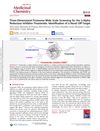
April 2021 in “Journal of Medicinal Chemistry” This study suggests that finasteride may inhibit the enzyme PNMT, potentially contributing to its sexual and psychological side effects.
 September 2020 in “arXiv (Cornell University)”
 This study demonstrated that a computational screening process can identify existing drugs and natural compounds with potential anti-COVID-19 activity, highlighting some candidates for further experimental validation.
This study aims to use a comprehensive health data set to develop a statistical model that can improve personalized and preventive health care by understanding relationships between various health parameters in individuals.
 October 2023 in “Biomedical science and engineering”
 Innovative methods are reducing animal testing and improving biomedical research.
 2 citations
,
May 2018 in “Expert opinion on orphan drugs”
2 citations
,
May 2018 in “Expert opinion on orphan drugs” This review discusses Omenn syndrome, a form of severe combined immunodeficiency, highlighting its immunopathology and genetic defects without presenting new clinical results.
 January 2026 in “Inflammation and Regeneration”
 This review highlights that two-photon excitation microscopy is a valuable tool for visualizing live skin structures and immune responses at high resolution, though its clinical use is hindered by safety and cost issues.
 1 citations
,
June 2017 in “International Journal of Toxicology”
1 citations
,
June 2017 in “International Journal of Toxicology” This symposium reviewed strategies to advance stalled drug molecules, discussed common regulatory hurdles, and explored options for repurposing drugs, but it reported no new research findings.
 153 citations
,
November 2004 in “Current Medicinal Chemistry”
153 citations
,
November 2004 in “Current Medicinal Chemistry” This article updates a prior work on pharmacophore modeling and highlights the advances in 3D database searching technologies for drug design, without presenting new research findings.
42 citations
,
April 2021 in “Pharmaceuticals” This study identified five FDA-approved drugs—cepharantine, clofazimine, metergoline, imatinib, and efloxate—as potential candidates for repurposing to interfere with viral entry in COVID-19 treatment.