 June 2025 in “Basrah Researches Sciences”
 This article discusses how medicinal plants, known for their antiviral, immunomodulatory, antioxidant, and anti-inflammatory properties, may help alleviate long-term COVID-19 effects, but emphasizes the need for further clinical trials to confirm safety and efficacy.
 June 2025 in “Journal of Neonatal Surgery”
 This article discusses the importance of lifestyle management, like physical activity and healthy habits, in mitigating polycystic ovarian syndrome's impact and reports no new clinical findings.
 April 2025 in “International Journal for Research in Applied Science and Engineering Technology”
 This study found that an herbal hair gel formulated with natural ingredients like aloe vera and essential oils showed stability, effectiveness, and aesthetic appeal, suggesting it could be a viable, safe alternative to synthetic hair gels, with potential for future production and clinical evaluation.
 April 2025 in “Journal of Neonatal Surgery”
 This review discusses the management of polycystic ovary syndrome and highlights the benefits of an integrative approach combining lifestyle, pharmacological, and herbal treatments, but reports no new research findings.
This study reviews the pharmacological potential of Bacopa monniera, highlighting its extensive therapeutic effects such as antioxidant, anti-inflammatory, and memory enhancement properties, which are primarily attributed to its diverse bioactive compounds.

This study discusses a natural hair care shampoo formulated with ingredients such as Ritha, aloe Vera, and Amla fruit, designed to clean hair, eliminate oil and dandruff, and promote strength, blackness, and growth.
In this review, researchers evaluated 111 studies on the biological activities and phytochemical components of the plant Tridax procumbens, emphasizing its ethnobotanical potential and the need for more research to understand its therapeutic benefits, especially in its native tropical regions.
 January 2025 in “International Journal for Research Trends and Innovation”
 This study assessed a herbal hair oil made from various plant ingredients, observing it supported hair growth and maintained stability for 45 days, with the phytochemical profile indicating the presence of saponins, sulfur, and ascorbic acid.
 January 2025 in “International Journal of Herbal Medicine”
 This review highlights that while dandruff affects over 50% of humans and cannot be fully eradicated, it can be controlled through chemical treatments that may cause side effects or herbal remedies such as Neem and Tea tree oil, which have longstanding use in hair care.
 January 2025 in “International Journal for Research Trends and Innovation”
 This review examines the factors contributing to Polycystic Ovary Syndrome in India, discussing genetic, lifestyle, and environmental influences, but provides no new clinical results.
 December 2024 in “Ankara Universitesi Eczacilik Fakultesi Dergisi”
 This review highlights Nigella sativa L. (black cumin) as a plant with numerous health benefits, noting its rich nutritional profile and reported therapeutic effects such as antioxidant and anti-inflammatory activities, identified through various in vitro, in vivo, and clinical research studies.
 July 2024 in “International Journal of Pharmacognosy and Life Science”
 This review highlights several natural ingredients, including Citrus Sinensis, Nigella sativa, flax seed, and coconut oil, that may promote hair growth and prevent hair loss due to their protective and nourishing properties, focusing on their formulation into hair serum.
 March 2024 in “Journal of Natural Remedies”
 In this study, an 18-year-old boy with alopecia areata successfully experienced normal and healthy hair regrowth after 4 months using microneedling with cupping, alongside internal herbal medication and topical oil application, as a cost-effective and less invasive alternative to high-cost hair treatments and transplantation.
This study suggests that bioactives like Curcumin, Quercetin, and "Tulsi" may relieve chemotherapy-induced adverse drug reactions in cancer patients, potentially reducing resistance and recurrence.
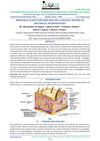 March 2024 in “International Research Journal Of Modernization In Engineering Technology And Science”
 This review highlights the beneficial effects of certain herbal drugs in treating skin diseases, such as their healing, antifungal, antiviral, antibacterial, anti-inflammatory, and antitumor-promoting activities, emphasizing recent technical advancements in the field over the past 17 years.
 March 2024 in “Journal of medicinal plants studies”
 This review comprehensively examines the Hibiscus rosa-sinensis plant, detailing its distribution, physical and chemical properties, bioactive compounds, ethnomedicinal uses, and potential toxicity, providing a broad understanding of its characteristics and health implications.
 February 2024 in “International Journal of Scientific Research in Science and Technology”
 This literature review outlines the traditional uses, nutritional composition, and bioactive compounds of pomegranate plants, highlighting their varied pharmacological actions such as antibacterial, antiviral, anticancer, and antioxidant effects, and discusses the peel's chemical composition and toxicology.
 January 2024 in “Journal of Ayurveda Campus”
 In this review, researchers reported that Psoralea corylifolia, extensively used in Ayurveda and Traditional Chinese Medicine, exhibits various pharmacological activities, including antioxidant and antidiabetic effects, and is primarily used for treating skin diseases. The authors suggest further clinical trials to explore its therapeutic potential.
 January 2024 in “Middle East Journal of Applied Science & Technology”
 This study formulated and evaluated a polyherbal body lotion using neem, tulsi, and aloe vera extracts, finding it met satisfactory physicochemical standards and was well received by users for skin smoothness and hydration without causing allergies.
 November 2023 in “International journal of Ayurveda and pharma research”
 This study prepared and evaluated a polyherbal hair oil using plant-based ingredients, finding that it met standard parameters and effectively addressed hair problems such as growth and dandruff, with FDA approval for clinical use.
 August 2023 in “International journal of basic and clinical pharmacology”
 This review article describes the ingredients and evaluation tests for formulating a hair serum aimed at improving hair growth and preventing hair loss, highlighting the roles of Citrus sinensis, Nigella sativa, flax seed, and coconut oil in addressing hair and scalp health.
 August 2023 in “International Journal of Research in Dermatology”
 In this study, 93% of women using Mintop Shampoo, containing Procapil and Redensyl, reported effectiveness in reducing hair fall, improving hair strength, and reducing dryness over 30 days, with no adverse events reported.
 July 2023 in “International journal of pharmacognosy and life science”
 This study explores the development of a herbal hair oil formulation using selected herbs to potentially address hair loss and related issues, as an alternative to synthetic medications that may cause serious side effects and offer limited effectiveness.
 May 2023 in “Journal of Pharmaceutical Research”
 This article reviews the extensive pharmacological applications of various parts of the neem plant, such as anticancer, anti-inflammatory, and antimicrobial effects, and reports no adverse effects except for allergic reactions, concluding neem is broadly beneficial with numerous medicinal and cosmetic uses.
 January 2023 in “Austin Journal of Obstetrics and Gynecology”
 This study found that in a sample of girls and adolescents aged 15–24 years, the prevalence of PCOS was 22.5% according to the Rotterdam criteria.
 November 2022 in “International journal of pharmaceutical sciences review and research”
 This review discusses the role of value addition and product diversification in promoting herbal products but reports no new research results.
 October 2022 in “Southeast Asian journal of health professionals”
 This article discusses factors influencing hair greying, such as thyroid hormone levels and postmenopausal changes, and suggests lifestyle adjustments for hair health; it reports no new clinical findings.
 October 2022 in “International journal of pharmaceutical sciences review and research”
 This study compared the antioxidant and antidiabetic activities of Hibiscus rosa-sinensis leaf extract and Eclipta alba bark extract, finding that Hibiscus rosa-sinensis exhibited greater antidiabetic activity, whereas Eclipta alba demonstrated stronger antioxidant activity.
 July 2022 in “Journal of bio innovation”
 This article discusses the role of Panchakarma, a set of five Ayurvedic therapies, in detoxifying the body, as described in traditional Ayurvedic texts.
 July 2022 in “International journal of KIU”
 This article outlines the scope, publication standards, and authorship responsibilities of the International Journal of KIU, but reports no new research results.