 15 citations
,
May 2016 in “Archives of Dermatological Research”
15 citations
,
May 2016 in “Archives of Dermatological Research” This study found significantly higher levels of the protein ULBP3 in patients with alopecia areata incognita compared to other hair loss conditions and healthy controls, suggesting ULBP3's potential as a diagnostic marker for AAI.
 23 citations
,
June 2012 in “PLOS ONE”
23 citations
,
June 2012 in “PLOS ONE” This study found that KLF4 expression in mouse hair follicle stem cells is important for effective cutaneous wound healing, with its knockdown leading to reduced stem cell populations and delayed healing.
 April 2023 in “The journal of investigative dermatology/Journal of investigative dermatology”
 This study found that deleting Ube2n in adult mouse skin leads to inflammation and other skin changes, and identifies IRAK1/4 as potential treatment targets for inflammatory skin disorders.
July 2026 in “Journal of Investigative Dermatology”  April 2016 in “Journal of Investigative Dermatology”
 This study reported that the absence of Lsh in skin led to significant epidermal hyperplasia and altered gene expression, suggesting its crucial role in regulating epidermal proliferation, differentiation, and wound healing.
 May 2018 in “European Journal of Dermatology”
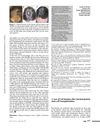
 Adjusting the medication tacrolimus resolved a boy's red nail beds after a stem cell transplant.
 4 citations
,
November 2019 in “Biomedical Journal of Scientific and Technical Research”
4 citations
,
November 2019 in “Biomedical Journal of Scientific and Technical Research” This paper does not provide study results; it shares author affiliations and publication details without reporting any findings.
August 2009 in “Mechanisms of Development” 40 citations
,
July 2015 in “Kidney International” This study found that blocking interleukin-3 improved lupus nephritis symptoms in MRL/Ipr mice, suggesting IL-3 may play a role in the disease's progression.
10 citations
,
January 1994 in “Annals of Internal Medicine” This case report presents a young woman with systemic lupus erythematosus who was found to have CD4+ lymphocytopenia.
 2 citations
,
June 2024 in “Frontiers in Plant Science”
2 citations
,
June 2024 in “Frontiers in Plant Science” This study found that RALF peptides, through liquid-liquid phase separation, form condensates with pectin and other proteins, playing a pivotal role in plant development and stress response regulation.
 April 2017 in “Journal of Investigative Dermatology”
 This study identified that dominant mutations in the KLHL24 gene cause epidermolysis bullosa through dysregulated autoubiquitination, leading to excessive degradation of keratin 14.
 1 citations
,
January 2013 in “African Journal of Pharmacy and Pharmacology”
1 citations
,
January 2013 in “African Journal of Pharmacy and Pharmacology” This study found that ultrasound assisted microwave extraction was more efficient than other methods for extracting luteolin from Eclipta prostrata, reducing extraction time and simplifying the process.
 April 2023 in “Journal of Investigative Dermatology”
 This study found that the oral IRAK4-inhibitors BAY 1834845 and BAY 1830839 reduced skin inflammation and systemic inflammatory responses in healthy volunteers, showing similar pharmacodynamic effects to prednisolone when challenged with topical imiquimod and intravenous LPS.
32 citations
,
May 2018 in “The Plant Cell” This article discusses the crucial role of root hairs in water and nutrient uptake from soil and reports no new findings.
99 citations
,
April 1998 in “The journal of investigative dermatology/Journal of investigative dermatology” This study found that human hair follicles serve as a crucial reservoir for Langerhans cells, which repopulate the epidermis depleted by ultraviolet B exposure.
21 citations
,
July 2015 in “International Journal of Nanomedicine” In this study, ultradeformable liposomes containing Tween 20 or terpenes increased phospholipid bilayer fluidity and enhanced skin penetration of sodium fluorescein, with terpenes improving hair follicle penetration.
 April 2023 in “Journal of Investigative Dermatology”
 This study demonstrated that a combination of four types of honey significantly improved hair integrity, porosity, and surface roughness after exposure to UV-A and pollution stress.
 February 2010 in “Journal of The American Academy of Dermatology”
 This study found that NB-002 demonstrated clear antifungal activity and clinically significant nail clearing in subjects with distal subungual onychomycosis and ≤50% nail involvement, compared to a vehicle treatment.
 July 1998 in “Proceedings of SPIE”
 This study found that Low Power Laser therapy may be an effective complementary treatment for scalp alopecia and crural ulcers, showing quicker and potentially better results than conventional treatments.
April 2016 in “The journal of investigative dermatology/Journal of investigative dermatology” This study found that combining UVB irradiation with anti-CD154 antibody improves the survival of hair follicle allografts in a humanized mouse model, suggesting a synergistic effect for allogeneic hair transplantation.
 April 2016 in “Proceedings of SPIE”
 This study found that UV laser-induced fluorescence spectroscopy can effectively differentiate between types of alopecia in patients, showing a high correlation between blood circulation levels and tissue autofluorescence intensity.
December 2015 in “OPAL (Open@LaTrobe) (La Trobe University)” In human hair follicle keratinocytes, this study found that treatment with the pharmacological inhibitor QLT0267 led to a strong inhibition of proliferation and migration and induced nearly 100% apoptosis.
 May 2026 in “Discover Oncology”
 This review discusses the role of LGR4 in tumors, highlighting its involvement in cancer progression, metastasis, and chemotherapy resistance, as well as its regulatory effects on tumor stem cell self-renewal and stem cell characteristics, based on multiple recent studies.
This study identified UBC22 as a novel E2 enzyme responsible for Lys11-linked ubiquitination in Arabidopsis, revealing its crucial roles in seed setting, female gametophyte development, and pathogen resistance.
6 citations
,
November 2018 in “American journal of transplantation” This study reported that using UVB preirradiation and anti-CD154 antibody treatment in a humanized mouse model prolonged hair follicle allograft survival and reduced immune cell infiltration without needing generalized immunosuppression.
 April 2023 in “Journal of Investigative Dermatology”
 This study found that LSD1 is crucial for embryonic skin barrier formation in mice, revealing its significant role in epidermal development and suggesting its potential as a target in skin diseases with barrier defects.
7 citations
,
March 2023 in “Journal of Investigative Dermatology” Low-intensity ultrasound may help protect hair follicles from chemotherapy-induced hair loss.
172 citations
,
March 2019 in “The EMBO Journal” This study found that in Arabidopsis thaliana, the interaction between extracellular leucine-rich repeat extensins and the receptor-like kinase FERONIA helps control vacuolar expansion, crucial for cellular elongation.