433 citations
,
April 2015 in “Photomedicine and laser surgery” This editorial discusses the terminology and distinctions between Low-Level Light/Laser Therapy and Photobiomodulation Therapy but reports no new clinical findings.
 September 2022 in “The American Journal of Dermatopathology”
 This study found that IL-17 expression was significantly higher in perifollicular fibrosis of active Lichen planopilaris lesions, suggesting that targeting IL-17 could impact the disease's progression.
36 citations
,
February 1998 in “Journal of Anatomy” This study used fibre optic confocal imaging to visualize subsurface structures in live mouse skin, revealing cellular details and blood vessel networks that dynamic events could be studied in vivo.
August 2024 in “JAAD Case Reports” This article reviews the current FDA-approved treatments for severe pediatric alopecia areata, including the use of Janus kinase inhibitors, but reports no new clinical findings.
 March 2025 in “Mediterranean Journal of Rheumatology”
 This study concluded that laser hair removal using Alexandrite laser emitting red and infrared light appears safe and does not significantly affect the disease activity of Systemic lupus erythematosus.
July 2025 in “Frontiers in Medicine” This study identified compound heterozygous mutations, c.1101del and c.736 T > A, in the LIPH gene responsible for causing autosomal recessive woolly hair in a child, with c.1101del being a novel frameshift mutation.
 9 citations
,
May 2013 in “JAMA Dermatology”
9 citations
,
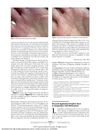
May 2013 in “JAMA Dermatology” This report documents two cases of eruptive nevi occurring in the skin folds of children with Langerhans cell histiocytosis.
12 citations
,
August 2007 in “Human Molecular Genetics” This study found that Lymphotoxin-beta primarily influences periderm differentiation, impacting epidermal and hair follicle differentiation at later stages.
43 citations
,
January 2016 in “Development” This study identified a critical NF-κB-LHX2-TGFβ2 signaling pathway essential for primary hair follicle development in mice, revealing new insights into the underlying mechanisms of morphogenesis.
2 citations
,
January 2023 in “SAGE Open Medical Case Reports” In this case report, discontinuing leflunomide resolved chronic cutaneous ulcers in a 67-year-old woman, suggesting a potential link between long-term leflunomide use and ulcer formation.
 January 2021 in “American journal of dermatological research and reviews”
 This study concluded that myositis in the reported case was caused by T-cell large granular lymphocytic leukemia, not dermatomyositis.
 August 2022 in “bioRxiv (Cold Spring Harbor Laboratory)”
 This study found that in mice, competition for hair follicles guides the organization of follicle-innervating LTMR neurons during early development, with different neuronal subtypes showing varying adaptive responses to increased neuron populations.
 7 citations
,
November 2007 in “Annales de Dermatologie et de Vénéréologie”
7 citations
,
November 2007 in “Annales de Dermatologie et de Vénéréologie” A man was diagnosed with a rare form of lupus after showing unique skin symptoms that responded well to treatment.
 November 2022 in “The journal of investigative dermatology/Journal of investigative dermatology”
 This study generated a transcriptomic map of human hair follicles, identifying compartment-specific gene expression profiles that can aid in developing targeted therapies for hair follicle disorders.
November 2022 in “Journal of Investigative Dermatology” This study generated a transcriptomic map of human hair follicle compartments, providing a database for identifying compartment-specific gene expression which may aid in developing targeted treatments for hair follicle disorders.
9 citations
,
September 2019 in “PLoS ONE” This study demonstrated that keratin K124 is specific to equine hoof lamellar tissue and established monoclonal antibodies that can specifically recognize K124 without cross-reacting with other tissues.

This study found that upper-bulge epidermal stem cells in mouse hair follicles are specialized for nerve interactions, crucial for forming tactile sensory units, and influence touch responses via EGFL6 and αv integrin pathways.
 835 citations
,
October 2008 in “Nature Genetics”
835 citations
,
October 2008 in “Nature Genetics” Lgr5 is a marker for active, long-lasting stem cells in mouse hair follicles.
36 citations
,
July 1996 in “The journal of investigative dermatology/Journal of investigative dermatology” This research reports a new autosomal recessive mutation in mice, 'lanceolate hair', causing generalized alopecia and hair shaft abnormalities, which may serve as a model for Netherton's syndrome in humans.
July 2019 in “Dermatologic Surgery” This abstract provides contact information for François Kuonen at the Lausanne University Hospital Center and reports no new research findings.
July 2026 in “Journal of the American Academy of Dermatology” April 2023 in “Journal of Investigative Dermatology” RNase L suppresses regeneration in mammals.
 36 citations
,
June 2021 in “Experimental & Molecular Medicine”
36 citations
,
June 2021 in “Experimental & Molecular Medicine” This study found that mechanical stress activates a WISP-1/Hedgehog signaling axis that contributes to ligamentum flavum hypertrophy and fibrosis, identifying Hedgehog signaling as a potential therapeutic target.
 August 1995 in “Journal of The European Academy of Dermatology and Venereology”
 New therapy helps treat hair loss.
January 2011 in “Xibei nongye xuebao” This study found that the K14 promoter exhibited higher activity in skin cell lines compared to other cell lines, while both K14 and K5 promoters were active in all tested cell lines.
30 citations
,
August 1984 in “Journal of the American Academy of Dermatology” This case report identified UVB photosensitivity and testicular failure as previously unreported components of low-sulfur hair syndrome in a 16-year-old male.
November 2025 in “Journal of Investigative Dermatology” NUL-5 may boost hair growth by improving hair follicle health and structure.
2 citations
,
December 2013 in “Journal of dermatology” This letter reports a homozygous missense mutation in the LIPH gene causing autosomal recessive hypotrichosis simplex in a Chinese patient.
 August 1995 in “Journal of The European Academy of Dermatology and Venereology”
 New therapy helps treat hair loss.
 October 2022 in “International journal of research in dermatology”
 This case report documents a 31-year-old woman with bullous SLE who showed improvement with high-dose parenteral steroids and dapsone, with ongoing follow-up due to potential kidney involvement.