March 2026 in “Journal of Burn Care & Research” This case series examined five male burn patients who developed folliculitis barbae or pseudofolliculitis barbae, highlighting the underreported nature of these complications and the variability in treatment response. The authors call for standardized diagnostic criteria and treatment protocols for these conditions in burn survivors.
 3 citations
,
May 2025 in “Cell Death and Disease”
3 citations
,
May 2025 in “Cell Death and Disease” This study found that METTL1 is upregulated in papillary thyroid cancer tissues and promotes cancer cell proliferation and metastasis through its tRNA methyltransferase activity.
96 citations
,
December 2018 in “Immunity” This study found that inhibiting TGF-β receptors in adult dermal fibroblasts restored their function and increased resistance to Staphylococcus aureus infection by enhancing their adipogenic and antimicrobial capabilities.
 7 citations
,
March 2021 in “Journal of the American Academy of Dermatology”
7 citations
,
March 2021 in “Journal of the American Academy of Dermatology” This study observed that some children and young adults with alopecia areata experienced flares during long-term tofacitinib treatment, despite initial successful hair regrowth.
 9 citations
,
January 2015 in “Current problems in dermatology”
9 citations
,
January 2015 in “Current problems in dermatology” This review discusses partial longitudinal-follicular unit transplantation (PL-FUT) for hair loss and notes its potential to multiply hair follicles while preserving donor areas, but reports no new clinical results.
 October 2025 in “International Journal of Risk & Safety in Medicine”
 In this case study, a 5-year-old girl with alopecia areata and atopic dermatitis that were unresponsive to previous treatments achieved substantial improvement with long-term tofacitinib, highlighting its potential safety and efficacy in managing both conditions concurrently.
July 2024 in “Journal of Investigative Dermatology” Brepocitinib reduces interferon signaling in hidradenitis suppurativa patients.
1 citations
,
January 2023 in “Dermatologic Therapy” This study reported that a single treatment using macrofocused ultrasound energy with a 2 mm transducer significantly reduced pore count, pore volume, and pore index in 34 Thai subjects with enlarged facial pores over a 6-month period, with no adverse events observed.
1 citations
,
January 2010 in “SRX Pharmacology” This study found that bupropion SR may improve symptoms in female trichotillomania patients who did not respond to SSRIs, with benefits maintained through a 16-month follow-up.
October 2025 in “Actas Dermo-Sifiliográficas” RF-mesotherapy with bicalutamide may be a promising new treatment for hair loss.
This article lists the clinically important interactions and skin reactions of several drugs and substances, including THA, FK506, tamoxifen, tamsulosin, tartrazine, tea tree oil, temazepam, and temozolomide, but provides no new clinical results.
 15 citations
,
July 2016 in “Urologic Clinics of North America”
15 citations
,
July 2016 in “Urologic Clinics of North America” This study found that combining 5-alpha reductase inhibitors with alpha-blockers provided the best symptomatic relief and reduced the risk of clinical progression for BPH, while PDE5 inhibitors could offset sexual side effects.
December 2012 in “Expert review of dermatology” This review summarizes current knowledge about Birt–Hogg–Dubé syndrome, discussing recent findings on its pathogenesis and treatment, but reports no new clinical results; the authors emphasize understanding its cutaneous manifestations.
May 2008 in “10th European Congress of Endocrinology” This study discovered that TTR is expressed in the human placenta as early as 6 weeks gestation, with increased levels in the first trimester potentially facilitating thyroid hormone delivery to the fetus.
 4 citations
,
August 2007 in “PubMed”
4 citations
,
August 2007 in “PubMed” This report describes a case of alopecia universalis in a woman with hepatitis C linked to pegylated interferon alfa-2b and ribavirin therapy, with hair regrowth observed one year after discontinuation.
June 2026 in “Khyber Journal Of Medical Sciences” This study found that among adults with severe alopecia areata, alopecia totalis, or alopecia universalis, oral tofacitinib was more effective than methotrexate in reducing hair loss over a 12-week period, though long-term safety and efficacy remain unestablished.
 1 citations
,
November 2001 in “Acc Current Journal Review”
1 citations
,
November 2001 in “Acc Current Journal Review” This review found that 5α‐reductase inhibitors were associated with slightly increased rates of decreased libido, erectile and ejaculatory dysfunction, gynecomastia, and mood disorders compared to placebo, though their long-term effects remain unclear.

This study found that a combination of betulin and cytostatic Namitecan had a statistically significant synergistic effect on solid Ehrlich adenocarcinoma tumors in NMRI mice, and suggests a promising method for administering betulin in in vivo experiments despite its water insolubility.
49 citations
,
November 2016 in “Frontiers in Pharmacology” This study found that over 26% of patients using Tripterygium wilfordii Hook F experienced adverse events, highlighting the need for better strategies to manage these risks.
 22 citations
,
July 2003 in “Military medicine”
22 citations
,
July 2003 in “Military medicine” This article reviews the causes, classification, and new treatments for pseudofolliculitis barbae but provides no new research findings.
8 citations
,
January 2017 in “Dermatology online journal” This case study reports that tofacitinib led to remission of psoriasis but did not improve alopecia universalis in one patient, suggesting varied responses in treating such conditions.
7 citations
,
March 2004 in “Journal of the American Academy of Dermatology” Tiger tail banding and hair abnormalities are reliable indicators for diagnosing trichothiodystrophy.
60 citations
,
August 2022 in “ESMO Open” This review discusses managing common and notable adverse events associated with the antibody-drug conjugate trastuzumab deruxtecan in patients with HER2-positive unresectable/metastatic breast cancer and reports no new clinical results.
July 2026 in “Pharmaciana” This study found that the optimal characteristics for ulin seed oil extraction are fresh, mature, and resinous seeds, and that FTIR spectrophotometry with PCA can effectively detect adulteration of the oil, particularly at certain wavenumbers like 1745 cm⁻¹.
2 citations
,
February 2024 in “Indian Dermatology Online Journal” This study reports that tofacitinib, a JAK 1/3 inhibitor, showed significant improvement in a patient with co-occurring severe alopecia totalis and lichen planus hypertrophicus, conditions that are typically resistant to treatment.
 24 citations
,
April 2017 in “Aesthetic plastic surgery”
24 citations
,
April 2017 in “Aesthetic plastic surgery” In this study, micro-autologous fat transplantation (MAFT) for frontal augmentation using the MAFT-GUN showed high patient satisfaction and no complications among 178 patients, suggesting it may be a reliable method for forehead contouring.
14 citations
,
September 2017 in “Clinical and Experimental Dermatology” In this report, a 26-year-old man with folliculitis decalvans unresponsive to standard treatments experienced significant disease clearance after 25 months of systemic photodynamic therapy, marking the first documented use of this therapy for this condition.
 January 2025 in “Dermatology and Therapy”
 This study found that ultraviolet-induced fluorescence trichoscopy can help differentiate between scarring and non-scarring alopecia and between psoriasis and seborrheic dermatitis.
February 2026 in “Annals of Case Reports” In this study, a patient with over 40 years of Alopecia Universalis achieved complete regrowth of hair on the scalp and eyebrows within less than three years after consistent treatment with oral Tofacitinib, suggesting its potential as a promising therapy for this condition.
 41 citations
,
December 2015 in “JAMA Dermatology”
41 citations
,
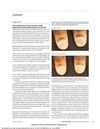
December 2015 in “JAMA Dermatology” Tofacitinib citrate improved nail dystrophy and pain in patients with alopecia universalis without causing side effects.