Search
for
Sort by
Research
90-120 / 1000+ results
research No evidence for THAP1/DYT6 variants as disease modifiers in DYT1 dystonia
THAP1 gene changes do not affect DYT1 dystonia; finasteride may help reduce tics and OCD in Tourette syndrome.
research Post-tyrosinase Inhibition of Melanogenesis by Melatonin in Hair Follicles in Vitro

research A frameshift mutation in the TRPS1 gene showing a mild phenotype of trichorhinophalangeal syndrome type 1
In this case report, a 20-year-old male with tricho-rhino-phalangeal syndrome was found to have a de novo frameshift mutation in the TRPS1 gene, highlighting the challenges in diagnosing this rare disorder.
research A second KRT71 allele in curly coated dogs
This study suggests that a newly identified KRT 71 gene variant may be responsible for curly hair in Curly Coated Retrievers and potentially contributes to follicular dysplasia.
research Cell surface receptor kinase FERONIA linked to nutrient sensor TORC signaling controls root hair growth at low temperature linked to low nitrate in Arabidopsis thaliana
This study found that low temperature triggers root hair elongation in Arabidopsis thaliana through a FERONIA-ROP2-TORC signaling pathway, also activated by nitrogen deficiency.
research 061 Selective inhibition of tyrosine kinase 2 prevents and restores interleukin-12-induced hair follicle immune privilege collapse: a novel approach to alopecia areata therapy?
This study found that interleukin-12 signals play a role in hair follicle immune privilege collapse in ex vivo alopecia areata models, and a TYK2 inhibitor may help prevent or reverse this process.

research 583 Induction of type 17 collagen decreases ultraviolet b-induced cellular senescence in human htert/ker-ct keratinocytes
This study found that apocynin restored COL17A1 expression in human keratinocytes and reduced UVB-induced cellular senescence, DNA damage, and cell cycle arrest.
research Deucravacitinib, an oral, selective, allosteric tyrosine kinase 2 inhibitor, in patients with alopecia areata: efficacy and safety results of a phase II, multicenter, randomized, double-blinded, placebo-controlled trial
This study found that the TYK2 inhibitor deucravacitinib did not significantly improve hair regrowth in patients with alopecia areata compared to placebo, suggesting it may not be effective for this condition. No new safety issues were identified.
research A Group of Type I Keratin Genes on Human Chromosome 17: Characterization and Expression
This study found that among the two highly homologous K16 genes on chromosome 17, only one produced a functional protein due to stronger promoter activity.

research AXR3andSHY2interact to regulate root hair development
This study found that different stabilizing mutations in Aux/IAA proteins affect root hair development in Arabidopsis by disrupting the auxin response and suggest a model where the relative abundance of these proteins determines root hair initiation.

research The TFIID subunit TAF4 regulates keratinocyte proliferation and has cell-autonomous and non-cell-autonomous tumour suppressor activity in mouse epidermis
In this study, inactivating the TAF4 subunit of transcription factor TFIID in mouse epidermis disrupted gene expression linked to skin and hair function, and increased tumor risk.
research CCDC47 gene and trichohepatoneurodevelopmental syndrome: Report of the fifth and sixth cases from Saudi Arabia
In this case study, researchers detailed two Saudi cases of the ultra-rare Trichohepatoneurodevelopmental syndrome, identifying pathogenic variants in the CCDC47 gene and reinforcing a strong gene-disease association, which helps clarify the disorder's clinical features and genetic mutations.
research Ku80 as a Novel Receptor for Thymosin β4 That Mediates Its Intracellular Activity Different from G-actin Sequestering
This study found that increased intracellular expression of thymosin β4 is necessary and sufficient to induce PAI-1 gene expression in endothelial cells, potentially mediated through Ku80 as a novel receptor.
research Localization and Regulation of Expression of the FAR-17A Gene in the Hamster Flank Organs
research A group of type I keratin genes on human chromosome 17: characterization and expression.
This study found that despite strong homology between two K16 genes, only one encoded a functional protein that assembled into keratin filaments in epithelial cells, possibly due to promoter strength differences.
research Complete hair regrowth in a patient with severe alopecia areata treated with deucravacitinib
In a case report, complete hair regrowth was observed in a patient with severe alopecia areata after treatment with deucravacitinib, a TYK2 inhibitor, suggesting new therapeutic avenues for alopecia areata despite TYK2 not being traditionally linked to this condition.

research Induction of dark keratinocytes by 12-O-tetradecanoyl-phorbol-13-acetate and mezerein as an indicator of tumor-promoting efficiency
This study found that TPA was significantly more effective than mezerein in inducing dark basal keratinocytes in mouse skin, which may be important in early tumor promotion stages.
research Carbobenzoxy-capped Phe-Lys(BODIPY TMR-X-acyloxymethyl ketone(QSY7)
This chapter discusses the synthesis and analysis of near-infrared fluorescent activity-based probes for imaging cysteine protease activity, reporting potential benefits for disease diagnosis but noting challenges in imaging specific locations with high cathepsin activity.
research 034 Characterization of novel TMEM173 mutation causing a lupus- and SAVI-like phenotype, modified by polymorphisms in TMEM173 and IFIH1
This study identified a novel G207E STING mutation causing a distinct phenotype involving alopecia, photosensitivity, and thyroid dysfunction, and suggests that common polymorphisms in TMEM173 and IFIH1 may influence disease presentation.
research Trichothiodystrophy: Current Concepts
This study explains that while trichothiodystrophy and xeroderma pigmentosum share genetic defects, TTD patients primarily exhibit issues in transcription initiation, not the increased skin cancer risk seen in XP.
research First-in-human phase 1 study of ETC-159 an oral PORCN inhbitor in patients with advanced solid tumours.
This phase I study reported that ETC-159, targeting Wnt signalling, showed tolerable safety profiles at doses that inhibit its pathway, though bone turnover markers increased, warranting early and regular monitoring. No tumor responses were observed, but two patients achieved stable disease for several cycles.

research Type A insulin resistance syndrome due to a novel heterozygous c.3486_3503del (p. Arg1163_Ala1168del) INSR gene mutation in an adolescent girl and her mother
In this case report, a novel heterozygous mutation in the insulin receptor gene was identified in an adolescent girl with type A insulin resistance syndrome, characterized by excessive hair growth and skin changes, and her mother.
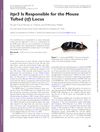
research Itpr3 Is Responsible for the Mouse Tufted (tf) Locus
This study identified the Itpr3 gene as responsible for the tufted hair loss phenotype in the BTBR mouse strain.
research Every TURP Is not Just BPH
In this case study, concurrent prostatic adenocarcinoma and a rare solitary fibrous tumor were identified on a transurethral resection of the prostate specimen.

research PRX102 Participates in Root Hairs Tip Growth of Rice
This study found that PRX102, a peroxidase with a unique polar localization pattern, plays a role in root hair growth by aiding the transport of materials to the tips of growing root hairs.
research The use of megavoltage radiation therapy in the treatment of thymomas in rabbits: 19 cases
This study found that rabbits with thymomas treated with radiation therapy had a median survival time of 313 days, increasing to 727 days excluding early deaths, with lower body weight linked to decreased survival.
research A Case of Tricho-rhino-phalangeal Syndrome Caused by a Novel Heterozygous Nonsense Mutation in the TRPS1 Gene
A new mutation in the TRPS1 gene caused Trichorhinophalangeal syndrome in a 17-year-old, highlighting the need for genetic testing.

research Thyrotropin releasing hormone (TRH): a new player in human hair‐growth control
This study found that thyrotropin-releasing hormone (TRH) acts as a potent stimulator of hair growth in human scalp hair follicles, promoting elongation and prolonging the anagen phase.
research Induction of ornithine decarboxylase in specific subpopulations of murine epidermal cells following multiple exposures to 12-O-tetradecanoylphorbol-13-acetate, mezerein and ethyl phenylpropriolate
This study suggests that chronic treatment with TPA in mouse skin selectively expands a keratinocyte subpopulation hyperinducible for ODC, which may be a key target for neoplastic transformation.