 1 citations
,
March 2023 in “Frontiers in Cardiovascular Medicine”
1 citations
,
March 2023 in “Frontiers in Cardiovascular Medicine” A specific gene variant is linked to heart disease, increased heart muscle, curly hair, and thick skin on palms and soles.
 35 citations
,
August 2010 in “The American journal of pathology”
35 citations
,
August 2010 in “The American journal of pathology” This study reports that hypomorphic alleles of the Ass1 gene in mice resemble human CTLN1, providing a potential model for preclinical studies and indicating that standard treatments for CTLN1 can rescue phenotypes.
1 citations
,
February 2025 in “Journal of the Neurological Sciences” This study suggests that BTP levels in cerebrospinal fluid might help diagnose CIDP and predict therapy response but require validation in larger cohorts.
 November 2020 in “International journal of contemporary pediatrics”
 This study reports two siblings with severe combined immunodeficiency due to a mutation in the FOXN1 gene, characterized by T-cell immunodeficiency, alopecia totalis, and nail dystrophy.
60 citations
,
December 1988 in “Journal of Biochemical Toxicology” In this study, TCDD administered to male rats down-regulated EGF receptor in liver plasma membranes and increased protein kinase activity, suggesting EGF receptor–mediated toxicological effects.
 August 2024 in “Cell Death and Disease”
 This study found that toll-like receptor 9 plays a previously unrecognized role in sensing skin injury and influencing tissue repair and regeneration in adult mice by modulating γδT cell migration.
 18 citations
,
November 2016 in “Neuromuscular Disorders”
18 citations
,
November 2016 in “Neuromuscular Disorders” This study found that patients with myotonic dystrophy types 1 and 2 often exhibit skin abnormalities, which correlate with genotype severity and serum vitamin D levels, and suggest premature aging.
2 citations
,
September 2016 in “Journal of Dermatological Science” Reduced TRPS1 leads to increased STAT3 and SOX9 in hair follicles, affecting hair growth.
October 2025 in “Diagnostics” In this case study, an 18-year-old woman's triangular alopecic patch diagnosed as temporal triangular alopecia was considered non-progressive and had no impact on her quality of life, so no treatment was initiated.
 8 citations
,
January 2009 in “Journal of pediatric endocrinology & metabolism/Journal of pediatric endocrinology and metabolism”
8 citations
,
January 2009 in “Journal of pediatric endocrinology & metabolism/Journal of pediatric endocrinology and metabolism” This study reports a novel TRbeta gene mutation associated with resistance to thyroid hormone syndrome, which may contribute to various forms of alopecia in the affected family members.
 January 2019 in “Clinical neuropharmacology”
 This case report describes a 4-year-old girl with trichotillomania triggered by vitamin D deficiency, who showed dramatic improvement with vitamin D therapy.
May 2024 in “JDDG Journal der Deutschen Dermatologischen Gesellschaft” This case study describes a middle-aged woman diagnosed with a proliferating trichilemmal tumor on her scalp, emphasizing the importance of comprehensive diagnostic approaches and highlighting surgical excision as the primary treatment.

This observational study reviewed thyroid eye disease patients treated with teprotumumab at one center, reporting common side effects like fatigue and dry eye symptoms, with serious adverse events including two cases of blood clots and one pulmonary embolism.
37 citations
,
January 1986 in “Carcinogenesis” This study found that TPA treatment transiently induces high levels of ODC in mouse epidermal cells, particularly around hair follicles, with localization reduced by retinoic acid or cycloheximide pretreatment.
 72 citations
,
November 2012 in “PloS one”
72 citations
,
November 2012 in “PloS one” This study found that dysregulation of the folliculin-p0071 interaction may lead to changes in cell adhesion and signaling, contributing to conditions like emphysema and renal cell carcinoma.
2 citations
,
May 2020 in “The journal of investigative dermatology/Journal of investigative dermatology” This study describes a family where a TP63 mutation was linked with prominent alopecia and mild ectodermal dysplasia features.
8 citations
,
December 2017 in “Small Ruminant Research” This study reports that variation in the ovine TCHH gene may influence wool fibre curvature, with specific gene variants affecting the mean fibre curvature in sheep.

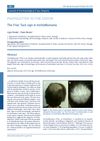
The man has Temporal Triangular Alopecia, a stable, non-scarring hair loss condition best treated with hair transplantation.
May 2022 in “The journal of investigative dermatology/Journal of investigative dermatology” This study found that TET2 plays a tumor-suppressive role in preventing squamous cell carcinomas by regulating 5-hydroxymethylcytosine levels, suggesting therapeutic potential for DNA methylation dynamics.
 January 2013 in “International Journal of Trichology”
 This case report highlights the discovery of a novel TRPS1 gene mutation in a 17-year-old with TRPS type I, underscoring the diagnostic importance of hair symptoms in congenital hair diseases.
 3 citations
,
March 2020 in “International Journal of Molecular Sciences”
3 citations
,
March 2020 in “International Journal of Molecular Sciences” This study found that overexpressing the gene Thymosin β4 (Tβ4) can promote the growth and development of secondary hair follicle dermal papilla cells in cashmere goats, suggesting its potential as a target for increasing cashmere production.
33 citations
,
December 2005 in “British Journal of Clinical Pharmacology” This study found that the Transdermal Delivery System efficiently delivers testosterone systemically and showed bioequivalent hormone concentrations to a known topical gel in healthy males.
 2 citations
,
July 2011 in “AFRICAN JOURNAL OF BIOTECHNOLOGY”
2 citations
,
July 2011 in “AFRICAN JOURNAL OF BIOTECHNOLOGY” This study identified genetic variations in the DSG4 gene among sheep, revealing valuable markers for assessing their impact on wool traits.
 9 citations
,
January 2023 in “International Journal of Biological Sciences”
9 citations
,
January 2023 in “International Journal of Biological Sciences” This study suggests that CTHRC1, a protein expressed in cardiac fibroblasts, may improve wound repair and prevent cardiac rupture after myocardial infarction by activating a specific signaling pathway.
 13 citations
,
June 2012 in “Journal of Dermatological Case Reports”
13 citations
,
June 2012 in “Journal of Dermatological Case Reports” This report describes an 8-year-old male with trichotillomania, confirmed by trichoscopy showing characteristic hair damage and patterns.
 2 citations
,
January 2000 in “Journal of Toxicologic Pathology”
2 citations
,
January 2000 in “Journal of Toxicologic Pathology” This study identified a single autosomal recessive gene responsible for hypotrichosis in a mutant rabbit strain, affecting hair growth and causing epidermal and hair follicle abnormalities.
71 citations
,
January 2011 in “Journal of cutaneous pathology” This case report describes the first confirmed instance of trichodysplasia spinulosa in a child with Down syndrome and leukemia, linking it to the TS-associated polyomavirus.
4 citations
,
October 2021 in “Journal of Clinical Medicine” This study found that individuals with heterozygous truncation-type variants in the *DSP* gene exhibit lower skin temperature and higher transepidermal water loss, with specific microscopic skin changes and pseudomonilethrix.
 32 citations
,
May 2012 in “PloS one”
32 citations
,
May 2012 in “PloS one” This study found that despite the persistence of aberrant double-negative T-cells, functional immune-competence was maintained after thymic transplantation in a patient with a rare FOXN1 mutation.
24 citations
,
March 2016 in “Journal of Investigative Dermatology” This study suggests that TIP39 and its receptor PTH2R, identified in human epidermis, may play a role in keratinocyte function and influence skin differentiation.