7 citations
,
January 2009 in “Indian Journal of Dermatology Venereology and Leprology” Hair changes may indicate disease activity in pemphigus patients.
March 2026 in “Mendeley Data” This abstract presents supplementary trichoscopy images for alopecia areata and scarring alopecia but reports no clinical findings.
 January 2026 in “Forum Dermatologicum”
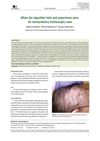
 This case study examined a 72-year-old woman with unique hair shaft constrictions consistent with monilethrix, despite features atypical for this condition, ultimately reaching a diagnosis that led to successful improvement using oral minoxidil and reduced hair trauma.

This study developed an automated image analysis framework for diagnosing hair disorders using trichoscopic images, reporting a Random Forest classifier as having an 86.67% accuracy in distinguishing between different scalp pathologies based on quantitative image features.
21 citations
,
January 2010 in “International journal of trichology” This report on two Indian male siblings with monilethrix highlights trichoscopy's role in diagnosing this condition, which can be complicated by early-onset androgenetic alopecia.
 November 2023 in “Laser therapy”
 In this case report, trichoscopy was highlighted as a vital diagnostic tool for pediatric alopecia areata, showing significant hair regrowth in a 4-year-old girl with toxoplasma-related alopecia after six weeks of therapy, emphasizing its role in tracking therapeutic progress.
 January 2023 in “Al-Azhar International Medical Journal /Al-Azhar International Medical Journal”
 This study found that quantitative trichoscopy is a simple and effective method for determining hair density and thickness in Egyptians, establishing baseline values for clinical hair loss investigations.
November 2021 in “Skin appendage disorders” This case report describes the first known instances of male androgenetic alopecia with trichoteiromania, suggesting self-induced hair loss can occur alongside patterned miniaturization of hair.
37 citations
,
April 1977 in “Journal of Cutaneous Pathology” This study found that specific histologic features in skin biopsies can help support a diagnosis of traumatic alopecia (trichotillomania), but not all markers are distinct to the condition.
 June 2026 in “International Journal of Ayurvedic Medicine”
 In this study, researchers investigated the alignment of trichoscopic findings with ayurvedic signs (lakshanas) for diagnosing hair loss, suggesting that integrating these perspectives could enhance diagnostics and management of hair and scalp conditions.
October 2022 in “International Journal of Research in Dermatology” This study suggests that hormonal disturbances play a role in female pattern hair loss and that trichoscopy may be a useful tool for diagnosis and differentiation from other conditions.
 1 citations
,
October 2022 in “Asian journal of medical sciences”
1 citations
,
October 2022 in “Asian journal of medical sciences” This study found trichoscopy to be a highly sensitive, non-invasive method for diagnosing tinea capitis in children, which could be valuable in resource-limited settings lacking mycological culture facilities.
1 citations
,
January 2016 in “Klinicheskaya dermatologiya i venerologiya”  10 citations
,
January 2015 in “Skin appendage disorders”
10 citations
,
January 2015 in “Skin appendage disorders” This study suggests that while low-cost videomicroscopes can correctly identify hair shaft alterations, they may be unreliable for detailed follicular and perifollicular trichoscopic examination compared to standard videodermatoscopes.
 16 citations
,
January 2011 in “International Journal of Trichology”
16 citations
,
January 2011 in “International Journal of Trichology” This article discusses the principles and considerations of clinical photography for hair disorders in dermatology, reporting no new clinical findings.
 13 citations
,
August 2017 in “International Journal of Dermatology”
13 citations
,
August 2017 in “International Journal of Dermatology” This study reported that trichoscopy revealed distinctive patterns across different autoimmune bullous diseases, suggesting it can be a useful preliminary diagnostic tool for differentiating these conditions.
October 2023 in “Asian journal of pharmaceutical and clinical research” In this study, researchers used trichoscopy to establish standardized findings for normal hair and scalp characteristics in 360 healthy males, noting significant age-related differences in hair diameter variability and identifying potential pathological indicators like colored dots and scarring not present in healthy individuals.
31 citations
,
October 2018 in “Journal of the European Academy of Dermatology and Venereology” In this study, trichoscopic examination found distinct hair characteristics for diagnosing eyebrow loss: alopecia areata is marked by features like exclamation mark hairs, while frontal fibrosing alopecia shows dystrophic hairs and distinctive regrowth patterns.

This review discusses recent advances in noninvasive hair imaging technologies, such as global photography, trichoscopy, reflectance confocal microscopy, and optical coherence tomography, highlighting their potential to improve hair diagnostics and treatment monitoring, while also outlining their clinical applications and limitations.
 December 2024 in “Texila international journal of public health”
 In this study conducted from September to November 2023, researchers used trichoscopy to accurately diagnose cicatricial alopecias by revealing unique patterns, reducing the need for biopsies, and proving to be a valuable non-invasive diagnostic method.
6 citations
,
January 2019 in “Indian Journal of Dermatology, Venereology and Leprology” In this study, researchers found that a low-cost USB dermoscope can effectively detect microscopic hair changes associated with early female pattern hair loss, making it a useful tool for diagnosis even without expensive equipment or programs.
December 2020 in “Dermatology practical & conceptual” Trichoscopy helped diagnose a teenage girl's hair loss as monilethrix.
 June 2026 in “IP Indian Journal of Clinical and Experimental Dermatology”
 This study found that trichoscopic parameters in male androgenetic alopecia deteriorated progressively with increasing disease severity and were significantly linked to genetic, metabolic, and psychosocial factors.
 89 citations
,
March 2018 in “The Journal of Dermatology”
89 citations
,
March 2018 in “The Journal of Dermatology” This review presents various trichoscopic findings for diagnosing alopecia areata but reports no new clinical results, emphasizing that no single marker is pathognomonic and multiple features should be considered together.
 34 citations
,
April 2016 in “International Journal of Dermatology”
34 citations
,
April 2016 in “International Journal of Dermatology” In this study, certain trichoscopic features were found to be sensitive and specific for diagnosing primary cicatricial alopecias and its subtypes using dermatoscopy.
June 2026 in “Indian Journal of Postgraduate Dermatology” In this study, trichoscopy significantly improved diagnostic accuracy in non-cicatricial alopecia, identifying alopecia areata as the most common cause and effectively aiding diagnosis in 28.2% of ambiguous cases.
January 2006 in “프로그램북(구 초록집)” January 2026 in “Surgical & Cosmetic Dermatology” September 2002 in “대한피부과학회지” This study observed that Koreans generally have lower hair density, larger diameter, and slower growth rate compared to Caucasians, providing useful baseline data for studying hair diseases and treatments.
4 citations
,
April 2014 in “Lasers in Surgery and Medicine” This observational study reports that a TRASER device using specific wavelengths for vascular and follicular targets showed both clinical responses and histological changes, suggesting its potential as an effective vascular and hair removal tool.