 July 2025 in “Journal of Cosmetic Dermatology”
 In this clinical study involving individuals with localized alopecia areata, TrA injections were found to significantly outperform MTX, leading to better hair regrowth and higher patient satisfaction, though both treatments had similar mild side effects.
 14 citations
,
June 2018 in “JAMA Dermatology”
14 citations
,
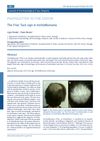
June 2018 in “JAMA Dermatology” This Viewpoint discusses the utility of dermoscope in routine practice and how familiarity with dynamic vs static trichoscopy may address its limitations, but it reports no new clinical findings.
1 citations
,
October 2023 in “Journal of the Endocrine Society” In this study, researchers found that transgender men exhibited impaired autonomic modulation during sympathetic stimulation compared to cisgender women, potentially due to testosterone treatment affecting cardiac autonomic modulation.
 13 citations
,
June 2012 in “Journal of Dermatological Case Reports”
13 citations
,
June 2012 in “Journal of Dermatological Case Reports” This report describes an 8-year-old male with trichotillomania, confirmed by trichoscopy showing characteristic hair damage and patterns.
 October 2024 in “Journal of Advanced Pharmaceutical Technology amp Research”
 This study found that nanoparticulate trigonelline formulations significantly improved hair length and density in rats with induced alopecia compared to controls and commercial hair oil, though it was not more effective than minoxidil after 30 days.
This article reviews approved treatments for androgenetic alopecia and reports no new research findings, highlighting the need for further studies.
7 citations
,
March 2004 in “Journal of the American Academy of Dermatology” Tiger tail banding and hair abnormalities are reliable indicators for diagnosing trichothiodystrophy.
October 2022 in “Zenodo (CERN European Organization for Nuclear Research)” This article discusses Truman Plus Male Enhancement, a testosterone booster, emphasizing its potential benefits for sexual health and energy, but does not report any new clinical results.

This study found that a machine-learning-driven strategy helped develop microneedles with high hardness and rapid dissolution, effectively promoting hair regrowth in androgenetic alopecia mice by activating the Wnt/β-catenin pathway, surpassing minoxidil's effects without biosafety risks.
May 2022 in “Reactions Weekly” January 2026 in “Surgical & Cosmetic Dermatology” 39 citations
,
February 2024 in “Small” This review discusses the evolution and development of smart and multifunctional microneedles, highlighting their potential future importance in medical applications, but it reports no new experimental results.
3 citations
,
February 2023 in “BMJ Case Reports” This case report describes a woman with trichotillomania who experienced marked improvement and hair regrowth after off-label onabotulinumtoxinA treatment.
 5 citations
,
January 2018
5 citations
,
January 2018 This study optimized a screening assay to identify molecules that inhibit or enhance TRPM5 ion channel activity, which may have implications for treating dysfunctions linked to cardiac arrhythmias and diabetes.
 December 2023 in “Portuguese journal of dermatology and venereology”
 This study found that trichoscopic examination can effectively differentiate between alopecia areata and trichotillomania, as specific features such as black dots and exclamation marks favor alopecia areata while hair breaking at various lengths and several unique patterns are exclusive to trichotillomania.
December 2025 in “Mycoses” In this study involving a murine skin infection model, researchers found that the Trichophyton mentagrophytes strain TIMM 2789, specific to rodents, induced typical symptoms of superficial dermatophytosis, while revealing that the fungal gene SUB6 is not essential for virulence.
 June 2022 in “Frontiers in Medicine”
 This review discusses acupuncture and moxibustion for alopecia and reports evidence suggesting their efficacy for various types of hair loss, but notes barriers like cost and aversion to needles.
 August 2021 in “Majalah Obat Tradisional”
 This study found that a hair tonic formulated from green tea extract showed similar hair growth-promoting activity to 2% Minoxidil in rabbits, without causing skin irritation or bacterial contamination.
January 2012 in “Культурно-историческая психология” In this study on rabbit grafts, autogenic PRP showed better histopathological results, but xenogenic PRP might still be a viable alternative for macroscopic evaluations.
1 citations
,
October 2022 in “Journal of Cosmetic Dermatology” In this study, combining 2% minoxidil with weekly microneedling significantly improved hair regrowth in women with female pattern hair loss compared to using minoxidil alone, with an 85% effective rate reported in the group receiving both treatments over a 24-week period.
9 citations
,
June 2025 in “Frontiers in Pharmacology” This review highlights recent advancements in microneedle technology, noting its ability to enhance transdermal drug delivery, biosensing, cancer treatment, and skin disease repair, while emphasizing its potential for improving patient compliance and reducing side effects.
13 citations
,
June 2012 in “European journal of medical genetics” In this study, researchers observed monochorionic diamniotic twins with discordant clinical phenotypes, where one had high-grade trisomy 12p mosaicism in certain tissues, while the other showed confined mosaicism likely due to twin-to-twin transfusion.
This study found that onychomatricoma can fully mimic the nail unit and differentiate toward the nail bed and isthmus, distinguishing it from other pilar tumors.
35 citations
,
September 2003 in “Archives of dermatology” This study proposed that the tiger tail phenomenon in trichothiodystrophy hair is caused by regular undulations of hair fibers, altering the optical properties seen under polarized light.
 6 citations
,
February 2025 in “Scientific Reports”
6 citations
,
February 2025 in “Scientific Reports” This study found that MEGA PROTAC improved the prediction of ternary structures with higher maximum DockQ scores compared to the BOTCP method in 16 out of 22 test cases.
 20 citations
,
January 2013 in “Annals of Dermatology”
20 citations
,
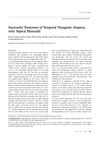
January 2013 in “Annals of Dermatology” Topical minoxidil successfully treated temporal triangular alopecia.

This case report details a 28-year-old male who developed trichotillomania following a traumatic brain injury, highlighting diagnostic challenges in distinguishing overlapping psychiatric and compulsive behaviors, and underscores the importance of a comprehensive, multidisciplinary treatment approach.
January 2022 in “Skin appendage disorders” In this study, the researchers found that trichoscopy can effectively visualize scalp micropigmentation, identified by homogenous, grey to black circular dots similar to closely cut hair, potentially reducing the need for invasive procedures.
January 2026 in “Clinical Case Reports” This case report describes a 6-year-old girl diagnosed with the rare concurrence of monilethrix and trichorrhexis nodosa, characterized by sparse, brittle hair, who showed minimal clinical improvement with low-dose oral and topical minoxidil treatment.
 1 citations
,
October 2017 in “Food Additives & Contaminants: Part A”
1 citations
,
October 2017 in “Food Additives & Contaminants: Part A” This study identified a new minoxidil analogue called triaminodil in an illegal hair-growth supplement, but no data on its chemical, toxicological, or pharmacological properties are available yet.