June 2026 in “Khyber Journal Of Medical Sciences” This study found that among adults with severe alopecia areata, alopecia totalis, or alopecia universalis, oral tofacitinib was more effective than methotrexate in reducing hair loss over a 12-week period, though long-term safety and efficacy remain unestablished.
 January 2015 in “Journal of evolution of medical and dental sciences”
 In this study, topical tacrolimus 0.03% cream showed good to excellent response in treating alopecia areata in 70% of participants, with no cutaneous or systemic side effects observed.
June 2025 in “British Journal of Dermatology” This study highlights the diverse prescribing and monitoring practices for low-dose oral minoxidil among dermatologists in the UK and Ireland, used widely for various hair loss conditions both as monotherapy and adjunctive therapy.
1 citations
,
February 2012 This abstract provides an overview of various topics related to pharmaceutical and therapeutic interventions, including acyclovir and photodynamic therapy for alopecia, but does not report new research findings.
 September 2010 in “Hair transplant forum international”
 This article discusses the evolving speciality of hair transplant surgery and reports no new clinical findings; it emphasizes the need for innovative organizational approaches.
 1 citations
,
April 2017 in “Journal of Investigative Dermatology”
1 citations
,
April 2017 in “Journal of Investigative Dermatology” This study found that the novel IPC analog SIG-1451 may inhibit inflammatory cytokine release in cell-based assays relevant to allergic dermatitis.
November 2024 in “Journal of Investigative Dermatology” Stimulating OR10J1 can promote hair growth and may help treat hair loss.
 March 2026 in “Zenodo (CERN European Organization for Nuclear Research)”
 This document, authored by Jack Schaffer, establishes prior art for methods aimed at treating disorders related to tissue function by restoring bioelectric communication among cells, preceding specific applications for conditions like androgenic alopecia and age-related sexual dysfunction.
 21 citations
,
January 2005 in “Pediatric Dermatology”
21 citations
,
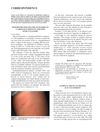
January 2005 in “Pediatric Dermatology” An 8-year-old girl with vitiligo developed extra hair growth on her knee after using tacrolimus ointment.
This article discusses the potency grading of steroid skin creams and highlights that very potent or potent steroids (grades I and II) can cause significant side effects, especially in children.
 December 2025 in “Zenodo (CERN European Organization for Nuclear Research)”
 This paper introduces the Vertex Overload Framework for androgenetic alopecia, suggesting that chronic mechanical and thermal stress on the vertex contributes to hair follicle miniaturization, with androgens acting as co-mediators of stress adaptation rather than isolated causes.
 April 2016 in “The journal of investigative dermatology/Journal of investigative dermatology”
 This study found that topical bortezomib increased cell proliferation in hair follicles and sebaceous glands in mice and may activate hair keratin gene expression through GATA-3 transcription factors.
2 citations
,
February 2024 in “Indian Dermatology Online Journal” This study reports that tofacitinib, a JAK 1/3 inhibitor, showed significant improvement in a patient with co-occurring severe alopecia totalis and lichen planus hypertrophicus, conditions that are typically resistant to treatment.
October 2024 in “Journal of Pakistan Association of Dermatologists” This study reports that a 21-year-old male with alopecia totalis responded positively to the JAK inhibitor tofacitinib, achieving complete hair regrowth after six months of treatment without significant side effects, though further research is needed to evaluate long-term efficacy.
 February 2025 in “Prospects in Pharmaceutical Sciences”
 This source reports that clascoterone cream, a topical androgen receptor inhibitor, has shown effectiveness in treating facial acne vulgaris in patients 12 and older, with clinical trials indicating a favorable safety profile compared to systemic treatments, and potential for broader dermatological applications.
 July 1997 in “Hair transplant forum international”
 This announcement previews the 5th Annual Meeting of the International Society of Hair Restoration Surgery and contains no new research findings.
 January 2016 in “Türkiye klinikleri tıp bilimleri dergisi”
 About 38% of patients at a dermatology clinic had oral lesions, with coated tongue, fissured tongue, and Fordyce granules being most common.
11 citations
,
October 1990 in “The Journal of dermatologic surgery and oncology” This review discusses the potential for new retinoids, topical antiandrogens, and alternative therapies to surpass tretinoin in treating cutaneous aging, but reports no clinical results.
March 1999 in “Hair transplant forum international” This letter shares personal insights and experiences from attending the World Hair Society meeting, providing no new research findings.
March 2023 in “Ukrainian Journal of Dermatology Venerology Cosmetology” In this article, the authors detail their experience with AltrenoTM, a new topical retinoid lotion used for treating mild to moderate acne, reporting clinical effectiveness and satisfactory tolerability among patients of various ages, including children as young as 9.
2 citations
,
November 2016 in “Journal of Pakistan Association of Dermatologists” In this study, tacrolimus was as effective as clobetasol propionate in treating alopecia areata, suggesting it can serve as an alternative therapy option.
February 2023 in “Journal of The American Academy of Dermatology” This publication discusses the use of low-dose oral minoxidil for treating traction alopecia but reports no new clinical outcomes; further research on its efficacy and safety is needed.
 April 2020 in “Dermatology and therapy” 100 citations
,
July 2006 in “British Journal of Dermatology”
April 2020 in “Dermatology and therapy” 100 citations
,
July 2006 in “British Journal of Dermatology” This study found that intralesional triamcinolone acetonide injections using a needleless injector led to rapid hair regrowth in patients with limited alopecia areata, while lasting growth was rare in alopecia totalis.
39 citations
,
May 2006 in “Molecular Plant-Microbe Interactions” This study suggests that fusaric acid at nontoxic concentrations may activate signal transduction in plants which could aid in the plant-defense responses against Fusarium spp.
January 2010 in “USFEU Scientific Library (Ural State Forest Engineering University)” This study developed a grooved microneedle platform enabling precise transdermal delivery of triamcinolone acetonide for alopecia areata, achieving accurate dosing by controlling groove position and drug concentration.
 April 2018 in “Journal of Investigative Dermatology”
 This study identified the osteopontin-derived peptide, FOL-005, as a potential inhibitor of unwanted human hair growth by promoting catagen development without reducing stem cell numbers or showing toxicity.

This phase II study found that a 0.05% topical dutasteride solution was more effective than oral finasteride (1 mg/day) in increasing hair count and width in males with androgenetic alopecia over 24 weeks, without causing irritation.