 14 citations
,
July 2016 in “Pediatric Dermatology”
14 citations
,
July 2016 in “Pediatric Dermatology” In this report, a case of steroid-resistant multifocal alopecia areata was successfully treated with topical bimatoprost, suggesting it may be a promising alternative therapy.
11 citations
,
January 2012 in “PubMed” This case report suggests that topical bimatoprost may promote eyebrow hair growth, as observed in a patient with eyebrow hypotrichosis, but lacks broader published scientific evidence.
 4 citations
,
September 2017 in “Dermatologic surgery”
4 citations
,
September 2017 in “Dermatologic surgery” This article contains no new research findings or results.
August 2017 in “Journal of the Dermatology Nurses' Association” This article reviews the usage, efficacy, side effects, and alternatives of topical bimatoprost 0.03% for dermatological applications but does not present new clinical findings.
 February 2024 in “Journal of Cosmetic Dermatology”
 This clinical trial found that combining fractional CO2 laser with bimatoprost solution significantly improved alopecia areata treatment outcomes compared to bimatoprost alone, as measured by a more substantial reduction in SALT scores and higher patient satisfaction over 12 weeks.
 July 2023 in “GLOBAL JOURNAL FOR RESEARCH ANALYSIS”
 This study explored a new treatment approach using 20% TCA application with topical bimatoprost solution for managing alopecia areata of the eyebrows in cases where traditional treatments failed, offering a potential additional option for difficult cases.
 July 2023 in “Annals of King Edward Medical University”
 This randomized clinical trial compared bimatoprost 0.03% solution and mometasone furoate 0.1% cream for treating alopecia areata in 60 patients, finding that mometasone furoate led to better hair regrowth, while both treatments showed significant effectiveness.
 7 citations
,
May 2018 in “Curēus”
7 citations
,
May 2018 in “Curēus” In this case report, a 60-year-old woman with eyebrow hypotrichosis experienced significant and lasting eyebrow growth after daily use of bimatoprost 0.03% solution, highlighting its potential as an effective treatment for eyebrow hair restoration.
 5 citations
,
January 2022 in “Drug Delivery”
5 citations
,
January 2022 in “Drug Delivery” In this study, a novel topical bimatoprost formulation (BIM-TF#5) significantly enhanced hair regrowth and increased dermal drug deposition in both human skin models and an androgenic alopecia mouse model compared to previous preparations.
 2 citations
,
February 2016 in “British Journal of Dermatology”
2 citations
,
February 2016 in “British Journal of Dermatology” This study found that topical bimatoprost significantly improved eyelash growth in individuals with idiopathic and chemotherapy-induced eyelash hypotrichosis compared to a vehicle treatment.
 55 citations
,
March 2009 in “Journal of The American Academy of Dermatology”
55 citations
,
March 2009 in “Journal of The American Academy of Dermatology” This study found that latanoprost and bimatoprost, when applied cutaneously to the eyelids, did not induce appreciable eyelash regrowth in patients with alopecia areata over 16 weeks.
 January 2010 in “Yearbook of Dermatology and Dermatologic Surgery”
 Topical latanoprost and bimatoprost ophthalmic solutions don't help eyelash growth in patients with alopecia areata.
February 2023 in “Journal of Cosmetic Dermatology” This study found that microneedling combined with either topical vitamin D3 or bimatoprost was more effective for hair regrowth in localized alopecia areata than microneedling alone, though differences between the two additives disappeared after three months.
9 citations
,
January 2019 in “Dermatology Online Journal” In this study, researchers suggest that laser-assisted drug delivery could enhance the administration of platelet-rich plasma, and potentially bimatoprost or minoxidil, for patients with androgenetic alopecia by ensuring uniform placement in the dermis without injection pain.
January 2018 in “International Journal of Medical Reviews and Case Reports” This study found that a 12-week topical application of bimatoprost 0.03% significantly increased the diameter of vellus hairs in patients with androgenic alopecia.
 1 citations
,
July 2023 in “Archives of dermatological research”
1 citations
,
July 2023 in “Archives of dermatological research” This study found that both 0.01% and 0.03% bimatoprost gel and 2% minoxidil gel significantly improved eyebrow density in individuals with hypotrichosis, with no significant difference between the treatments, although the highest bimatoprost concentration showed a more favorable response.
 17 citations
,
December 2013 in “Journal of Investigative Dermatology Symposium Proceedings”
17 citations
,
December 2013 in “Journal of Investigative Dermatology Symposium Proceedings” In this study, once-daily treatment with bimatoprost 0.03% solution significantly increased eyelash growth, thickness, and darkness in patients with chemotherapy-induced eyelash loss compared to placebo, and was well tolerated over one year.
 1 citations
,
March 2023 in “Frontiers in Medicine”
1 citations
,
March 2023 in “Frontiers in Medicine” This meta-analysis found that topical prostaglandin analogs could significantly improve hair length and density in patients with hair loss, compared to placebo, without notable safety differences.
 January 2023 in “Indian Dermatology Online Journal”
 This study found that there was no significant difference in hair regrowth between clobetasol and bimatoprost for scalp alopecia areata over 12 weeks, but bimatoprost had fewer side effects and prompted earlier, more pigmented hair regrowth.
 36 citations
,
May 2011 in “Dermatologic therapy”
36 citations
,
May 2011 in “Dermatologic therapy” This review discusses topical and intralesional treatments for alopecia areata, providing a management strategy based on patient age and disease severity, but reports no new clinical results.
 3 citations
,
July 2010 in “Archives of internal medicine”
3 citations
,
July 2010 in “Archives of internal medicine” A woman kept her eyelashes during chemotherapy possibly because of her glaucoma eye drops.
 4 citations
,
September 2019 in “Journal of cosmetic dermatology”
4 citations
,
September 2019 in “Journal of cosmetic dermatology” This study found that after 24 weeks of bimatoprost 0.01% treatment, significant improvements in the density and diameter of eyebrow hair were observed, most notably in the tail section of the eyebrow.
This article reviews interventions for preventing chemotherapy-induced alopecia and highlights scalp cooling as the only currently effective method, while noting its limitations and other potential options without providing new results.
 53 citations
,
February 2020 in “Expert Opinion on Pharmacotherapy”
53 citations
,
February 2020 in “Expert Opinion on Pharmacotherapy” This review discusses pharmacologic and non-pharmacologic treatments for androgenetic alopecia, noting that current medications like finasteride and minoxidil can slow hair loss but only partially restore hair growth, with early treatment offering better outcomes.
 26 citations
,
January 2019 in “Expert Opinion on Investigational Drugs”
26 citations
,
January 2019 in “Expert Opinion on Investigational Drugs” This review explored the new and emerging treatments for androgenetic alopecia and alopecia areata, finding that JAK inhibitors show promise for alopecia areata, while advancements in stem-cell research may eventually lead to new and improved treatments for androgenetic alopecia.
 25 citations
,
June 2020 in “Dermatology practical & conceptual”
25 citations
,
June 2020 in “Dermatology practical & conceptual” This study reviewed treatments for chemotherapy-induced hair loss, finding that scalp cooling is FDA-approved for prevention, while minoxidil and bimatoprost may aid post-chemotherapy regrowth. The authors emphasized tailored therapies and the potential utility of tools like trichoscopy and trichogram.
 32 citations
,
March 2021 in “Journal of cosmetic dermatology (Print)”
32 citations
,
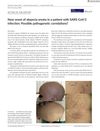
March 2021 in “Journal of cosmetic dermatology (Print)” This letter to the editor discusses a potential link between new onset alopecia areata and SARS-CoV-2 infection, but reports no new clinical results.
 17 citations
,
August 2015 in “Expert Opinion on Pharmacotherapy”
17 citations
,
August 2015 in “Expert Opinion on Pharmacotherapy” This article discusses the social and psychological impact of hair disorders and the challenges in their treatment, but reports no new clinical results.
1 citations
,
February 2025 in “Indian Dermatology Online Journal” This systematic review identified that surgical treatments show a positive response for eyebrow and eyelash leukotrichia, while topical tofacitinib appears promising but requires further research to confirm its efficacy.
 4 citations
,
March 2023 in “Current Oncology”
4 citations
,
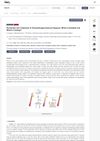
March 2023 in “Current Oncology” This study reviews current methods and emerging approaches to prevent and treat chemotherapy-induced hair loss, reporting that evidence-based research is needed to validate effective strategies, which could enhance cancer patients’ quality of life and treatment compliance.