November 2023 in “IntechOpen eBooks” This source highlights that arsenic exposure through contaminated groundwater is a significant global health risk, leading to skin and hair conditions such as pigmentation changes, skin irritation, alopecia, and can eventually result in skin cancer.
 April 2023 in “Indian journal of paediatric dermatology”
 In this case study, a 12-year-old boy with isolated nail lichen planus showed significant improvement after receiving intramuscular triamcinolone acetonide and topical tacrolimus treatment, although his great toenails were less responsive.
 August 2001 in “Journal of Cutaneous Medicine and Surgery”
 Prednisone has risks for lupus patients, isotretinoin is safe for mental health, transplant patients risk skin cancer, and various treatments are effective for specific skin conditions.
 September 1997 in “Journal of The European Academy of Dermatology and Venereology”
 Topical spironolactone effectively treats hair loss in women.
 13 citations
,
August 1982 in “Archives of dermatology”
13 citations
,
August 1982 in “Archives of dermatology” This case report describes a 62-year-old man with psoriasis who developed a unique nail abnormality after two months of treatment with the oral retinoid etretinate, alongside hair thinning and cheilitis.
 7 citations
,
December 2016 in “British Journal of Dermatology”
7 citations
,
December 2016 in “British Journal of Dermatology” This report presents evidence that alopecia areata incognita may be a possible mechanism of hair loss in patients with Cronkhite–Canada syndrome.
 4 citations
,
December 2013 in “The Journal of Dermatology”
4 citations
,
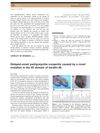
December 2013 in “The Journal of Dermatology” This letter to the editor discusses a case of delayed-onset pachyonychia congenita linked to a new mutation in keratin 6b but presents no new research findings.
 January 2022 in “Dermatology Review”
 This case report details an occurrence of PRIDE syndrome accompanied by lumbosacral hypertrichosis.
 July 1980 in “Journal of The American Academy of Dermatology”
 The conference concluded that understanding hair and nail disorders is important, iron deficiency may be linked to hair loss, and while some treatments for skin conditions are effective, they may have risks and high costs.
 38 citations
,
December 2011 in “Anais Brasileiros de Dermatologia”
38 citations
,
December 2011 in “Anais Brasileiros de Dermatologia” This study found that in dermatological patients, poorer quality of life was associated with being younger, single, having a low income, one skin disease, and longer duration of the condition.
 10 citations
,
December 2015 in “Clinics in Dermatology”
10 citations
,
December 2015 in “Clinics in Dermatology” This review highlights the eye and skin manifestations of endocrine-related metabolic diseases but provides no new clinical results.
 7 citations
,
May 2014 in “Clinical practice”
7 citations
,
May 2014 in “Clinical practice” This article reviews drug-induced hair and nail disorders and discusses their clinical recognition, underlying mechanisms, and potential treatment strategies, without presenting new research findings.
 3 citations
,
November 2018 in “Oncology issues”
3 citations
,
November 2018 in “Oncology issues” This article discusses the emerging field of supportive oncodermatology, which collaborates between oncology and dermatology to address skin-related side effects of cancer treatments, and reports no new clinical results.
 1 citations
,
January 2019 in “Przegla̧d dermatologiczny”
1 citations
,
January 2019 in “Przegla̧d dermatologiczny” This article reviews the concept of cardiodermatology and its application in clinical practice but does not present new empirical findings.
 1 citations
,
May 2015 in “Journal of The American Academy of Dermatology”
1 citations
,
May 2015 in “Journal of The American Academy of Dermatology” Lichen planus pigmentosus and fibrosing frontal alopecia in Colombia are likely different stages of the same disease.
 1 citations
,
November 2014
1 citations
,
November 2014 This chapter reviews patchy hair loss due to skin disease, nail disorders related to chronic trauma, and treatments for small carcinomas, but it reports no new clinical findings.
 January 2021 in “Erciyes medical journal”
 This study found an increase in certain dermatological conditions like dermatitis and scabies, and a decrease in others such as psoriasis vulgaris and atopic dermatitis during the COVID-19 pandemic compared to the previous year.
 5 citations
,
April 2013 in “Nasza Dermatologia Online”
5 citations
,
April 2013 in “Nasza Dermatologia Online” This study reports no new clinical results on oral zinc therapy for acrodermatitis enteropathica but provides demographic data and symptom prevalence among thirty affected children.
 2 citations
,
September 2014 in “Journal of evolution of medical and dental sciences”
2 citations
,
September 2014 in “Journal of evolution of medical and dental sciences” In this study, 92% of HIV-infected patients had mucocutaneous manifestations, with oral candidiasis being the most common condition observed.
 64 citations
,
February 1995 in “Journal of The American Academy of Dermatology”
64 citations
,
February 1995 in “Journal of The American Academy of Dermatology” This report describes a case where hidradenitis suppurativa developed in a patient receiving lithium, adding to the recognized cutaneous side effects like psoriasis, acneiform lesions, and alopecia.
 44 citations
,
August 2010 in “Lupus”
44 citations
,
August 2010 in “Lupus” This article reviews the characteristics and classification criteria of cutaneous lupus erythematosus and reports no new clinical findings.
 18 citations
,
March 2004 in “Clinics in Dermatology”
18 citations
,
March 2004 in “Clinics in Dermatology” This review discusses recent advances in understanding the cellular, molecular, and genetic factors contributing to lupus erythematosus and reports no new experimental findings.
 8 citations
,
April 2015 in “Advances in Psychosomatic Medicine”
8 citations
,
April 2015 in “Advances in Psychosomatic Medicine” This review discusses the complex relationship between psychotropic medications and the skin, focusing on cutaneous side effects, dermatologic uses, and psychiatric disorders with skin manifestations, but reports no new findings.
 7 citations
,
October 2019 in “Annals of palliative medicine”
7 citations
,
October 2019 in “Annals of palliative medicine” This review examines the incidence and management of dermatologic adverse effects from FDA-approved oral targeted cancer therapies, highlighting frequent occurrences like rashes and rarer severe conditions such as Stevens-Johnson Syndrome.
 7 citations
,
April 2011 in “Expert review of dermatology”
7 citations
,
April 2011 in “Expert review of dermatology” This article reviews practical approaches for managing dermatologic conditions in patients with skin of color and reports no new clinical findings.
 6 citations
,
August 1993 in “Archives of Dermatology”
6 citations
,
August 1993 in “Archives of Dermatology” This article describes the first documented case of acquired uncombable hair syndrome in a 39-year-old woman, contributing to the understanding of this rare condition.
 2 citations
,
October 2021 in “Journal of skin and stem cell”
2 citations
,
October 2021 in “Journal of skin and stem cell” This study observed that nail abnormalities often indicate underlying dermatological or systemic conditions, with psoriasis and infections being the most common causes among patients.
 1 citations
,
August 1946 in “Archives of dermatology”
1 citations
,
August 1946 in “Archives of dermatology” This case presentation describes an adult with tinea capitis and related symptoms who was found to have a Trichophyton gypseum infection.
 February 2022 in “International journal of research in dermatology”
 This case series describes seven distinct hair shaft disorders, highlighting the importance of accurate diagnosis since these conditions are often treated incorrectly as alopecias without improvement.
 January 2022 in “Acta dermatovenerologica Alpina, Pannonica et Adriatica (Tiskana izd.)”
 This article presents an overview of uncombable hair syndrome, emphasizing its clinical and molecular characteristics and noting systemic manifestations such as neuropsychiatric, ophthalmic, and cardiopulmonary issues.