 2 citations
,
March 2023 in “Skin research and technology”
2 citations
,
March 2023 in “Skin research and technology” This study observed that temporal triangular alopecia in infants presents with distinct clinical and dermatoscopic features, indicating the usefulness of dermatoscopy for diagnosis and differential diagnosis.
August 2005 in “The Journal of Cell Biology” This abstract provides a graphic illustrating that mice lacking the Sgk3 gene exhibit thin coats and abnormal hair, suggesting a role for Sgk3 kinase in hair follicle growth, but reports no new experimental findings.
14 citations
,
July 2019 in “Journal of Investigative Dermatology” In this study, targeted inactivation of the integrin-linked kinase gene in melanoblasts led to defects in cell migration, proliferation, and ability to populate the skin, implicating an integrin-linked kinase-Rac1 connection in melanocyte function.
86 citations
,
May 2002 in “Journal of Investigative Dermatology” This study characterized a new human keratin, hK6irs1, specifically found in the inner root sheath of hair follicles, which suggests its role in the structural integrity and guidance of growing hair shafts.
15 citations
,
February 2015 in “Anais brasileiros de dermatologia/Anais Brasileiros de Dermatologia” This article reviews the use of dermoscopy in distinguishing temporal triangular alopecia from alopecia areata, emphasizing its role in avoiding invasive diagnostics and ineffective treatments; it reports no new clinical findings.
15 citations
,
June 2020 in “The journal of investigative dermatology/Journal of investigative dermatology” This study identifies KLK14 as a significant factor contributing to hair defects and skin inflammation in a mouse model of Netherton syndrome.
22 citations
,
May 2011 in “Molecular Biology of the Cell” In this study, gene inactivation in mouse hair follicle stem cells lacking ILK impaired wound healing by reducing their progeny’s contribution to the regenerating epidermis, but did not affect hair follicle regeneration.
April 2025 in “The Journal of Dermatology” This study provides initial insights into the use of JAK inhibitors for CTCL, reporting some cases of symptom improvement, but highlights the need for further research on their association with CTCL development and safety.
March 2026 in “International Journal of Cosmetic Science” This research reports that KCV and its palmitoylated derivatives show strong effectiveness in strengthening hair proteins, indicating their potential for use in advanced hair care products.
 April 2017 in “Journal of Investigative Dermatology”
 The researchers reported that iPSCs derived from Sendai virus reprogrammed blood cells can mature into functional keratinocytes for up to 60 days, potentially offering new approaches for DEB treatment.
 January 2023 in “Indian dermatology online journal”
 This case study describes a previously unknown association of the PIBIDS complex with autoimmune thyroiditis and autoimmune hemolytic anemia in a five-year-old Indian child.
July 2024 in “Journal of Investigative Dermatology” This study found that systemic treatment with DS77754007, a KLK5 inhibitor, improved skin symptoms in a mouse model of Netherton Syndrome more effectively than certain antibody treatments, suggesting KLK5 inhibition as a promising therapeutic approach for this condition.
 8 citations
,
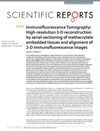
February 2019 in “Scientific Reports”
8 citations
,
February 2019 in “Scientific Reports” This article describes the immunofluorescence tomography method to achieve high-resolution 3-D reconstruction of epithelial tissues and reports no clinical results.
 July 2014 in “Journal of the Portuguese Society of Dermatology and Venereology”
 This review covers current knowledge of tricoscopy's applications in diagnosing and monitoring scalp and hair disorders but presents no new clinical results.
 April 2012 in “Informa Healthcare eBooks”
 Temporal triangular alopecia is a lifelong condition with hairless patches on the side of the head that may be present from birth.
 July 2022 in “The journal of investigative dermatology/Journal of investigative dermatology”
 This study found that locally administering thymic stromal lymphopoietin (TSLP) promotes hair growth by stimulating hair follicle cell proliferation during both normal conditions and after skin injury in mice.
 February 2024 in “PloS one”
 This review concluded that oral tofacitinib and adalimumab are promising treatments for cicatricial alopecia, showing effectiveness in improving signs and symptoms but requiring regular monitoring for adverse effects. The authors emphasize the need for further extensive studies to solidify these findings.
 7 citations
,
August 2016 in “Nursing for Women's Health”
7 citations
,
August 2016 in “Nursing for Women's Health” This article reviews the issue of hair-thread tourniquets in infants, emphasizing the importance of awareness for timely diagnosis and suggesting prevention strategies, but reports no new clinical results.
13 citations
,
September 2014 in “BMC Complementary and Alternative Medicine” Tanshinone IIA helps protect skin tissue from low oxygen damage by boosting certain cell markers.
May 2020 in “Business Innovation & Entrepreneurship Journal” This study discusses the development of a turmeric-based herbal hair removal product named PASIKULA, highlighting its potential to increase the economic value of turmeric and acceptance by consumers.
 12 citations
,
January 2014 in “Cell structure and function”
12 citations
,
January 2014 in “Cell structure and function” This study suggests that specific combinations of human type I and II hair keratins, particularly K35-K85 and K36-K81, have distinct in vitro assembly properties that are significant for macrofibril formation.
6 citations
,
May 2000 in “Pediatric Dermatology” This article discusses a case study supporting the reclassification of KID syndrome as an ectodermal dysplasia, introducing a potential treatment combination that may alleviate symptoms in affected patients.
 33 citations
,
January 2005 in “Dermatology”
33 citations
,
January 2005 in “Dermatology” This mini-review summarizes the Trichoscan as a sensitive tool for measuring hair growth parameters, demonstrating its effectiveness in detecting treatment response in androgenetic alopecia but noting some practical limitations.
![[4-t-Butylphenyl]-N-(4-imidazol-1-yl phenyl)sulfonamide (ISCK03) Inhibits SCF/c-kit Signaling in 501mel Human Melanoma Cells and Abolishes Melanin Production in Mice and Brownish Guinea Pigs](/images/assets/4eb017dc-711d-4926-bcd0-c3b8f48e3a99/small/19974.jpg) 26 citations
,
July 2007 in “Biochemical Pharmacology”
26 citations
,
July 2007 in “Biochemical Pharmacology” This study found that phenyl-imidazole sulfonamide derivatives, particularly ISCK03, inhibited c-kit signaling and promoted depigmentation in various experimental settings, suggesting potential use as skin-whitening agents.
 139 citations
,
December 1998 in “The journal of investigative dermatology/Journal of investigative dermatology”
139 citations
,
December 1998 in “The journal of investigative dermatology/Journal of investigative dermatology” This study identified a new type II cytokeratin, named K6hf, exclusively expressed in the companion layer of the human hair follicle, distinguishing it from other keratins and suggesting a unique biochemical role.
August 1994 in “Journal of Dermatological Science” January 2013 in “edoc (University of Basel)” This study found that TRF1 plays a crucial role in maintaining pluripotency and stem cell compartments, but it is not a suitable in vivo telomere length marker.
August 2024 in “Skin Research and Technology” This report describes the diagnosis and treatment of traumatic anserine folliculosis in children, highlighting its distinct skin features and suggesting tretinoin cream as an effective remedy.
54 citations
,
February 1994 in “Journal of Investigative Dermatology” 187 citations
,
May 1988 in “Differentiation” This study found that trichocytic cytokeratins, typically found in hair, are also present in nails, filiform papillae of the tongue, and the epithelial reticulum of the thymus.