July 2024 in “Journal of Investigative Dermatology” INTASYL is a promising, adaptable RNAi technology for treating skin cancers.
January 2025 in “Dusunen Adam The Journal of Psychiatry and Neurological Sciences”  January 2009 in “Elsevier eBooks”
 Low level laser therapy may help with hair loss.
 555 citations
,
July 2001 in “Genes & Development”
555 citations
,
July 2001 in “Genes & Development” This study found that Tcf3 and Lef1 differently regulate cell differentiation in multipotent skin stem cells, with Tcf3 promoting follicle-like features and Lef1, when modified, promoting sebocyte differentiation.
July 2026 in “Journal of Investigative Dermatology” 27 citations
,
September 2013 in “The FASEB Journal” This study reports that the loss of the protein Memo in mice leads to a reduced lifespan and suggests that Memo is a key regulator of FGFR signaling and vitamin D production.
 131 citations
,
October 2004 in “Clinical Cancer Research”
131 citations
,
October 2004 in “Clinical Cancer Research” This study suggests that applying topical Tempol to the scalp before whole brain radiation may protect against radiation-induced alopecia and is safe and well-tolerated.
September 2011 in “European journal of cancer”  18 citations
,
August 2018 in “The FASEB journal”
18 citations
,
August 2018 in “The FASEB journal” This study found that Hoxc13-/- rabbits exhibit complete hair loss on the head and dorsum, providing a potential model for understanding human ECTD-9 and related dermatological conditions.
 13 citations
,
June 2012 in “Journal of Dermatological Case Reports”
13 citations
,
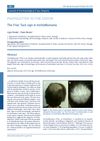
June 2012 in “Journal of Dermatological Case Reports” This report describes an 8-year-old male with trichotillomania, confirmed by trichoscopy showing characteristic hair damage and patterns.
 January 2026 in “Nanoscale Advances”
 In this study, a biocompatible zinc oxide nanocomposite loaded with the anticancer drug 9-Br-Nos demonstrated effective drug delivery and cytotoxicity against lung cancer cells in vitro, while also proving non-toxic to healthy cells, suggesting its potential for targeted lung cancer treatment.
February 2014 in “Cancer Research” This study found that MYH9 acts as a tumor suppressor in squamous cell carcinomas by stabilizing p53 in the nucleus, suggesting its role in cancer prevention.
May 2022 in “International Journal of Trichology” July 2026 in “Journal of Investigative Dermatology”  April 2023 in “The journal of investigative dermatology/Journal of investigative dermatology”
 This study revealed distinct cellular and transcriptomic differences among various subtypes of cutaneous T-cell lymphoma, particularly highlighting characteristics unique to folliculotropic mycosis fungoides.
April 2026 in “Proceedings of the National Academy of Sciences” In this study, Tmem30b was identified as a key regulator of outer hair cell structure in mice, and its modulation may offer a therapeutic approach for certain types of hearing loss.
2 citations
,
May 2020 in “The journal of investigative dermatology/Journal of investigative dermatology” This study describes a family where a TP63 mutation was linked with prominent alopecia and mild ectodermal dysplasia features.
 September 2019 in “The journal of investigative dermatology/Journal of investigative dermatology”
 This study found that deleting all three Tet genes in mice led to shorter hair shafts and altered hair types, with associated changes in gene expression and DNA hydroxymethylation.
 55 citations
,
June 2014 in “Nature Communications”
55 citations
,
June 2014 in “Nature Communications” This study found that overexpression of the transcription factor Tcf3 accelerates keratinocyte migration and skin wound healing in mice, highlighting its potential as a therapeutic target for wound repair.
 14 citations
,
February 2020 in “Scientific reports”
14 citations
,
February 2020 in “Scientific reports” This study found that telocytes in human scalp tissue were located around hair follicles and glands and may be involved in skin regeneration and homeostasis.
 March 2023 in “JIIS (Jurnal Ilmiah Ibnu Sina): ilmu farmasi dan kesehatan”
 This study concluded that the optimum biotin microemulsion hair tonic composition involves span 80 (20%), tween 80 (9.47%), and PEG 400 (5%), providing favorable viscosity and globule size.
 November 2022 in “Journal of Investigative Dermatology”
 This study found that "early" transit amplifying cells, marked by CD271, are the first keratinocyte stem cell progenitors with distinct features, playing a significant role in early epidermal differentiation and regeneration.
September 2025 in “Journal of the American Academy of Dermatology” Ritlecitinib may help treat alopecia areata by protecting hair follicles.
April 1946 in “Archives of Dermatology” This report describes two cases of tinea capitis: one resistant to local iodine treatment after partial improvement, and another cured with the same treatment, in African American and Caucasian children, respectively.

In a mouse hair-growth model, this study found that the optimized compound 39 matched the efficacy of pyrilutamide for androgenic alopecia, with faster response and maintained safety, suggesting it as a promising topical AR antagonist with reduced systemic toxicity risk.
43 citations
,
August 1994 in “Journal of Investigative Dermatology” 10 citations
,
March 2016 in “Toxicology and applied pharmacology” This study reports that A132, a hair dye ingredient, induces phototoxicity and photogenotoxicity via mitochondrial apoptosis when exposed to sunlight, suggesting potential risks of oxidative stress and hair damage.
January 2026 in “Open MIND” This study identified candidate compounds from a natural-product library that may interact with the PIEZO1 and MLCK pathways, potentially countering a non-androgen cause of hair follicle miniaturization, all based on computer simulations; experimental validation is necessary.
 July 2024 in “British journal of dermatology/British journal of dermatology, Supplement”
 This study identified a new pathogenic variant, c.1081G>T; p.(Glu361*), in the KRT31 gene as a cause of autosomal-dominant monilethrix, highlighting the role of hair keratin proteins in hair and nail tissue disorders.
 May 2017 in “Journal of The American Academy of Dermatology”
 An intact skin barrier is crucial to prevent infection in cases of tether-induced tenosynovitis.