1 citations
,
October 2017 in “Annals of Oncology” This study found that 93% of patients treated with adjuvant Paclitaxel and Trastuzumab for early-stage HER2-positive breast cancer experienced mild to moderate hair loss.
25 citations
,
April 2012 in “Veterinary and comparative oncology” This study found that rabbits with thymomas treated with radiation therapy had a median survival time of 313 days, increasing to 727 days excluding early deaths, with lower body weight linked to decreased survival.
May 2025 in “International Journal of Trichology” In this case report, a 7-year-old boy with alopecia totalis experienced significant hair regrowth after adding topical tofacitinib and mometasone to his treatment regimen, suggesting potential benefits of topical Janus kinase inhibitors for pediatric patients with this condition.
 5 citations
,
June 2015 in “Journal of dermatology”
5 citations
,
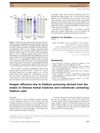
June 2015 in “Journal of dermatology” This letter to the editor describes a case of anagen effluvium due to thallium poisoning from Chinese herbal medicine and rodenticide but reports no new research findings.
 September 2023 in “SKIN The Journal of Cutaneous Medicine”
 This case report documented a 74-year-old female with alopecic patches and other skin issues during talquetamab therapy for multiple myeloma, suggesting that the drug may cause skin-related adverse effects due to reactivity to GPRC5D-expressing structures.
 2 citations
,
January 1990 in “Leukemia & Lymphoma”
2 citations
,
January 1990 in “Leukemia & Lymphoma” This study reported a 74% overall response rate for a new combination chemotherapy of mitoxantrone, etoposide, and prednisolone in patients with relapsed or refractory Hodgkin's disease or non-Hodgkin's lymphoma.
8 citations
,
December 2007 in “Journal of Thoracic Oncology” Erlotinib can cause significant but temporary hair loss in lung cancer patients.
 74 citations
,
September 1980 in “Medical Clinics of North America”
74 citations
,
September 1980 in “Medical Clinics of North America” This article discusses toxic epidermal necrolysis, highlighting its high mortality rate despite aggressive treatment, and notes controversy over using high-dose systemic corticosteroids as therapy.
September 2025 in “Annals of African Medicine”  29 citations
,
June 2014 in “Drug delivery”
29 citations
,
June 2014 in “Drug delivery” This study reported that nanoemulsions significantly improved the skin permeability of thiocolchicoside compared to its aqueous solution, suggesting they are effective carriers for its transdermal delivery.
1 citations
,
April 2004 in “Cancer” This study describes that 65% of patients receiving imatinib mesylate in a patient assistance program experienced skin hypopigmentation, primarily in ethnically Chinese individuals, suggesting variability across populations.
December 2025 in “Pediatric Dermatology” In this study, a 14-year-old girl developed Malassezia folliculitis and seborrheic dermatitis after starting trametinib, which improved with itraconazole treatment. The research underscores the importance of recognizing trametinib-related skin reactions and suggests managing them with antifungal therapy without necessarily discontinuing the medication.
2 citations
,
January 2012 in “ACTA SCIENTIAE VETERINARIAE” This case report describes the successful topical treatment of a horse with a Pythium insidiosum infection using amphotericin B and DMSO, leading to significant wound healing and hair regrowth.
 153 citations
,
January 2001 in “Science”
153 citations
,
January 2001 in “Science” In a neonatal rat model, this study found that topical CDK2 inhibitors reduced chemotherapy-induced hair loss in 33 to 50% of the animals, suggesting a potential strategy for preventing alopecia in cancer patients.
 17 citations
,
April 2016 in “Journal of Investigative Dermatology”
17 citations
,
April 2016 in “Journal of Investigative Dermatology” This study found that the synthetic thyroid hormone receptor modulator KB2115 significantly prolonged the growth phase of human hair follicles in culture without altering mitochondrial activity, suggesting potential as a safer hair loss treatment compared to traditional thyroid hormones.
 28 citations
,
January 2016 in “Vitamins and hormones”
28 citations
,
January 2016 in “Vitamins and hormones” This source reports that thymosin beta 4 accelerated dermal wound repair in phase 2 clinical trials for pressure ulcers, stasis ulcers, and epidermolysis bullosa wounds and was well tolerated.
 December 2024 in “PubMed”
 This study evaluates the compatibility of six active pharmaceutical ingredients, including finasteride and spironolactone, with TrichoFoam™, a foam vehicle used in personalized treatments for alopecia, though it does not report specific results.
 14 citations
,
October 2003 in “Annals of Oncology”
14 citations
,
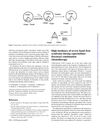
October 2003 in “Annals of Oncology” In this study, the researchers observed that the severity of capecitabine-induced hand-foot syndrome in advanced gastric cancer patients was not linked to the IVS14+1G→A mutation in the DPYD gene.
8 citations
,
August 2022 in “Pharmaceutics” This study found that erythrocyte-anchored CPA-encapsulated nanoparticles improved the delivery and accumulation of Cepharanthine in the lungs, enhancing its effectiveness in treating acute lung injury by reducing inflammatory responses.
 11 citations
,
January 2020 in “Micro and Nanosystems”
11 citations
,
January 2020 in “Micro and Nanosystems” This study found that transethosomal gel loaded with propranolol hydrochloride prolonged drug release and increased peak plasma concentration compared to an oral tablet, suggesting a promising alternative for delivery.
![The Synthesis of (−)-4-Methyl-8-Chloro-Trans-1,2,3,4,4a,5,6,10b-Octahydrobenzo-[f]-Quinolin-3-One-[3-14C] (LY300502-14C) via a Circuitous Route](/images/assets/73bab8dc-bdf0-45e3-8ef7-73d0d4b93cb1/small/21074.jpg) 3 citations
,
October 1994 in “Journal of Labelled Compounds and Radiopharmaceuticals”
3 citations
,
October 1994 in “Journal of Labelled Compounds and Radiopharmaceuticals” This synthesis report details the successful development of a C-14 labeled isotopomer of LY300502, a 5α-reductase inhibitor, through a multi-step radiochemical process.
 15 citations
,
January 2014 in “Medicinal chemistry”
15 citations
,
January 2014 in “Medicinal chemistry” This study conducted molecular docking and ADME property analysis on 144 newly designed isatin analogs, suggesting they exhibit lead-like properties for targeting EGFR enzymes.
May 2025 in “Pakistan Armed Forces Medical Journal” This study found that topical Dithranol 0.5% is more effective than topical Tacrolimus 0.1% for hair regrowth in patients with alopecia areata, with 40% of Dithranol-treated patients showing over 80% hair regrowth compared to 23.33% for Tacrolimus-treated patients.
 78 citations
,
March 2004 in “Annals of Oncology”
78 citations
,
March 2004 in “Annals of Oncology” This study found that the combination of docetaxel, cisplatin, and 5-fluorouracil is active and feasible for treating squamous cell carcinoma of the head and neck, with dose level I recommended for further testing.
 1 citations
,
September 2024 in “International Journal of Advanced Multidisciplinary Research and Studies”
1 citations
,
September 2024 in “International Journal of Advanced Multidisciplinary Research and Studies” This study observed that 100% of cancer patients at Dr. Moewardi Surakarta Hospital receiving carboplatin-paclitaxel chemotherapy experienced grade 2 alopecia as an adverse drug reaction.
 1 citations
,
October 1935 in “Nature”
1 citations
,
October 1935 in “Nature” Potassium iodide prevents hair loss and reduces toxicity from thallium acetate.
19 citations
,
September 2021 in “British journal of dermatology/British journal of dermatology, Supplement” This study suggests that pretreatment with a PPAR-γ modulator may prevent damage to hair follicle stem cells caused by a chemotherapy metabolite, potentially offering a strategy to mitigate permanent chemotherapy-induced alopecia.
 October 2020 in “Journal of Pharmaceutical Sciences”
 This study found that using gallate-containing formulations like EGCG or tannic acid increased the solubility and controlled release of finasteride in microspheres, enhancing its dermal penetration in pig skin by 10 to 50 times compared to a control.
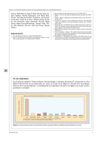
The document corrects a mistake by stating that pimecrolimus, not tacrolimus, is the drug that concentrates in the skin.
July 2025 in “Indian Dermatology Online Journal” In this case report, researchers documented a rare instance of trans-epidermal elimination of insulin formulation in a 45-year-old woman with diabetes, suggesting that insulin or its excipients may have caused a granulomatous reaction leading to skin lesions at injection sites and impaired diabetes control.