 2 citations
,
August 2022 in “Federal Practitioner”
2 citations
,
August 2022 in “Federal Practitioner” This case report describes a patient with lamotrigine-associated drug-induced hypersensitivity syndrome requiring prolonged and complex treatment, with observed complications including extensive alopecia areata and autoimmune thyroiditis.
 57 citations
,
June 2021 in “Polymers”
57 citations
,
June 2021 in “Polymers” This review discusses photothermal agent hybrids in hydrogels for antibacterial action, angiogenesis, and osteogenesis in tissue engineering, but reports no new experimental findings.
May 2005 in “Cancer Research” This study found that over-expression of thymosin beta-4 in transgenic mice accelerated wound healing and hair growth, but did not affect tumor progression despite stimulating tumor metastasis.
53 citations
,
June 1983 in “Journal of Investigative Dermatology” This study reports that human epidermal transglutaminase activity increases with treatment using organic solvents and chemicals without significant molecular weight changes, which may allow modulation of the enzyme in skin diseases.
52 citations
,
May 2009 in “Human & experimental toxicology” This study reported that despite treatment, patients with severe thallium poisoning experienced lasting visual impairment and partial recovery of polyneuropathy over two years, with hair loss fully reversing.
July 2024 in “Journal of Investigative Dermatology” July 2025 in “Journal of Investigative Dermatology” Monocyte-derived dendritic cells play a key role in UVB-induced skin sensitivity and inflammation.
June 2007 in “Emergency medicine news” This article discusses the symptoms, diagnosis, and treatment of thallium poisoning, with no new clinical results reported; the authors emphasize the importance of early suspicion for effective intervention.
November 2025 in “Journal of Investigative Dermatology” Light skin shows more inflammation from sun exposure than dark skin.
September 2024 in “Journal of the American Academy of Dermatology” Sun-protective behaviors increased, and sunburns decreased in both Hispanic and Non-Hispanic White individuals from 2005 to 2020.
5 citations
,
March 2008 in “DMW - Deutsche Medizinische Wochenschrift” This case report observed that despite treatment with Berlin blue and forced diuresis for thallium poisoning, a 42-year-old man experienced lasting distal polyneuropathy symptoms six months post-hospital discharge.
 54 citations
,
July 1967 in “Science”
54 citations
,
July 1967 in “Science” This study found that aged tritiated thymidine breaks down and incorporates into cytoplasmic macromolecules, not DNA, suggesting caution in its use.
31 citations
,
October 1992 in “PubMed” This study demonstrated immunological cross-reactivity between mycobacterial heat-shock protein 65 and human epidermal cytokeratin 1/2, suggesting that this cross-reactive epitope might play a role in skin diseases.
60 citations
,
February 2003 in “Postgraduate Medical Journal” In this report, it was noted that severe paresthesia, ophthalmoplegia, cerebellar and extrapyramidal signs, and alopecia can strongly indicate thallium poisoning, and haemodialysis may be beneficial even in the third week after poisoning.
19 citations
,
February 1998 in “Cellular Immunology” Hair growth phase in mice weakens certain immune responses.
 11 citations
,
August 2016 in “Journal of dermatological treatment”
11 citations
,
August 2016 in “Journal of dermatological treatment” This study evaluated the effects of tip cryotherapy on idiopathic guttate hypomelanosis lesions, finding that 82.3% of treated lesions showed significant improvement after four months compared to only 2% of control lesions, with minimal side effects.
November 2025 in “Veterinary and Animal Science” This study found that both dark and white dromedary camels exhibited high medullation in hair fibers, suggesting adaptations for insulation and heat dissipation in hot desert environments.
 March 2011 in “Journal of clinical and experimental investigations”
 This study describes two thallium poisoning outbreaks, highlighting characteristic symptoms like hair loss and peripheral neuropathy, and emphasizes that such poisoning can stem from accidental or criminal ingestion.
29 citations
,
August 2011 in “PubMed” This study found that selected polymeric pretreatments on hair can significantly reduce breakage and protect against thermal damage from hot flat irons by maintaining cuticle integrity and moisture.
36 citations
,
June 2015 in “International journal of toxicology” This study established a new mouse model for TCE-induced skin sensitization and reported that proinflammatory cytokines TNF-α, IFN-γ, and IL-2 significantly contribute to this sensitization process.
26 citations
,
December 2012 in “Bioanalysis” The researchers reported that glucuronides stored as dried blood spots under ambient conditions exhibited stability equivalent to liquid samples stored at -80°C.
 59 citations
,
September 2007 in “Biochemical and Biophysical Research Communications”
59 citations
,
September 2007 in “Biochemical and Biophysical Research Communications” This study found that a gain-of-function mutation in the TRPV3 channel leads to altered hair development in DS-Nh mice by affecting the anagen and telogen phases, highlighting TRPV3's role in hair growth regulation.
 22 citations
,
March 1932 in “Journal of the American Medical Association”
22 citations
,
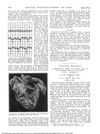
March 1932 in “Journal of the American Medical Association” This report describes eleven cases of thallium poisoning in individuals who consumed tortillas made from barley mixed with thallium sulphate, leading to symptoms including tingling, abdominal pain, vomiting, and limb weakness.
10 citations
,
March 2022 in “Frontiers in Oncology” This study found that the overexpression of the lncRNA HOTTIP in glioma cells increased resistance to the chemotherapy drug temozolomide, suggesting a key role for miR-10b and EMT processes in this resistance.
1 citations
,
January 2010 in “Han-guk hyeonmigyeong hakoeji/Applied microscopy” This study found that straight permed hair retains more weight than virgin hair during burning at higher temperatures, with distinct differences in morphological changes observed through thermal analysis and microscopy.
 4 citations
,
June 2019 in “International Journal of Cosmetic Science”
4 citations
,
June 2019 in “International Journal of Cosmetic Science” This study developed mathematical models showing that heat penetrates individual hair quickly but takes longer to reach the center of hair bundles, helping understand potential damage from high-temperature styling tools.
 May 2026 in “Sudovo-medična ekspertiza”
 This study documented three cases of acute thallium poisoning—one involving accidental overdose and two linked to intentional homicide—characterized by neurological and systemic symptoms, and in severe instances, death, underscoring thallium compounds' significant toxicity.
53 citations
,
March 2006 in “Biopolymers” This study suggests that increased amounts of less stable disulfide conformers in hair shafts may be linked to the brittleness observed in trichothiodystrophy.
July 2025 in “Indian Dermatology Online Journal” In this case report, researchers documented a rare instance of trans-epidermal elimination of insulin formulation in a 45-year-old woman with diabetes, suggesting that insulin or its excipients may have caused a granulomatous reaction leading to skin lesions at injection sites and impaired diabetes control.