 August 2025 in “Intisari Sains Medis”
 This study found that in healthy individuals, TGF-β1 levels in platelet-rich plasma are significantly higher when extracted using the buffy coat method compared to the pure method, with additional gender differences observed only in the buffy coat PRP.
May 2005 in “Faculty Opinions – Post-Publication Peer Review of the Biomedical Literature” In this study, transgenic mice with a truncated latent transforming growth factor-beta-binding protein showed reduced keratinocyte proliferation and alterations in the hair cycle due to mis-localization of transforming growth factor-beta.
2 citations
,
September 2017 in “Journal of Investigative Dermatology” This study found that notch1 signaling is severely impaired in hidradenitis suppurativa patients with or without NCSTN or other gamma-secretase gene mutations, highlighting a canonical defect at the lesional tissue level.
2 citations
,
March 1986 in “BMJ” 111 citations
,
April 2000 in “British journal of dermatology/British journal of dermatology, Supplement” In this study, physiological levels of free T3 significantly enhanced the survival of human hair follicles in vitro.
7 citations
,
February 2012 in “British Journal of Dermatology” This study identified two major antibody-binding sites on tyrosine hydroxylase in vitiligo and alopecia areata patients, suggesting that their immune response is heterogeneous and can target multiple epitopes.
 May 2022 in “Experimental dermatology”
 In this study, hair shafts from trichothiodystrophy patients with ERCC2 mutations revealed abnormal cuticle structures and protein imbalances compared to normal hair shafts.
2 citations
,
January 2014 in “Dermatology Online Journal” This article reviews hair-thread tourniquet syndrome, discussing its demographics, causes, and current treatment methods, but presents no new clinical findings.
July 2024 in “Journal of Investigative Dermatology” Human hair follicles have their own thyroid hormone system.
 December 2022 in “American journal of medical genetics. Part A”
 This case report describes an instance of autosomal recessive uncombable hair syndrome caused by maternal uniparental disomy of chromosome 1.
46 citations
,
November 2007 in “Gene Expression Patterns” This study observed that Trps1 gene expression in mice is precisely regulated in skin development, particularly during hair follicle morphogenesis, with distinct localization patterns in different cell types.
5 citations
,
June 2015 in “The Journal of Dermatology” This study identified "HTLV-1-associated lichenoid dermatitis" as a skin condition in HTLV-1-infected individuals, characterized by reactive eruptions associated with increased immunity toward infected CD4+ T cells.
July 2024 in “Journal of Investigative Dermatology” Brepocitinib reduces interferon signaling in hidradenitis suppurativa patients.
December 2009 in “생명과학회지” This study found that thymosin β4 is highly expressed in multiple human tissues and may play a role in organ function and angiogenesis through co-localization with VEGF.
 1 citations
,
June 2021 in “bioRxiv (Cold Spring Harbor Laboratory)”
1 citations
,
June 2021 in “bioRxiv (Cold Spring Harbor Laboratory)” This study found that in wild-type Arabidopsis plants, root hair growth is suppressed with increased nutrient availability, with RHD6 subfamily genes down-regulated and GTL1 and DF1 genes influencing root hair morphology under these conditions.
 52 citations
,
April 2013 in “Developmental Cell”
52 citations
,
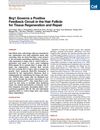
April 2013 in “Developmental Cell” This study found that Brg1, a chromatin-remodeling enzyme, plays a critical role in hair regeneration and early epidermal repair by regulating bulge stem cells through a Brg1-Shh interaction.
3 citations
,
June 2018 in “Internal Medicine” In this study, a patient with Cronkhite-Canada syndrome complicated by severe sepsis and disseminated intravascular coagulation was successfully treated using combined therapies, including recombinant human soluble thrombomodulin, despite the absence of a standard treatment regimen for CCS.
11 citations
,
December 2017 in “Orphanet Journal of Rare Diseases” This study found a previously unreported ST14 gene mutation in a patient with ichthyosis-hypotrichosis syndrome, highlighting novel skin and hair characteristics and emphasizing the critical role of the Asp482 amino acid in matriptase activation.
18 citations
,
November 2016 in “Transgenic research” This study found that transgenic cashmere goats overexpressing thymosin beta-4 have a higher secondary to primary hair follicle ratio, suggesting potential for increased cashmere yield.
 10 citations
,
April 2020 in “Clinics in Dermatology”
10 citations
,
April 2020 in “Clinics in Dermatology” This case report describes a girl in China with biotinidase deficiency confirmed by genetic mutations, whose skin and hair symptoms improved with biotin therapy.
January 2016 in “Zurich Open Repository and Archive (University of Zurich)” This study concludes that dietary L-serine supplementation shows promise as a long-term therapy for hereditary sensory and autonomic neuropathy type 1, reducing neurotoxic 1-deoxysphingolipid levels and improving symptoms in severe cases.
21 citations
,
September 2021 in “New Phytologist” This study found that the transcription factor HB24 plays a critical role in root hair elongation in Arabidopsis thaliana by promoting the conversion of indole-3-butyric acid to indole-3-acetic acid through regulation of IBR1 expression.
 April 2023 in “Journal of Investigative Dermatology”
 This study found that human TMEM2 does not function as a hyaluronidase but is involved in regulating hyaluronan metabolism.
12 citations
,
March 2013 in “The American journal of dermatopathology/American journal of dermatopathology” This article reports on three new cases of Birt–Hogg–Dubé Syndrome and emphasizes the role of genetic analysis in its diagnosis due to clinical challenges.
 7 citations
,
August 2022 in “Nature communications”
7 citations
,
August 2022 in “Nature communications” This study found that Thy1+ keratinocytes in the basal layer of the interfollicular epidermis play a crucial role in epidermal homeostasis and wound repair, with their ablation impairing these processes.
12 citations
,
January 2011 in “Journal of the Saudi Society of Dermatology & Dermatologic Surgery” This study documented an outbreak of thallium poisoning in Iraq, highlighting its dermatological, neurological, and psychological signs, which are crucial for accurate diagnosis.
89 citations
,
January 2020 in “PubMed” This review discusses biotinidase deficiency, noting that biotin treatment from birth can prevent symptoms, but acknowledges the complexity and need for further understanding due to late-onset cases with varied clinical findings.
March 2026 in “Bioengineering & Translational Medicine” This study reported that a modified version of Thymosin beta 4, called PEG-rTβ4, demonstrated potential as a treatment for acute myocardial infarction by improving cardiac function and reducing cell death via specific biochemical pathways, suggesting its promise in drug development efforts.
 January 2024 in “Inflammation and regeneration”
 This study identified Th22 cells as key effectors in hair regeneration driven by thymosin beta 15, suggesting they could be potential targets for hair regrowth therapies.
April 2019 in “The journal of investigative dermatology/Journal of investigative dermatology” This study in mice suggests that defects in hair follicles with mesenchymal TSC2 disruption may result from an impaired TGFβ1 response, indicating a potential novel treatment approach for tuberous sclerosis complex.