 2 citations
,
June 2011 in “Journal of clinical and experimental investigations”
2 citations
,
June 2011 in “Journal of clinical and experimental investigations” This study found that oral zinc sulphate appeared effective and safe for treating thallium poisoning, particularly in reducing hair and skin symptoms and mitigating its severe progression in patients.
 February 2025 in “Frontiers in Veterinary Science”
 This case report highlights the successful use of Prussian Blue to treat a dog suffering from thallium intoxication, demonstrating the importance of early diagnosis and targeted therapy in veterinary care for improving recovery outcomes.
 June 2011 in “Journal of clinical and experimental investigations”
 This study suggests that oral zinc sulphate may be an effective and safe treatment for thallium poisoning, particularly in improving dermatological symptoms and reducing the progression of the condition.
December 2023 in “Ukraïnsʹkij žurnal sučasnih problem toksikologìï/Ukraïnsʹkij Žurnal Sučasnih Problem Toksikologìï” This study found an increase in criminal and accidental thallium (Tl+) poisonings globally, particularly in Ukraine, partly due to online availability, underscoring the need for better control and diagnosis to prevent severe outcomes and potential misuse during ongoing conflicts.
 28 citations
,
March 2010 in “Clinics in dermatology”
28 citations
,
March 2010 in “Clinics in dermatology” This review details historical advancements in understanding and treating superficial fungal infections, with notable milestones in identifying causative agents and developing effective treatments, but it reports no new findings.
52 citations
,
May 2009 in “Human & experimental toxicology” This study reported that despite treatment, patients with severe thallium poisoning experienced lasting visual impairment and partial recovery of polyneuropathy over two years, with hair loss fully reversing.
June 2007 in “Emergency medicine news” This article discusses the symptoms, diagnosis, and treatment of thallium poisoning, with no new clinical results reported; the authors emphasize the importance of early suspicion for effective intervention.
48 citations
,
January 2008 in “European Neurology” This study demonstrated that acute thallium poisoning primarily manifests with gastrointestinal issues, polyneuropathy, and dermatological changes, and treatments like hemoperfusion and hemodialysis may improve symptoms.
 June 2026 in “The Russian Archives of Internal Medicine”
 This case report detailed a 38-year-old woman with thallium intoxication, who initially presented with polyneuropathy and alopecia. The diagnosis was confirmed by toxicology, and treatment with potassium hexacyanoferrate led to full recovery, underscoring the importance of early diagnosis and treatment in toxic polyneuropathies.
January 2010 in “Guoji yaoxue yanjiu zazhi” This review discusses thallium poisoning, its mechanisms, clinical symptoms, and treatment approaches, highlighting hemoperfusion as an effective method to eliminate absorbed thallium, though no new clinical results are presented.
5 citations
,
March 2008 in “DMW - Deutsche Medizinische Wochenschrift” This case report observed that despite treatment with Berlin blue and forced diuresis for thallium poisoning, a 42-year-old man experienced lasting distal polyneuropathy symptoms six months post-hospital discharge.
 119 citations
,
June 1993 in “BMJ”
119 citations
,
June 1993 in “BMJ” This article discusses the high toxicity and potential use of thallium as a poison, highlighted by two cases of intentional thallium poisoning.
1 citations
,
May 2007 in “Emergency medicine news” This article discusses thallium poisoning and its diagnosis, symptoms, and treatment options, emphasizing the need for awareness due to its misleading symptoms and potential for misdiagnosis.
27 citations
,
January 2017 in “Journal of clinical and diagnostic research” This case report details a 23-year-old woman who was poisoned with thallium by a colleague and treated with activated charcoal and Prussian blue.
 January 2024 in “Current research in toxicology”
 This review reports that thallium poisoning causes severe neurological damage, with early gastrointestinal symptoms and later neurological dysfunction, and highlights the importance of early diagnosis and Prussian blue as an effective antidote.
60 citations
,
February 2003 in “Postgraduate Medical Journal” In this report, it was noted that severe paresthesia, ophthalmoplegia, cerebellar and extrapyramidal signs, and alopecia can strongly indicate thallium poisoning, and haemodialysis may be beneficial even in the third week after poisoning.
 22 citations
,
March 1932 in “Journal of the American Medical Association”
22 citations
,
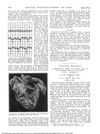
March 1932 in “Journal of the American Medical Association” This report describes eleven cases of thallium poisoning in individuals who consumed tortillas made from barley mixed with thallium sulphate, leading to symptoms including tingling, abdominal pain, vomiting, and limb weakness.
12 citations
,
January 2011 in “Journal of the Saudi Society of Dermatology & Dermatologic Surgery” This study documented an outbreak of thallium poisoning in Iraq, highlighting its dermatological, neurological, and psychological signs, which are crucial for accurate diagnosis.
3 citations
,
May 1963 in “Radiology” This article reports on five cases of thallium poisoning seen at Hospital Dos de Mayo, Lima, Peru, highlighting the clinical symptoms and diagnostic features observed, including a case confirmed through various laboratory tests.
January 2023 in “Indian Journal of Forensic and Community Medicine” This report describes two cases of thallium poisoning with gastrointestinal symptoms, peripheral neuropathy, and alopecia, which were effectively treated using activated charcoal, potassium chloride, and hemodialysis.
 1 citations
,
August 2023 in “The journal of pharmacology and experimental therapeutics/The Journal of pharmacology and experimental therapeutics”
1 citations
,
August 2023 in “The journal of pharmacology and experimental therapeutics/The Journal of pharmacology and experimental therapeutics” This study developed a new method to analyze Cantú syndrome mutations in KATP channels, finding that while Kir6.1 mutations increase sensitivity to potassium channel openers, SUR2B mutations show reduced sensitivity, but both result in marked hyperpolarization compared to wild-type channels under basal conditions.
32 citations
,
December 1963 in “Pharmacological Reviews” This article reviews how various chemical agents affect human hair and skin, suggesting the need for more research on their pharmacologic and dermatologic effects; it does not report new experimental results.
3 citations
,
May 2007 in “Pediatrics in review” This article reviews the epidemiology, presentation, and treatment of tinea infections and offers no new clinical findings, advocating for the use of oral antifungals and proper hygiene practices.
 36 citations
,
January 2010 in “Human & experimental toxicology”
36 citations
,
January 2010 in “Human & experimental toxicology” This case report found that two women developed toxic selenium levels after consuming paradise nuts, resulting in symptoms like massive hair loss and nail discoloration.
 11 citations
,
August 2010 in “Pediatric dermatology”
11 citations
,
August 2010 in “Pediatric dermatology” This report details two cases of Lichen spinulosus in the submental area, treated effectively and safely with topical tacalcitol cream.
 5 citations
,
January 2018
5 citations
,
January 2018 This study optimized a screening assay to identify molecules that inhibit or enhance TRPM5 ion channel activity, which may have implications for treating dysfunctions linked to cardiac arrhythmias and diabetes.
 1 citations
,
April 2022 in “The Egyptian Journal of Hospital Medicine ”
1 citations
,
April 2022 in “The Egyptian Journal of Hospital Medicine ” This review evaluates laser therapy for alopecia areata, noting that fractional lasers facilitate hair growth and drug delivery, but reports no new clinical results.
 March 2011 in “Journal of clinical and experimental investigations”
 This study describes two thallium poisoning outbreaks, highlighting characteristic symptoms like hair loss and peripheral neuropathy, and emphasizes that such poisoning can stem from accidental or criminal ingestion.
 7 citations
,
May 2018 in “Curēus”
7 citations
,
May 2018 in “Curēus” In this case report, a 60-year-old woman with eyebrow hypotrichosis experienced significant and lasting eyebrow growth after daily use of bimatoprost 0.03% solution, highlighting its potential as an effective treatment for eyebrow hair restoration.
 5 citations
,
June 2015 in “Journal of dermatology”
5 citations
,
June 2015 in “Journal of dermatology” This letter to the editor describes a case of anagen effluvium due to thallium poisoning from Chinese herbal medicine and rodenticide but reports no new research findings.