32 citations
,
August 2016 in “Journal of the American Academy of Dermatology” This letter discusses congenital triangular alopecia (TTA), a non-scarring hair loss condition often seen in children, without reporting new clinical findings.
 7 citations
,
March 2021 in “Journal of the American Academy of Dermatology”
7 citations
,
March 2021 in “Journal of the American Academy of Dermatology” This study observed that some children and young adults with alopecia areata experienced flares during long-term tofacitinib treatment, despite initial successful hair regrowth.
 3 citations
,
May 2024 in “Cureus”
3 citations
,
May 2024 in “Cureus” This review revisits hair-thread tourniquet syndrome, highlighting the importance of prompt diagnosis and treatment by removing the constricting hair or similar substance to prevent damage to affected body parts, aiming to raise healthcare professionals' awareness for better prevention and management.
January 2007 in “Frontiers in Medicine” This study found that tofacitinib was an effective and better-tolerated treatment for moderate-to-severe AA compared to SCs, though its efficacy decreased in patients with disease episodes longer than two years.
 August 2018 in “Journal of the American Academy of Dermatology”
 Tofacitinib is a potential alternative treatment for alopecia totalis, especially in patients with a shorter duration of the condition and more preserved hair follicles, but the overall response rate is low.
 November 2025 in “Mendeley Data”
 This study found that tofacitinib and baricitinib, when administered with unorthodox weight-stratified dosing in pediatric patients with moderate-to-severe AA, showed comparable efficacy and tolerability, though baricitinib's efficacy decreased with non-standard dosing.
 January 2024 in “Dermatologic therapy”
 In this study, pediatric patients with alopecia areata treated with systemic tofacitinib showed significant improvement at 12 months, but the small sample size and retrospective design limit conclusions about its effectiveness.
 December 2020 in “TURKDERM”
 This case report describes a 3-year-old boy diagnosed with temporal triangular alopecia, emphasizing the importance of clinical and dermoscopic examination for correct diagnosis due to the condition's rarity and risk of misdiagnosis.
 November 2022 in “Arab Gulf Journal of Scientific Research”
 This review discusses the potential clinical benefits and functional properties of taurine as a conditionally essential amino acid, noting its presence in energy drinks, but reports no new experimental results.
This case study reports that a pediatric patient with recalcitrant alopecia areata was treated using a 308 nm excimer lamp and topical tofacitinib 2% gel.
December 2024 in “Veterinary Dermatology” This case report identified cutaneous epitheliotropic T-cell lymphoma in a 3-year-old male sugar glider after skin biopsies, highlighting the need for thorough diagnostic evaluations in exotic pets.
 13 citations
,
June 2012 in “Journal of Dermatological Case Reports”
13 citations
,
June 2012 in “Journal of Dermatological Case Reports” This report describes an 8-year-old male with trichotillomania, confirmed by trichoscopy showing characteristic hair damage and patterns.
 2 citations
,
March 2023 in “Skin research and technology”
2 citations
,
March 2023 in “Skin research and technology” This study observed that temporal triangular alopecia in infants presents with distinct clinical and dermatoscopic features, indicating the usefulness of dermatoscopy for diagnosis and differential diagnosis.
 2 citations
,
February 2018 in “Journal of dermatology & cosmetology”
2 citations
,
February 2018 in “Journal of dermatology & cosmetology” This article discusses triangular temporal alopecia, highlighting dermoscopy's role in diagnosis and the limited therapeutic options, without reporting new clinical results.
This observational study reviewed thyroid eye disease patients treated with teprotumumab at one center, reporting common side effects like fatigue and dry eye symptoms, with serious adverse events including two cases of blood clots and one pulmonary embolism.
January 2025 in “International Journal of Pharmaceutics” In this study, gelatin-coated transferosomes were developed to deliver tofacitinib specifically to hair follicles, resulting in 80% hair regrowth in alopecia areata patients with recalcitrant lesions after 12 weeks of treatment.
 1 citations
,
August 1946 in “Archives of dermatology”
1 citations
,
August 1946 in “Archives of dermatology” This case presentation describes an adult with tinea capitis and related symptoms who was found to have a Trichophyton gypseum infection.
 February 2026 in “Oncology Reviews”
 This review highlights the promising clinical outcomes of sacituzumab tirumotecan (sac-TMT), an antibody-drug conjugate for breast cancer that targets TROP2, demonstrating improved response rates and progression-free survival, with manageable safety concerns including primarily mild-to-moderate nausea and alopecia.
 13 citations
,
November 2021 in “Pediatric Dermatology”
13 citations
,
November 2021 in “Pediatric Dermatology” This study found that oral tofacitinib was effective and well tolerated for treating alopecia areata in most pediatric patients, with nearly 73% experiencing hair regrowth.
 1 citations
,
April 2020 in “Asian Journal of Medicine and Biomedicine”
1 citations
,
April 2020 in “Asian Journal of Medicine and Biomedicine” This article reports a case of hair tourniquet syndrome in a child's toe, successfully treated surgically, and emphasizes the need for healthcare providers to be aware for early detection and treatment.
 49 citations
,
May 2018 in “Journal of the American Academy of Dermatology”
49 citations
,
May 2018 in “Journal of the American Academy of Dermatology” This letter discusses the limited treatment options for pediatric alopecia areata and the lack of controlled studies for therapies like systemic and off-label immunosuppressive drugs, without reporting new clinical results.
 48 citations
,
November 2017 in “Journal of the American Academy of Dermatology”
48 citations
,
November 2017 in “Journal of the American Academy of Dermatology” Tofacitinib 2% ointment helped hair regrow in 3 out of 10 patients with alopecia areata, but caused side effects like scalp irritation and raised cholesterol in some.
 23 citations
,
September 2009 in “Child Abuse & Neglect”
23 citations
,
September 2009 in “Child Abuse & Neglect” This case report highlights the importance of considering hair-thread tourniquet syndrome as a potential diagnosis for girls with genital swelling and pain, emphasizing the need for prompt intervention.
This case study from Morocco reports the country's first suspected instance of Tinea capitis caused by Trichophyton tonsurans, identified in a 25-year-old member of the national judo team, highlighting the need for screening and improved hygiene in sports environments to prevent potential outbreaks.
 January 1999 in “American Journal of Medical Genetics Part A”
 This case report describes a rare occurrence of ectodermal dysplasia features in a 14-year-old with MBTPS1 gene variants, expanding the known spectrum of related disorders.
1 citations
,
January 2024 in “Arab Board Medical Journal” This study found that tofacitinib was an effective and well-tolerated treatment for alopecia areata, with significant to moderate hair regrowth in 78% of patients observed.
 14 citations
,
July 2012 in “Journal of the American Academy of Dermatology”
14 citations
,
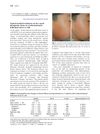
July 2012 in “Journal of the American Academy of Dermatology” This study found that topical tacalcitol improved roughness and scaling in erythromelanosis follicularis faciei et colli, although it was less effective for facial erythema.
2 citations
,
December 2019 in “Chinese medical journal/Chinese Medical Journal” This case report describes a rare instance of tinea capitis caused by Trichophyton tonsurans in a Chinese patient, followed by the development of herpes zoster, suggesting a potential link to immunosuppression.
 2 citations
,
May 2022 in “Journal of the American Academy of Dermatology”
2 citations
,
May 2022 in “Journal of the American Academy of Dermatology” This study observed that most patients with traction alopecia showed improved or stabilized hair loss with therapeutic counseling and adjunctive treatments, but follow-up was often inconsistent, highlighting the need for better awareness and management.
22 citations
,
July 2006 in “Annals of The Royal College of Surgeons of England” This case report aims to raise physician awareness about 'toe-tourniquet' syndrome, which can lead to digit loss if not promptly treated, and to prevent its misdiagnosis as child abuse.