 March 2022 in “Marmara University Open Access System”
 This article critically examines the relationship between new media and digital games, emphasizing their cultural and historical contexts, but provides no new empirical findings.
 January 2022 in “International journal of zoology and animal biology”
 This review discusses canine dermatomyositis, highlighting its genetic basis, clinical manifestations, and the need for improved treatment options, without reporting new findings.
 January 2022 in “Dermatology Review”
 This study found that patients with chronic kidney disease-associated pruritus had elevated serum levels of interleukin 31, suggesting a possible role of this cytokine in the condition.
 April 2021 in “Sohag Medical Journal”
 This review outlines the proposed theories behind the development of alopecia areata, emphasizing the autoimmune process involving lost immune privilege in hair follicles, and stresses the need to pinpoint specific pathogenic mechanisms for potential treatments.
 January 2021 in “Natural Products Chemistry & Research”
 This study found that Datura metel leaf and flower extracts could improve hair growth, with leaf extracts prompting quicker growth and mixed extracts enhancing overall regrowth effectiveness in animal models.

This article provides an overview of conditions that can cause hair loss in dogs and cats and offers guidance on diagnostic approaches, but it presents no new research findings.
 January 2018 in “Springer eBooks”
 This study discusses how dermatological issues in athletes can arise from or be exacerbated by mechanical trauma, infections, and environmental factors, highlighting the importance of thorough history and examination to differentiate these from other skin conditions.
 January 2016 in “Georg Thieme Verlag eBooks”
 The document recommends personalized, culturally sensitive treatments to rejuvenate the aging Asian face, focusing on natural results and specific techniques for skin, hair, and facial features.
 July 2011 in “Facial Plastic Surgery”
 The document provides a quiz for physicians to earn continuing medical education credits in facial plastic surgery.
 May 2011 in “Dermatología argentina”
 In this case report, a female patient with frontal fibrosing alopecia and lichen scleroatrophicus vulvae experienced excellent results from hair microtransplants combined with finasteride and topical minoxidil, maintained over six years.
 May 2009 in “The American Journal of Dermatopathology”
 This abstract contains only journal subscription and informational content and does not present any research findings.
 December 2008 in “The American Journal of Cosmetic Surgery”
 Multi-pass laser skin treatments improved healing, reduced pain, and had no major complications.
 September 2006 in “Plastic and Reconstructive Surgery”
 This study observed a 31% decrease in antidepressant use among patients already using such medication before cosmetic surgery, suggesting a potential influence of cosmetic procedures on antidepressant needs.
 September 2006 in “Plastic and Reconstructive Surgery”
 This study observed a 31% decrease in antidepressant use among patients who were preoperatively taking such medication, suggesting cosmetic surgery may influence antidepressant needs.
 September 2006 in “Plastic and Reconstructive Surgery”
 This study found a 31% decrease in antidepressant use following cosmetic surgery, suggesting that such procedures may influence medication use by improving self-esteem.
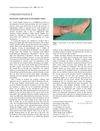 May 2002 in “British Journal of Dermatology”
 A pregnant woman's skin condition improved after giving birth, possibly due to high estrogen levels during pregnancy.

Taking calcium may help elderly with osteoporosis, birth control with levonorgestrel doesn't increase heart attack risk, Salmonella can cause arthritis, a national ethics committee is recommended, and sulfasalazine might help with a hair loss condition.
 February 1938 in “Journal of the American Medical Association”
 This abstract contains no research results but appears to be a web navigation or user interface message.
 August 2016 in “InTech eBooks”
 This source highlights the diverse scope of facial plastic and reconstructive surgery, noting the specialty's adaptability to changing trends and ethnic preferences for aesthetic outcomes, without reporting specific study results.
 January 2012 in “Current Therapy In Oral and Maxillofacial Surgery”
 Endoscopic forehead and brow lifting safely and consistently improves aged eyebrows, but may have complications.
 May 2002 in “British Journal of Dermatology”
 This brief article is a response from the authors about hair density, hair diameter, and female pattern hair loss, and it reports no new clinical findings.
This study reported that transitioning dairy cows from a tie-stall to a free-stall barn significantly reduced carpal and hock lesions, but increased stress and heel horn erosions.
March 2012 in “Journal of Experimental Biology” This study challenges the idea that tarantulas produce silk from their feet to steady themselves during falls, suggesting instead that the hairs on their feet are chemosensors secreting lymph, not silk.
 May 2017 in “Journal of The American Academy of Dermatology”
 An intact skin barrier is crucial to prevent infection in cases of tether-induced tenosynovitis.
 June 2017 in “Journal of The American Academy of Dermatology”
 Tapinarof cream at 1% concentration is effective and better tolerated for treating atopic dermatitis than the 2% concentration.
 13 citations
,
March 2002 in “Pediatric Dermatology”
13 citations
,
March 2002 in “Pediatric Dermatology” This article discusses temporal triangular alopecia, emphasizing the need for increased awareness to prevent misdiagnosis and ineffective treatment, but reports no new clinical results.
This article lists the clinically important interactions and skin reactions of several drugs and substances, including THA, FK506, tamoxifen, tamsulosin, tartrazine, tea tree oil, temazepam, and temozolomide, but provides no new clinical results.
7 citations
,
March 2004 in “Journal of the American Academy of Dermatology” Tiger tail banding and hair abnormalities are reliable indicators for diagnosing trichothiodystrophy.
1 citations
,
June 1999 in “American Journal of Contact Dermatitis” In this study, tazarotene 0.1% gel showed greater efficacy than tretinoin 0.025% gel in reducing acne lesions and demonstrated similar efficacy to adapalene 0.1% gel when used less frequently.
3 citations
,
November 1998 in “Pediatrics in review” This article reviews various dermatophyte infections, particularly tinea capitis, and discusses their clinical presentations, diagnosis, and treatment, but reports no new clinical findings.