January 2019 in “Journal of the American Academy of Dermatology” This study found that many childhood cancer survivors at one institution delayed dermatologic care and had inadequate sun protection, risking late diagnosis of skin complications from cancer therapy.
31 citations
,
January 2014 in “The Scientific World JOURNAL” This study found that the water extract of Eclipta prostrata L. may protect skin cells against UVB-induced damage, likely due to its antioxidant properties and absorption of UVA and UVB radiation.
March 2026 in “Photodermatology Photoimmunology & Photomedicine” In this study, compliance with UV protection recommendations was highest among vitiligo patients compared to those with other cutaneous immune-mediated inflammatory dermatoses, indicating a need for tailored education to improve compliance across all groups.
This study found that a combination of photoprotector and nighttime formulations with essential oils improved skin barrier function and structural characteristics in young men's oily, acne-prone, and photoaged skin.
1 citations
,
July 2014 in “The journal of investigative dermatology/Journal of investigative dermatology” This review discusses various topics from the 62nd Annual Montagna Symposium on the Biology of Skin, focusing on the diverse effects of light on skin biology, and reports no new clinical results.
September 2022 in “Pharmacy Today” September 2023 in “Journal of the American Academy of Dermatology” This study analyzed NHANES data from 2005 to 2020 and found that sunscreen-wearing behavior was more common among females than males, individuals aged 29-56 compared to those aged 0-28, and significantly less likely among non-Hispanic Black respondents compared to non-Hispanic White respondents.
 5 citations
,
November 2017 in “Asian Journal of Beauty and Cosmetology”
5 citations
,
November 2017 in “Asian Journal of Beauty and Cosmetology” This study found that sinapic acid demonstrated antioxidant and anti-inflammatory effects against UVB-induced damage in human keratinocytes, suggesting its potential as an anti-aging cosmetic ingredient.
This study validated a new test method using a patented chamber to measure the efficacy of a sunscreen in reducing carbon black particle adhesion, with a 55% reduction observed on treated skin in a group of 22 women.
January 1985 in “Clinical research” This study found that topical alpha-terthienyl combined with UVA radiation rapidly induced dose-dependent cutaneous photosensitization in guinea pigs, suggesting potential for photochemotherapy in skin disorders without future carcinogenic risks.
June 2016 in “한국디자인문화학회지” This study found that ultraviolet A rays damage all hair types, with stronger adverse effects on colored and permanently waved hair, suggesting the use of sunblock products for hair protection.
 5 citations
,
January 2010 in “International journal of trichology”
5 citations
,
January 2010 in “International journal of trichology” This report describes two cases of alopecia totalis treated with turban psoralen and sunlight exposure, but it provides no clinical outcome results.
 July 2016 in “Dermatologie pro praxi”
 This article discusses the use of Espumil foam base in pharmacies for preparing dermatological medications and reports no new clinical results.
 89 citations
,
June 2012 in “Anais Brasileiros de Dermatologia”
89 citations
,
June 2012 in “Anais Brasileiros de Dermatologia” This review compiles epidemiological data on actinic keratoses and suggests promoting strategies like early diagnosis and photoprotection to prevent progression to skin cancer, but it reports no new clinical findings.
 April 2016 in “JAMA Dermatology”
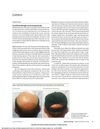
 This commentary highlights the importance of additional sun protection for individuals with alopecia, noting that common headwear like baseball caps may provide insufficient photoprotection for the scalp.
3 citations
,
January 2010 February 2023 in “مجلة التراث والتصميم” This study found that choosing appropriate fabrics for hats and caps enhanced protection against sun damage and air pollution for hair in construction and manufacturing workers.
 November 2020 in “Journal of The American Academy of Dermatology”
 This study investigated the use of spironolactone in patients with estrogen-dependent cancers, aiming to determine if it is linked to increased cancer recurrence risk, but results are not reported.
 31 citations
,
February 2019 in “International Journal of Cosmetic Science”
31 citations
,
February 2019 in “International Journal of Cosmetic Science” This study found that ultraviolet radiation negatively affects hair follicle functions in human scalp skin, and caffeine application may provide some protective effects against this damage.
14 citations
,
July 2015 in “International Journal of Molecular Sciences” This study found that S-Methylmethionine sulfonium (SMMS) enhances cell survival and reduces damage from UVB irradiation in skin cells, suggesting its potential as a cosmetic ingredient for UV protection.
65 citations
,
November 2008 in “Pediatric Dermatology” This study observed that phototherapy is an effective and well-tolerated treatment for childhood dermatoses, particularly for psoriasis and pityriasis lichenoides chronica.
 31 citations
,
January 2011 in “Dermato-endocrinology”
31 citations
,
January 2011 in “Dermato-endocrinology” This review updates the protective effects and molecular mechanisms of melatonin against ultraviolet-induced damage in human skin, reporting no new clinical findings.
 21 citations
,
January 2012 in “Biological and Pharmaceutical Bulletin”
21 citations
,
January 2012 in “Biological and Pharmaceutical Bulletin” This study found that using a combination of iontophoresis and liposomal delivery facilitated the effective intradermal administration of superoxide dismutase in rats, reducing oxidative skin damage from UV exposure.
 November 2022 in “Journal of Investigative Dermatology”
 This study developed a chalcone-based molecule that significantly increased tyrosinase inhibition and solubility, showing potential as a safe and effective skin depigmenting and antiaging agent, with supportive epigenetic and antioxidant properties observed in vitro.
 January 1993 in “Side effects of drugs annual”
 This chapter covers various dermatological drugs, cosmetics, and topical agents, focusing on the properties and uses of propolis, but does not present new clinical findings.
29 citations
,
July 2013 in “Journal of Investigative Dermatology” This review explores the mechanisms by which UV radiation causes skin cancer, highlighting UV-induced DNA damage and its implications for cancer prevention strategies, but reports no new findings.
 3 citations
,
January 2022 in “Journal of The American Academy of Dermatology”
3 citations
,
January 2022 in “Journal of The American Academy of Dermatology” This study found that sunscreen and moisturizer use was associated with a higher likelihood of developing frontal fibrosing alopecia in the reviewed studies.
 January 2021 in “Journal of clinical and cosmetic dermatology”
 This review highlights the role of the skin's photosensory system in mediating responses to UVA radiation, contributing both to immediate protective effects and to broader circadian and seasonal adaptations, but reports no new experimental results.
 26 citations
,
June 2018 in “Australasian Journal of Dermatology”
26 citations
,
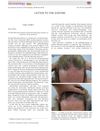
June 2018 in “Australasian Journal of Dermatology” Stopping sunscreen use on the forehead led to hair regrowth in a woman with frontal fibrosing alopecia.
 June 2018 in “Journal of Dermatological Science”
 UV radiation may cause DNA changes in skin, certain UVB therapy helps psoriasis, a new gene mutation is linked to mild piebaldism, different immune cells affect psoriasis, a drug promotes hair growth, and some cancer drugs could treat skin barrier issues.