5 citations
,
January 2014 in “Advances in bioscience and biotechnology” This study concluded that daily ingestion of natural honey may protect against liver toxicity induced by Doxorubicin in male Albino mice.
4 citations
,
January 2014 in “Indian journal of paediatric dermatology” This review discusses the use of methotrexate for pediatric dermatoses and reports increased use in certain conditions like psoriasis, but mainly isolated case reports for others.
December 2025 in “Biomedicines” This source reviews the common skin-related side effects of tyrosine kinase inhibitors in treating endocrine cancers and emphasizes that proactive, multidisciplinary management can effectively control these adverse events without compromising cancer treatment efficacy.
April 2025 in “JAAD reviews.” This review provides an overview of skin manifestations associated with substance use disorder but reports no new clinical findings; the authors emphasize the importance of dermatological evaluation and multidisciplinary care in managing these cases.
 18 citations
,
November 2021 in “Anais Brasileiros de Dermatologia”
18 citations
,
November 2021 in “Anais Brasileiros de Dermatologia” This review examines the skin manifestations associated with COVID-19 but reports no new clinical findings, emphasizing the need for differential diagnoses to correlate skin symptoms with the virus.
8 citations
,
May 2025 in “Pharmaceuticals” This article reviews 27 small-molecule drugs approved by the FDA in 2024, noting that among them, eight "first-in-class" drugs with breakthrough therapy status show distinct mechanisms and substantial efficacy improvements in various conditions like cancer and chronic diseases.
7 citations
,
December 2024 in “Antibiotics” This review discusses the potential of cathelicidins in treating skin conditions but highlights significant challenges, including unclear clinical efficacy, safety concerns, and bacterial resistance, that must be addressed for successful medical application.
7 citations
,
October 2024 in “BMC Women s Health” This study highlights significant unmet medical needs among breast cancer patients due to inadequate solutions for managing treatment-related adverse events and reveals varied information needs regarding these events.
 December 2024 in “Nutrients”
 In this review, skin changes like hair loss and brittle nails linked to nutritional deficiencies common in eating disorders are examined as critical diagnostic tools, highlighting the need for integrated care involving dermatologists, psychiatrists, and nutritionists for effective management.
 January 2024 in “Journal der Deutschen Dermatologischen Gesellschaft”
 This research paper reviews the mechanisms and management of non-biologic immunosuppressive drugs used in dermatology, highlighting their safety profiles and handling during pregnancy, breastfeeding, and vaccination, but does not report specific results on these aspects.

This article reviews the cutaneous side effects of immune checkpoint inhibitors and targeted therapies for skin cancers, noting that while generally mild, these effects can influence treatment decisions and quality of life, underscoring the need for physicians to be aware of these adverse reactions.
January 2018 in “Journal of the advanced practitioner in oncology” This case study provides an exemplar of a 75-year-old man with metastatic renal cell carcinoma, outlining his medical history, recent imaging findings, and treatment decisions; it reports no clinical results.
44 citations
,
October 2020 in “Arthritis Care & Research” This review summarizes various indices used to assess disease activity and damage in systemic lupus erythematosus, highlighting challenges in universal consensus and their practical applications in research and clinical settings.
 28 citations
,
July 2017 in “Expert Review of Anticancer Therapy”
28 citations
,
July 2017 in “Expert Review of Anticancer Therapy” This study found that CDK4/6 inhibitors in hormone-positive metastatic breast cancer were linked to increased risks of fatigue, alopecia, and stomatitis compared to placebo.
December 2013 in “American journal of transplantation” This case report describes a 27-year-old kidney transplant recipient with end stage renal failure who developed infections and adverse reactions, ultimately resolving with antiviral treatment targeting HHV6.
505 citations
,
October 2011 in “Journal of clinical oncology” This phase I study found that MK-2206 was well tolerated and demonstrated evidence of AKT signaling blockade in patients with advanced solid tumors, with the maximum-tolerated dose established at 60 mg.
 22 citations
,
March 1932 in “Journal of the American Medical Association”
22 citations
,
March 1932 in “Journal of the American Medical Association” This report describes eleven cases of thallium poisoning in individuals who consumed tortillas made from barley mixed with thallium sulphate, leading to symptoms including tingling, abdominal pain, vomiting, and limb weakness.
 21 citations
,
January 2022 in “Pharmaceutics”
21 citations
,
January 2022 in “Pharmaceutics” This systematic review investigated colchicine as a potential treatment for various skin conditions, finding that most studies reported generally positive clinical outcomes when used alone or with other drugs, despite some variability in results.
18 citations
,
January 1987 in “PubMed” This study found that plasma zinc concentrations were significantly lower in patients with alcoholic cirrhosis, especially those with skin manifestations of zinc deficiency, compared to control subjects.
 January 2014 in “Michigan telecommunications and technology law review”
 This study reported that alcoholic cirrhosis patients with zinc deficiency and skin lesions showed rapid symptom improvement with oral zinc sulfate treatment, confirming the diagnosis.
 14 citations
,
April 2017 in “American Journal of Transplantation”
14 citations
,
April 2017 in “American Journal of Transplantation” This review examines nonmalignant skin toxicities from immunosuppressive and transplant-related medications, emphasizing the need for effective identification and management by care providers; it presents no new research findings.
10 citations
,
January 1967 in “PubMed” This research reports that oral contraceptives may cause melasma in 24-29% of users, with minimal improvement after stopping the drug and limited effectiveness of hydroquinone treatment.
January 2018 in “Journal of Diabetic Association Medical College.” This case study reports a two and a half-month-old with biotinidase deficiency who showed rapid seizure improvement with biotin treatment after presenting with convulsions and neurological symptoms.
 January 2016 in “Türkiye klinikleri tıp bilimleri dergisi”
 About 38% of patients at a dermatology clinic had oral lesions, with coated tongue, fissured tongue, and Fordyce granules being most common.
October 2010 in “eCommons (Cornell University)” This case report highlights that cutaneous epitheliotropic lymphoma in dogs can present with various skin lesions, such as depigmentation, making diagnosis challenging for veterinarians.
 June 1987 in “Pediatric Neurology Briefs”
 This report describes a case of a 5-year-old boy with acute somnolence, alopecia, keratoconjunctivitis, and perioral stomatitis linked to lactic acidaemia.
 16 citations
,
December 2020 in “International Journal of Clinical Practice”
16 citations
,
December 2020 in “International Journal of Clinical Practice” This study found that urticaria, psoriasis, and allergic/irritant contact dermatitis were more commonly diagnosed during the COVID-19 pandemic period, while acne and some other dermatological conditions decreased compared to before the pandemic.
2 citations
,
July 2025 in “RMD Open” This study found that IL-1 blockers are effective for SURF and identified predictors of colchicine resistance, emphasizing the need for refined diagnostic criteria and personalized treatment due to the heterogeneity observed within SURF.
 1 citations
,
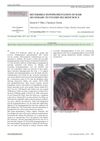
January 2013 in “Nasza Dermatologia Online”
1 citations
,
January 2013 in “Nasza Dermatologia Online” This case report describes reversible hypopigmentation of hair in a child due to vitamin B12 deficiency, which improved after vitamin B12 supplementation.
 January 2020 in “Journal of Clinical Biochemistry and Nutrition”
 This study observed that lower serum zinc levels in patients with chronic liver disease were linked to a higher prevalence of symptoms like dermatitis, taste disorder, and alopecia, suggesting these symptoms may be associated with zinc deficiency.