7 citations
,
January 2025 in “Journal of Experimental & Clinical Cancer Research” This study found that PRMT5 inhibitors showed potent anti-tumor activity in models of adenoid cystic carcinoma and that combining these inhibitors with lenvatinib may have additional growth-inhibitory effects.
 6 citations
,
June 2018 in “PLOS ONE”
6 citations
,
June 2018 in “PLOS ONE” This study demonstrated that the Alopecia Areata Assessment Tool (ALTO) effectively identifies alopecia areata cases with high sensitivity and specificity in a dermatology clinic setting.

This study highlights how economic systems facing global uncertainties require effective management based on sustainable development principles, emphasizing adaptive management and scientific modeling to enhance financial and economic stability within enterprises.
 15 citations
,
March 1998 in “Journal of Public Policy & Marketing”
15 citations
,
March 1998 in “Journal of Public Policy & Marketing” This article discusses the development and testing of comprehensible over-the-counter drug product labels, highlighting the need for improved consumer understanding and calling for further research on label design.
3 citations
,
November 2022 in “Frontiers in Plant Science” This study found that microwave-assisted extraction significantly increased the yield of secondary metabolites, including phenolic and flavonoid content, from Nardostachys jatamansi, enhancing its anti-Alzheimer's potential compared to conventional extraction methods.
June 2024 in “British Journal of Dermatology” This study found that alopecia areata significantly impacts patients' quality of life irrespective of hair loss severity, and concluded that the newer assessment tools AAPPO and AASIS better capture this impact compared to the traditional SALT measure.
 7 citations
,
April 2021 in “Journal of The American Academy of Dermatology”
7 citations
,
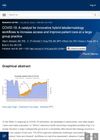
April 2021 in “Journal of The American Academy of Dermatology” This study found that the implementation of the SAVe teledermatology model increased access to dermatologic care during COVID-19, reducing referral wait times significantly compared to in-person visits.
November 2025 in “Informatica” This study introduces a novel image enhancement method that significantly improves the visual quality of low-light sports images by utilizing improved bilateral filtering and the CLAHE algorithm, achieving a 65.24% improvement in color and edge detail preservation compared to state-of-the-art methods on the LOL dataset.
 April 2021 in “Journal of Investigative Dermatology”
 This study found that multicomponent microarray patches for SARS-CoV-2 vaccination produced stronger immune responses and fewer side effects in mice compared to traditional intramuscular injection.
June 1985 in “Journal of the American Academy of Dermatology” June 2025 in “British Journal of Dermatology” This study detailed the implementation of an autonomous AI device in an NHS skin cancer pathway, showing that it achieved a sensitivity of 97.3% for diagnosing skin cancers and exceeded sensitivity targets compared to specialists with a negative predictive value over 99.7%.
 18 citations
,
January 2001 in “Annual Reports in Medicinal Chemistry”
18 citations
,
January 2001 in “Annual Reports in Medicinal Chemistry” This chapter reviews selective androgen receptor modulators, discussing their therapeutic potential beyond current androgen applications, and reports no new clinical findings.
15 citations
,
March 2023 in “BioMed” This review discusses multisystem inflammatory syndrome in adults (MIS-A) related to SARS-CoV2 and outlines the existing knowledge and unanswered questions, reporting no new clinical results.
3 citations
,
April 2016 in “Research and reports in urology” In a cell-free test setting, this study found that a novel saw palmetto extract effectively inhibited the 5α-reductase type II enzyme, showing promising bioactivity comparable to finasteride for promoting prostate health.
October 2022 in “Amplla Editora eBooks”  June 2026 in “bioRxiv (Cold Spring Harbor Laboratory)”
 This study found that inhibiting the interaction between HOTAIR and EZH2 can block pro-fibrotic gene expression in fibroblasts and interfere with tissue remodeling in systemic sclerosis patient skin.
 14 citations
,
January 2024 in “Theranostics”
14 citations
,
January 2024 in “Theranostics” In this study involving a mouse model, researchers reported that intranasal delivery of protein-based CRISPR/dCas9 nanoparticles targeting the gene *Sirt1* reduced cerebral edema and increased survival following ischemic stroke, with no significant toxicity observed.
6 citations
,
July 2025 in “Cancer Medicine” This study reported that ZSYY001, a nanoparticle formulation of polymeric micellar paclitaxel, showed promising antitumor activity and was safe and well-tolerated in preclinical models and a phase I trial, without acute hypersensitivity reactions at doses up to 390 mg/m².
This study discovered two new species of mites in the hair follicles of squirrel monkeys from South America, potentially causing follicle damage due to secondary infection.
 May 2025 in “The Journal of Rheumatology”
 This case report highlights the importance of trans-esophageal echocardiography in distinguishing Libman-Sacks endocarditis from infective endocarditis in systemic lupus erythematosus patients, guiding appropriate treatment for associated cerebrovascular disease.
1 citations
,
January 2024 in “International Journal of Epidemiology” This study describes the ongoing HABIT study in Taicang, China, which aims to identify risk factors and the relationship between cardiovascular and neurodegenerative diseases among 10,357 adults, by collecting and analyzing long-term data on health, lifestyle, and biological specimens. Results are not yet available.
January 2025 in “Case Reports in Genetics” The researchers identified a pathogenic variant in the SRD5A2 gene among siblings with 46,XY disorder of sexual development, highlighting the importance of comprehensive genetic testing in diagnosis and management.
22 citations
,
December 2020 in “mSphere” This study identified a fungal sulfotransferase enzyme, FgSULT1, from *Fusarium graminearum*, expanding the sulfotransferase superfamily and offering new biocatalytic methods for producing bioactive sulfates.
 14 citations
,
November 1963 in “The journal of investigative dermatology/Journal of investigative dermatology”
14 citations
,
November 1963 in “The journal of investigative dermatology/Journal of investigative dermatology” This article reviews the identification and characterization of soluble proteins in horny tissues such as calluses and psoriatic scales, but reports no new clinical results.
 October 2025 in “Indian Journal of Dermatology”
 This study examined the dermoscopic features of five patients with tuberous sclerosis and found that dermoscopy can differentiate characteristic cutaneous features from similar conditions, potentially aiding in earlier diagnosis when other symptoms are subtle or absent.
8 citations
,
May 2024 in “Diagnostics” This survey investigated how well an AI chatbot could generate dermoscopic language reports for dermatologists and found that participants were equally satisfied with its responses across scenarios, despite lower performance in diagnosing SCC and inflammatory dermatoses.
4 citations
,
January 1993 in “Clinical Chemistry and Laboratory Medicine (CCLM)” This study developed a highly sensitive fluorescent assay for measuring enzyme activity in single hair follicles, allowing the efficient analysis of over 100 samples per day.
April 2018 in “Blackwell's Five‐Minute Veterinary Consult Clinical Companion” This chapter reviews common dermatoses in small animals and offers bulleted lists as a preliminary tool for formulating differential diagnoses, but reports no new clinical findings.
 April 2023 in “Clinical theriogenology”
 This report highlights the usefulness of specific diagnostic procedures, including penile/preputial cytology and transabdominal ultrasonography, in diagnosing cryptorchidism and Sertoli cell tumors in dogs with generalized skin conditions.
This study found that super-enhancers play a crucial role in driving malignant progression in squamous cell carcinoma stem cells through a regulatory network involving ETS2 transcription factors, highlighting the potential link between high ETS2 levels and poor patient outcomes in head and neck cancers.