January 2018 in “Bradford Scholars (University of Bradford)” This study found that SWI/SNF complexes, especially the ATPase BRG1, are crucial for keratinocyte migration in human wound healing but do not affect hair growth in short-term hair follicle cultures.
 December 2017 in “Journal of Cosmetic Dermatology”
 This article does not contain an abstract, so it provides no new research findings or clinical results.
 June 2017 in “Experimental dermatology”
 This article, a special issue on hair follicle biology and pathology, reports no new research findings.
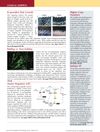 July 2016 in “Experimental Dermatology”
 This article provides clinical snippets from Experimental Dermatology and reports no new research findings.
 July 2016 in “Journal of Investigative Dermatology”
 R-spondin2 may help treat hair loss, gene differences could explain baldness, a peptide's regulation is linked to psoriasis, B-defensin gene copies may affect a skin condition's risk and severity, and potential markers and targets for alopecia areata were identified.
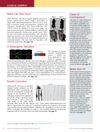 January 2016 in “Journal of Investigative Dermatology”
 Some cells may slow melanoma growth, a protein could affect skin pigmentation, a gene-silencing method might treat hair defects, skin bacteria changes likely result from eczema, and a defensin protein could help treat multiple sclerosis.
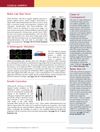 January 2016 in “Experimental Dermatology”
 This article in Experimental Dermatology does not include an abstract or any new research findings.
 May 2015 in “Journal of Investigative Dermatology”
 Melanoma risk tools need improvement, a gene mutation causes a hair disorder that might be treated by managing cell stress, a potential therapy for a skin-ear disorder involves blocking cell channels, skin wrinkling may indicate lung aging regardless of smoking, and oxidative stress might contribute to common baldness.
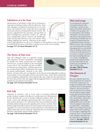 April 2015 in “Experimental Dermatology”
 Melanoma risk tools need improvement, certain gene mutations cause skin diseases and could be treated by targeting those mutations, skin wrinkling may relate to lung aging due to genetic factors, and oxidative stress affects hair loss but can be reduced in low oxygen.
 August 2010 in “Journal of Investigative Dermatology”
 New hair regrowth model introduced, imiquimod kills skin cancer cells, T-cadherin loss makes skin cancer more invasive, no strong link between PTCH1 gene and skin cancer after transplant, and male teens more likely to have hereditary hair loss.
 July 2010 in “British Journal of Dermatology”
 New hair regrowth model proposed, imiquimod found to kill skin cancer cells, T-cadherin loss linked to invasive skin cancer, no clear gene link to skin cancer after transplant, and study on children's hair loss shows male dominance and genetic ties.
 September 2005 in “Journal of Investigative Dermatology”
 This study found that ferulic acid effectively stabilized vitamins C and E in a topical solution, doubling skin photoprotection against solar-simulated irradiation, which may help in preventing photoaging and skin cancer.
June 2005 in “Journal of Investigative Dermatology” A bull with a gene mutation was asymptomatic, synthetic retinoids cause hair loss, and new therapeutic targets were identified for skin diseases.
April 2005 in “Journal of Investigative Dermatology” This compilation reviews multiple dermatologic studies, reporting findings such as the lack of a psoriasis-susceptibility allele in cluster 17, and highlighting a mouse model for studying hair follicle formation, among others.
June 2004 in “Journal of Investigative Dermatology” Increased pigmentation may protect skin from UVB, new targets for skin disease treatments were identified, sunscreen ingredients don't affect hormones, TNF-α inhibitors may help diabetic wounds, and certain treatments could prevent chemotherapy-induced hair loss.
June 2004 in “Journal of Investigative Dermatology” Apoptosis may play a role in feather and hair development, SF-36 is better for mental health in skin patients, a psoriasis gene is found in Caucasians, eosinophils might not be crucial for some skin allergies, and changes in atopic dermatitis could increase skin sensitivity.
December 2003 in “The journal of investigative dermatology/Journal of investigative dermatology” This review covers various dermatological studies, including findings on glycerol's optical clearing effects, approaches to keloid prevention, itch quantification, baldness heritability, and fumaric acid esters for psoriasis, without presenting new clinical results.
 November 2003 in “Journal of Investigative Dermatology”
 This article includes summaries of multiple studies on dermatological topics like Imiquimod's effects on tumors, vitamin C absorption enhancement, and ferritin levels in hair loss, but reports no new results itself.
13 citations
,
October 2000 in “International Journal of Dermatology” This case report describes a 6-year-old boy with Bloom syndrome characterized by distinct facial skin changes, delayed development, and a high frequency of sister chromatid exchanges.
 9 citations
,
March 2018 in “JEADV. Journal of the European Academy of Dermatology and Venereology/Journal of the European Academy of Dermatology and Venereology”
9 citations
,
March 2018 in “JEADV. Journal of the European Academy of Dermatology and Venereology/Journal of the European Academy of Dermatology and Venereology” This article is a letter to the editor discussing positive Jacquet's sign in traction alopecia and provides no new research results.
 5 citations
,
February 2023 in “European journal of endocrinology”
5 citations
,
February 2023 in “European journal of endocrinology” This study found that older patients with Cushing's syndrome had fewer typical symptoms of hypercortisolism, more comorbidities, and were more often treated conservatively compared to younger patients.
13 citations
,
October 2019 in “Journal of Integrative Agriculture” This study found that certain FZD3 gene variants were significantly associated with wool traits in Chinese Merino sheep, suggesting potential as genetic markers for breeding.
 3 citations
,
April 2012 in “Bioinformation”
3 citations
,
April 2012 in “Bioinformation” This study concluded that specific SNPs in the TRPS1 gene significantly alter its protein structure, affecting interactions and contributing to the development of congenital hypertrichosis.
2 citations
,
February 2021 in “European Journal of Plastic Surgery” This study found that the Fibonacci 'snail' flap for scalp defect reconstruction healed faster and resulted in better aesthetic outcomes than skin grafts, though not all complication rate differences were statistically significant.
 January 2024 in “Current research in toxicology”
 This review reports that thallium poisoning causes severe neurological damage, with early gastrointestinal symptoms and later neurological dysfunction, and highlights the importance of early diagnosis and Prussian blue as an effective antidote.
January 2026 in “Pharmaceutics” This review discusses the dual role of extracellular vesicles in Alzheimer's disease, highlighting their potential in both exacerbating and alleviating the condition, and emphasizes the need for advanced technologies to enhance diagnosis and treatment.
November 2024 in “Forensic Sciences” This review highlights the potential for using the Y chromosome in epigenetic analyses to better understand male-specific aging and disease mechanisms.
October 2007 in “Revue du Rhumatisme”  22 citations
,
October 2018 in “British Journal of Haematology”
22 citations
,
October 2018 in “British Journal of Haematology” This review examines the gender-specific challenges in preventing and treating venous thromboembolism in women and highlights the need for further research on safe and optimal treatment strategies.
 January 2026 in “Beilstein Journal of Organic Chemistry”
 This study developed a metal-free method for synthesizing sulfinimidate esters, showcasing their potential as versatile intermediates for enantioselective bond formation under mild conditions.