![Verification of the Major Metabolic Oxidation Path for the Naphthoyl Group in Chemoattractant Receptor-Homologous Molecule Expressed on Th2 Cells (CRTh2) Antagonist 2-(2-(1-Naphthoyl)-8-fluoro-3,4-dihydro-1H-pyrido[4,3-b]indol-5(2H)-yl)acetic Acid (Setipiprant/ACT-129968)](/images/assets/d743d32f-3115-48ff-9697-2f2d56130701/small/14175.jpg) 6 citations
,
September 2015 in “Journal of Medicinal Chemistry”
6 citations
,
September 2015 in “Journal of Medicinal Chemistry” This study synthesized and verified the structures of Setipiprant's major and minor metabolites, confirming their regio- and enantioselectivity from earlier proposals in a clinical study.
10 citations
,
April 1964 in “Journal of the American Geriatrics Society” This article reviews triamcinolone acetonide as an intramuscular long-acting steroid therapy for dermatologic disorders but reports no new clinical results.
 2 citations
,
August 2008 in “Journal of Liaquat University of Medical & Health Sciences”
2 citations
,
August 2008 in “Journal of Liaquat University of Medical & Health Sciences” This case report describes a twenty-year-old woman misdiagnosed with a sebaceous cyst that was actually pilomatrixoma, a benign skin lesion from hair matrix cells, confirmed by histopathology after excision.
November 2025 in “Journal of Investigative Dermatology” AMP-303 injections can increase hair growth in androgenetic alopecia with minimal side effects.
 October 2022 in “Amplla Editora eBooks”
 Tocilizumab might be an effective treatment for COVID-19.
4 citations
,
December 2024 in “JAAD Case Reports” This review discusses previously reported cases of drug-associated hidradenitis suppurativa linked to various immunomodulating medications but reports no new clinical results.
 January 2025 in “Biomedical Engineering Letters”
 This study reported that a new polymeric formulation for topical minoxidil delivery in an animal model improved hair growth and hair follicle formation more effectively than minoxidil in PBS, suggesting potential as a future hair loss treatment.
28 citations
,
November 2004 in “Endocrinology” This study by Gao et al. reports that two nonsteroidal selective androgen receptor modulators, S1 and S4, demonstrated tissue-selective actions in rats, suppressing prostate growth while maintaining muscle growth without altering hormone levels.
2 citations
,
January 2022 in “JAAD Case Reports” This case report describes a 69-year-old woman who developed drug-induced acquired ichthyosis related to ponatinib therapy, which improved upon stopping the medication.
 June 2022 in “Jurnal Health Sains”
 This review discusses plant-based alternatives for hair tonic formulations to address hair loss and contains no new clinical results, advocating for plant extracts as safer options than synthetic ingredients.
 June 2026 in “Frontiers in Medicine”
 This study conducted a large-scale comparison using FAERS data to assess the post-marketing safety profiles of spironolactone, eplerenone, and finerenone, finding unique adverse event patterns for each drug and highlighting the need for personalized safety monitoring and further investigation in other pharmacovigilance databases.
5 citations
,
July 2023 in “Microorganisms” This study analyzed skin biopsies from human monkeypox virus (hMPXV1) cases and found characteristic pustular stage features, including epidermal necrosis, shadow cell appearance, ballooned keratinocytes, and a dense inflammatory infiltrate, expanding histological knowledge crucial for understanding this disease and related Orthopoxvirus infections.
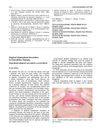 January 2010 in “Actas Dermo-Sifiliográficas”
 A woman developed thick gums from everolimus treatment after a kidney transplant.
December 2024 in “Institutional Repositories DataBase (IRDB)” In this study, the authors found that the shoulder guard hair of captive sika deer most accurately reflects dietary information during winter coat growth, useful for analyzing wild deer hair samples.
 1 citations
,
June 2025 in “Journal of Allergy and Clinical Immunology Global”
1 citations
,
June 2025 in “Journal of Allergy and Clinical Immunology Global” This study describes the case of a young boy with Netherton syndrome who showed significant improvements in skin inflammation, quality of life, and hair growth after receiving dupilumab, with a marked decrease in serum IgE levels observed following treatment.
21 citations
,
December 2017 in “The journal of investigative dermatology. Symposium proceedings/The Journal of investigative dermatology symposium proceedings” This study suggests that statins may help treat acute alopecia areata, with animal experiments showing increased regulatory T cell populations after statin treatment in mice with the condition.
10 citations
,
October 2019 in “Iranian Biomedical Journal” This study found that a 5 µM concentration of simvastatin significantly increased the differentiation of hair follicle stem cells into keratinocytes in vitro.
 December 2020 in “한국인그리에학회지”
 This study found that topical application of astrigent persimmon fruit extract may promote hair growth in a Black mice model by increasing the hair existing area and hair length without significantly increasing hair follicles.
1 citations
,
December 2025 in “PLoS ONE” This study evaluated the real-world safety of Tepotinib for treating NSCLC with METex14 skipping mutations, confirming known adverse events and identifying new signals like deafness and taste disorder, especially highlighting early monitoring.
 April 2025 in “Jurnal Inovasi Bahan Lokal dan Pemberdayaan Masyarakat”
 This study found that variations in propylene glycol concentration in wax apple leaf extract hair tonic affected pH, specific gravity, and viscosity, aligning with SNI requirements.
January 2019 in “Prosiding Program Kreativitas Mahasiswa” This study found that a 15% Pisum sativum extract concentration in hair tonic showed the most effective hair growth, with a length of 14.51mm and weight of 0.16g.
15 citations
,
March 2023 in “BioMed” This review discusses multisystem inflammatory syndrome in adults (MIS-A) related to SARS-CoV2 and outlines the existing knowledge and unanswered questions, reporting no new clinical results.
This study suggests that finasteride might reduce SARS-COV-2 infectivity by inducing epigenetic changes in the TMPRss2 protein, which is crucial for viral activation and multiplication.
 27 citations
,
August 1984 in “Experimental and Molecular Pathology”
27 citations
,
August 1984 in “Experimental and Molecular Pathology”  April 2017 in “The journal of investigative dermatology/Journal of investigative dermatology”
 This study reports that 71% of patients treated with the gamma-secretase inhibitor PF-03084014 for desmoid tumors experienced dermatologic side effects, such as follicular lesions and pruritic eruptions, which were managed with topical or systemic treatments.
 April 2023 in “Journal of the American Academy of Dermatology”
 This study aimed to evaluate the outcomes of switching between two JAK inhibitors, tofacitinib and baricitinib, in treating alopecia areata, due to the lack of data on their comparative efficacy.
 February 2026 in “Oncology Reviews”
 This review highlights the promising clinical outcomes of sacituzumab tirumotecan (sac-TMT), an antibody-drug conjugate for breast cancer that targets TROP2, demonstrating improved response rates and progression-free survival, with manageable safety concerns including primarily mild-to-moderate nausea and alopecia.
 12 citations
,
February 2014 in “PLoS ONE”
12 citations
,
February 2014 in “PLoS ONE” This study observed high expression of mTOR pathway effectors in fibrous papules and TSC-associated angiofibromas, suggesting that topical rapamycin might be an effective treatment for fibrous papules.
1 citations
,
December 2024 in “Indian Dermatology Online Journal” This research notes that biologics and small molecules are effective for treating nail psoriasis and alopecia areata, albeit with precautions for adverse events, but no clinical trials have been published for their use in treating nail lichen planus and atopic dermatitis.
 23 citations
,
November 2015 in “Phytotherapy Research”
23 citations
,
November 2015 in “Phytotherapy Research” This study found that cucurbitacin I from bitter melon most effectively inhibited the growth of lung cancer cells and promoted hair cell growth in cell cultures.